



Gods
Drama · History
Overview
Set in communist Poland of the 80s the movie depicts early career of cardio surgeon Zbigniew Religa.
Top Cast
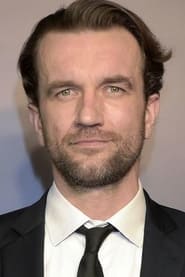
Tomasz Kot
Zbigniew Religa

Piotr Głowacki
Marian Zembala

Szymon Piotr Warszawski
Andrzej Bochenek

Magdalena Czerwińska
Anna Religa
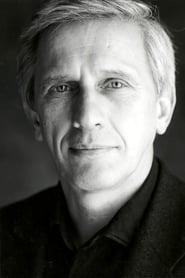
Jan Englert
Profesor Wacław Sitkowski

Rafał Zawierucha
Romuald Cichoń
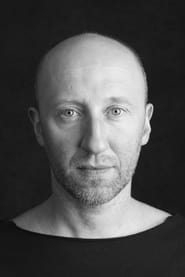
Cezary Kosiński
Roman Włodarski
Władysław Kowalski
Profesor Jan Moll
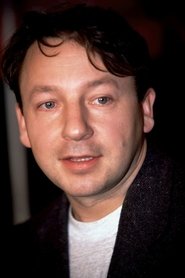
Zbigniew Zamachowski
Stanisław Pasyk
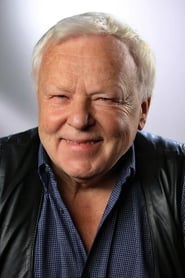
Marian Opania
Profesor Jan Nielubowicz
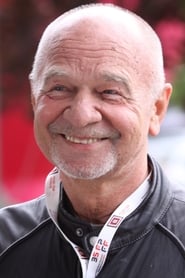
Ryszard Kotys
Członek komisji etyki lekarskiej
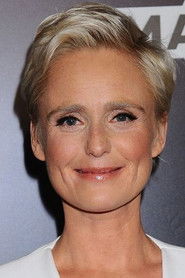
Kinga Preis
Matka Ewki







Tomasz Kot
Tomasz Kot
Zbigniew Religa
Tomasz Kot
Zbigniew Religa
Piotr Głowacki
Piotr Głowacki
Marian Zembala
Piotr Głowacki
Marian Zembala
Szymon Piotr Warszawski
Szymon Piotr Warszawski
Andrzej Bochenek
Szymon Piotr Warszawski
Andrzej Bochenek
Magdalena Czerwińska
Magdalena Czerwińska
Anna Religa
Magdalena Czerwińska
Anna Religa
Jan Englert
Jan Englert
Profesor Wacław Sitkowski
Jan Englert
Profesor Wacław Sitkowski
Rafał Zawierucha
Rafał Zawierucha
Romuald Cichoń
Rafał Zawierucha
Romuald Cichoń
Cezary Kosiński
Cezary Kosiński
Roman Włodarski
Cezary Kosiński
Roman Włodarski
Władysław Kowalski
Władysław Kowalski
Profesor Jan Moll
Władysław Kowalski
Profesor Jan Moll
Zbigniew Zamachowski
Zbigniew Zamachowski
Stanisław Pasyk
Zbigniew Zamachowski
Stanisław Pasyk
Marian Opania
Marian Opania
Profesor Jan Nielubowicz
Marian Opania
Profesor Jan Nielubowicz
Similar Movies
The movie is inspired by the true life story of Bulgarian paralympic ‘Long jump’ triple world champion Mihail Hristov. The film follows Mihail from the moment he loses both his arms in an electric current incident and makes the life-changing decision of becoming a professional athlete as he goes through the catharsis of deciding to start a new life without arms. He goes through a number of difficulties, both on the sports field and in his personal relationships with his parents, his coach, the girl he falls in love with but most of all, the difficulty of accepting what has happened to him. The script traces Mihail's difficult fate from the accident that left him without arms to becoming a triple long jump world champion, inventor of a new type of prosthetics and a motivational speaker.
The Spanish journalist Manuel Chaves Nogales (1897-1944) was always there where the news broke out: in the fratricidal Spain of 1936, in Bolshevik Russia, in Fascist Italy, in Nazi Germany, in occupied Paris or in the bombed London of World War II; because his job was to walk, see and tell stories, and thus fight against tyrants, at a time when it was necessary to take sides in order not to be left alone; but he, a man of integrity to the bitter end, never did so.
In the occupied Netherlands near the end of WWII, a young teenager, Jeroen Boman (Maarten Smit) is sent to the Dutch countryside to avoid the war in Amsterdam. While living with his adopted family, Jeroen meets and becomes friends with a Canadian soldier named Walt Cook, who is stationed at the same town he is staying at. Joroen and Walt spend a lot of time playing around and eventually a romantic relationship develops between them. The boy’s sexual curiosity leads him to have a sexual experience with Walt, an encounter that is shown with some vague detail but without actually showing any nudity, even though sexual intimacy between the two of them is implied. Overall, the movie handles this difficult subject with an elegant style and feeling, without having the adult-child relationship overwhelm the viewer and thus allowing the movie to be seen as just a wartime relationship between two people that marks an important time in a young boy’s life.
Assigned to oversee the development of the atomic bomb, Gen. Leslie Groves is a stern military man determined to have the project go according to plan. He selects J. Robert Oppenheimer as the key scientist on the top-secret operation, but the two men clash fiercely on a number of issues. Despite their frequent conflicts, Groves and Oppenheimer ultimately push ahead with two bomb designs — the bigger "Fat Man" and the more streamlined "Little Boy."