

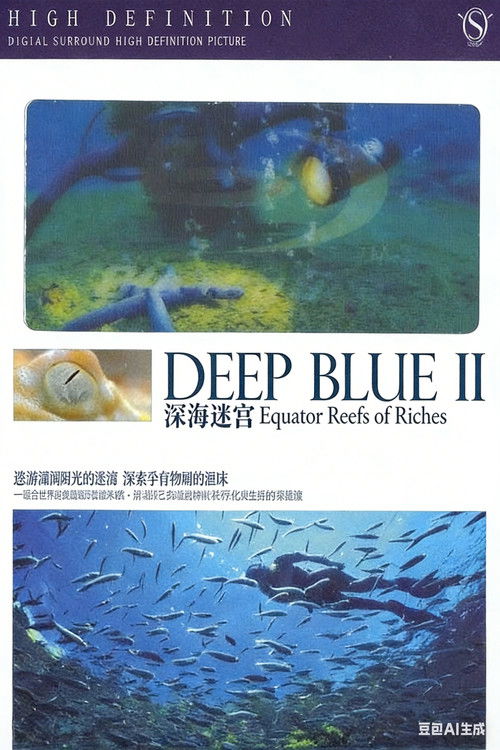
Equator - Reef of Riches
Documentary
Overview
The Indonesian archipelago in the Indo-Pacific Ocean comprises thousands of islands, atolls and the largest concentration of coral reefs in the world. This rich and varied environment is a product of a unique set of natural circumstances. The equatorial sun powers ocean currents among the tiny dots of land. Where the archipelago meets the western tip of New Guinea an intersection of ocean currects creates perhaps the world's richest reefs - in the region of the Rajah Ampat Islands. A coral reef houses a myriad of colors, shapes and patterns: from the bulb tentacle anemone which protects, and in turn is protected by, the brightly coloured clownfish; to the multi-branched gorgonian, home of the tiny pygmy seahorses.
Top Cast

Peter Hayden
Peter Hayden
Narrator
Peter Hayden
Narrator
Similar Movies

Bright Green Lies investigates the change in focus of the mainstream environmental movement, from its original concern with protecting nature, to its current obsession with powering an unsustainable way of life. The film exposes the lies behind the notion that solar, wind, hydro, biomass, or green consumerism will save the planet. Tackling the most pressing issues of our time will require us to look beyond the mainstream technological solutions and ask deeper questions about what needs to change.
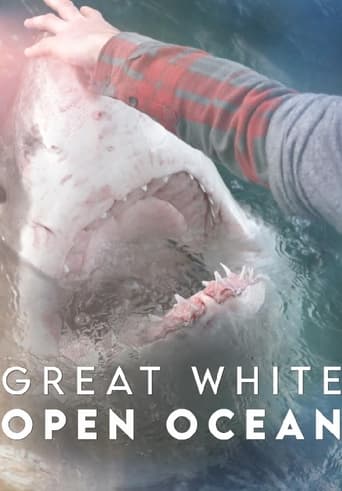
Not your normal shark documentary and I have watched many. Never have I felt so emotional and touched by watching one. From the initial incident to the devastating after affects, this shows one persons passion and genuine love for these beautiful animals. Honestly a beautiful documentary with twists and turns unseen before in this genre. Respect and love to you Jimmy I know you will be in Guadalupe in 2023.
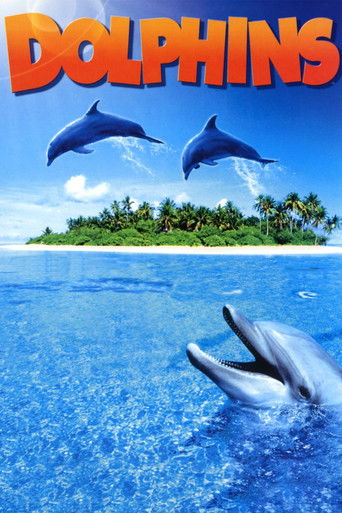
From the banks of the Bahamas to the seas of Argentina, we go underwater to meet dolphins. Two scientists who study dolphin communication and behaviour lead us on encounters in the wild. Featuring the music of Sting. Nominated for an Academy Award®, Best Documentary, Short Subject, 2000.
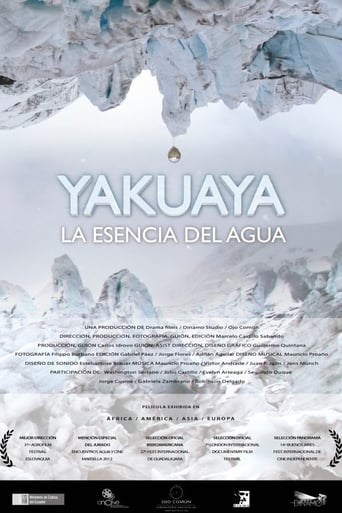
Yaku: water; aya: essence, blood. Yakuaya is a non-verbal documentary about the descent of water and life that follows the journey of a drop of water from its birth on a glacier until its arrival at the sea. Along the way, water influences the life of a peasant, locks himself in the rhythm of a bottling factory, brings people together in the city, transforms the life of a woman, leads a river navigator, awakens hope in a desert and welcomes the innocence of two children in the sea.
There is a mystery there and the answer lies somewhere between Bermuda, Puerto Rico and Miami. Hundreds of boats and planes have disappeared in the ocean with little or no trace at all. Most of these cases can be explained quite easily by human error or bad weather. But there are some that defy all explanation. Theories abound on these causes: Aliens, massive gas eruptions and freak waves. The documentary reveals that the boats and planes face a real danger in a triangle, but the true threat is often as strange as the wildest theory.

A love letter to Mar del Plata made of images, times and a road trip. "The Happy Ones" is an experimental short documentary composed of past and present family footage. It portrays a place in the summer, the city of Mar del Plata, with a span of 20 years between past and present images (January 2000 and 2020). Despite the time that passed by, it's beaches, essence and people remain, always willing to keep dancing.
Peter Snow presents highlights from today's three deep-sea dives around the world. In 2002 BBC organized three concurrent dives , first in Monterey Bay where unmanned submersible is lowered into underwater canyon which is over mile deep. Second dive is in Grand Cayman where submersible Atlantis will explore life at the spectacular Cayman Wall , Kate Humble reports . During the dive, the crew used bait to attract a deep-water giant, the six-gill shark. Third dive takes place in middle of the Atlantic 1200 miles west of Portugal, which is also deepest of the three dives, divers will descent in Russian submersible Mir from research vessel Keldish and the Mir will dive in the bottom of the ocean in 2300 metres .