

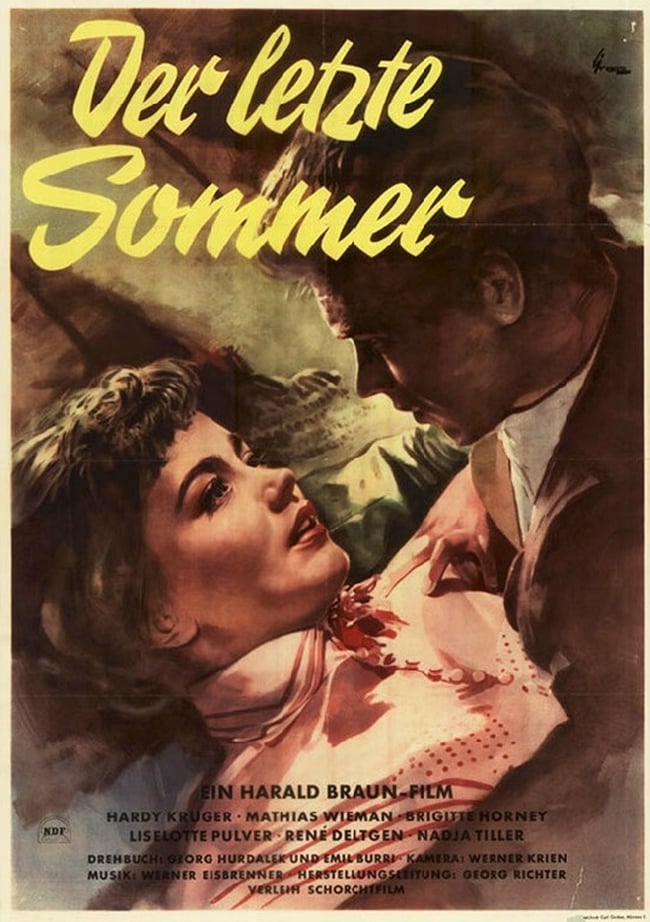
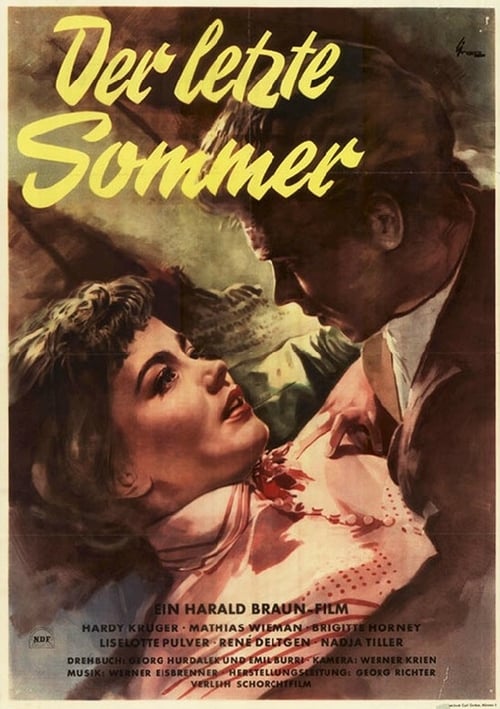
Der letzte Sommer
Drama
Overview
A Nordic revolutionary's plans to murder the president go awry when he falls in love with the man's daughter.
Top Cast
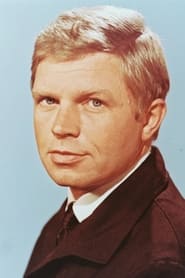
Hardy Krüger
Rikola Valbo

Mathias Wieman
Präsident Tolemainen

Brigitte Horney
Tatjana Tolemainen

Liselotte Pulver
Jessika Tolemainen
Uta Hallant
Katja Tolemainen
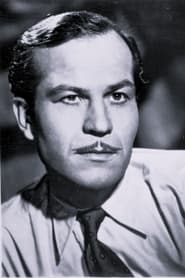
René Deltgen
Gawan Massi

Nadja Tiller
Anja, Gawans Schwester

Werner Hinz
Innenminister
Paul Bildt
Vittunen, Klavierstimmer

Leonard Steckel
Kommissar Berki

Käthe Haack
Frau Lundgreen
Rolf Henniger
Ministerialrat









Hardy Krüger
Hardy Krüger
Rikola Valbo
Hardy Krüger
Rikola Valbo
Mathias Wieman
Mathias Wieman
Präsident Tolemainen
Mathias Wieman
Präsident Tolemainen
Brigitte Horney
Brigitte Horney
Tatjana Tolemainen
Brigitte Horney
Tatjana Tolemainen
Liselotte Pulver
Liselotte Pulver
Jessika Tolemainen
Liselotte Pulver
Jessika Tolemainen
Uta Hallant
Uta Hallant
Katja Tolemainen
Uta Hallant
Katja Tolemainen
René Deltgen
René Deltgen
Gawan Massi
René Deltgen
Gawan Massi
Nadja Tiller
Nadja Tiller
Anja, Gawans Schwester
Nadja Tiller
Anja, Gawans Schwester
Werner Hinz
Werner Hinz
Innenminister
Werner Hinz
Innenminister
Paul Bildt
Paul Bildt
Vittunen, Klavierstimmer
Paul Bildt
Vittunen, Klavierstimmer
Leonard Steckel
Leonard Steckel
Kommissar Berki
Leonard Steckel
Kommissar Berki
Similar Movies
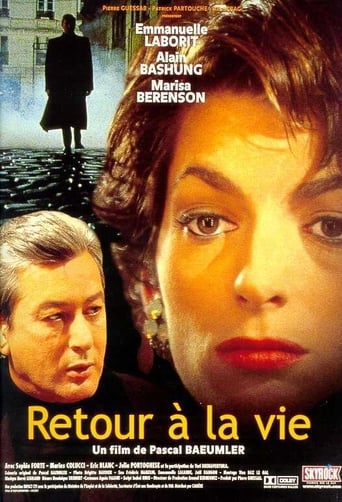
Louise, a young deaf and dumb comedian, has just been named best actress of the year. She is married to Yann, twenty years her senior. But their relationship is conflicting. It seems that Yann takes a malicious pleasure in psychologically torturing Louise. A whirlwind of uncertainties where dreams collide with nightmares, anguish, submission, sadism... Louise confides in Stephanie, her best friend, who advises her to flee. Louise refuses, convinced of a better future. One evening, while Yann tortures her once again, she kills him.
Houses, now abandoned and empty, are being boarded up in Besence of the Ormányság. "Only-childism" is in fashion, due to the law that provides for the way in which landed properties are inherited. The birth of children that are "not desirable" is being prevented through illegal medical intervention, which is often responsible for the death of pregnant women. The happiness of János and Julis are also the victims of this attitude: their parents would not hear of another child.

The tranquility of a remote Armenian mountain community is disrupted when a group of shepherds affected by the pangs of an evening hunger, decide to butcher and barbecue the sheep of another's that have strayed into their herd. An official inquiry by the city police complicates matters, and questions of law, morality and community only seem to lead to further entanglements.
The bells of the Calvinist church in Garabó have been silent for years, and people prefer to go the Rumanian church. Returning from his studies in Utrecht, Simándy Pál - at his own request - gets a job here, in the alpine village. The young Hungarian minister meets Florica, the educated daughter of Todorescu, the Rumanian pope, whom he knew before. She falls in love with him.
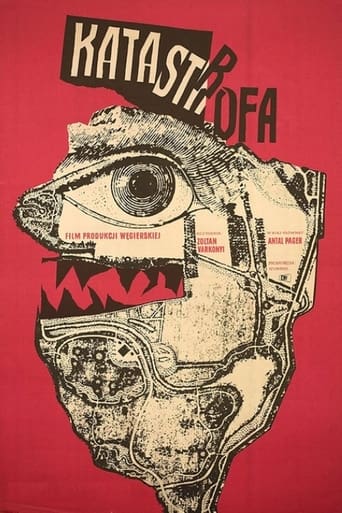
Private inspector Hável happens to travel on the train which is attacked at Biatorbágy. His attention is drawn to a suspicious man, and in the next few days he confirms that it was indeed him who committed the crime. Yet the police accuses not the lunatic Marschalkó but the communists. Summary justice is declared.
Divorced and single bailiff Carla Schön has many problems with her pubescent daughter Eva. However, she cannot use these problems because she has to work in her everyday life. Even in her hobby, orchestral playing, she is absolutely tense. But then she meets the musician Andi Jannings and falls in love with him. He is a dry alcoholic and is in constant dispute with his ex-wife. To make matters worse, he is also a caretaker at Eva's school. Torn between her new love and daughter, Carla soon finds that her next job has to do with Andi. He has money problems and, accordingly, has not made any maintenance payments to his ex-wife.