

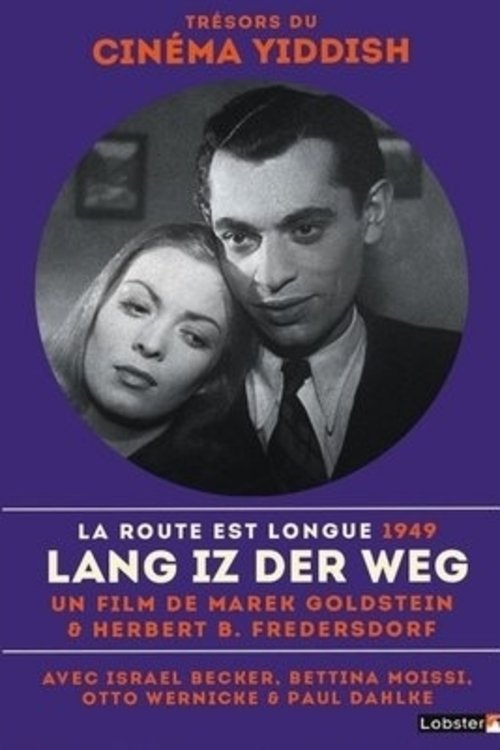
Long Is the Road
History · Drama
Overview
The first feature film to represent the Holocaust from a Jewish perspective. Shot on location at Landsberg, the largest DP camp in U.S.-occupied Germany, and mixing neorealist and expressionist styles, the film follows a Polish Jew and his family from pre-war Warsaw through Auschwitz and the DP camps.





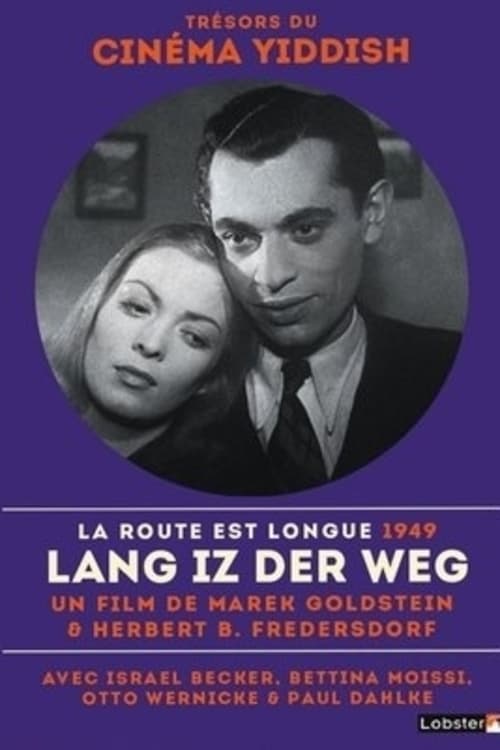
Israel Beker
Israel Beker
David Jelin
Israel Beker
David Jelin
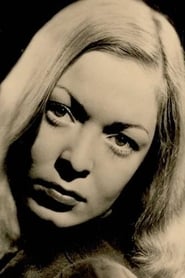
Bettina Moissi
Bettina Moissi
Dora Berkowitz
Bettina Moissi
Dora Berkowitz
Berta Litwina
Berta Litwina
Hanna Jelin
Berta Litwina
Hanna Jelin
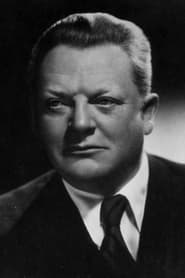
Otto Wernicke
Otto Wernicke
doctor
Otto Wernicke
doctor
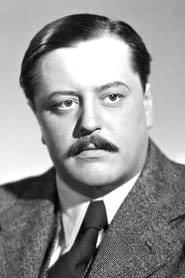
Paul Dahlke
Paul Dahlke
doctor
Paul Dahlke
doctor
Misha Natan
Misha Natan
Partisan
Misha Natan
Partisan
David Hart
David Hart
Mr. Liebermann
David Hart
Mr. Liebermann
Heinz-Leo Fischer
Heinz-Leo Fischer
Chodetzki
Heinz-Leo Fischer
Chodetzki
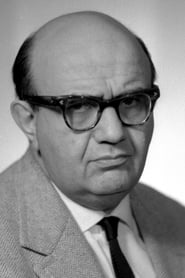
Aleksander Bardini
Aleksander Bardini
Farmer
Aleksander Bardini
Farmer
Similar Movies
Post-war Poland. 10-year-old Marysia lives in the countryside with her mother, Helena, who survived a concentration camp. One day Helena announces that her brother - Marysia's uncle - is coming to join them for dinner. Although Marysia herself survived the occupation in shelter, she experiences first-hand that the nightmare of war does not end with the ceasefire.
Emmy Awards nominee for "Outstanding Individual Achievement in a Craft: Research: Multi-faceted portrait of the man who succeeded Lenin as the head of the Soviet Union. With a captivating blend of period documents, newly-released information, newsreel and archival footage and interviews with experts, the program examines his rise to power, deconstructs the cult of personality that helped him maintain an iron grip over his vast empire, and analyzes the policies he introduced, including the deadly expansion of the notorious gulags where he banished so many of his countrymen to certain death.
January 1942, in Nazi-occupied Poland during World War II. Thousands of Jews have been confined to the Warsaw ghetto for more than a year. Outside, life goes on; inside, they struggle to survive another day. Still, on a cold winter night, a group of Jewish actors manage to stage a lively musical comedy.
Around 80 years ago, the gynecologist Carl Clauberg conducted medical experimentation on Jewish girls and women in Auschwitz. The results of those sadistic experiments were used in medicine across the globe. It is possible that German companies played a part in those experiments. Most of the survivors became infertile, and very few of them were later capable to give birth. The Untold Story of Block 10 introduces the audience to those who have survived.
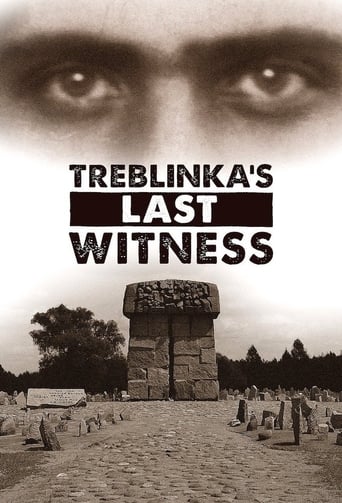
Samuel Willenberg and Kalman Taigman, the last two survivors of the Nazi extermination camp Treblinka, recount the horrors they experienced during the war and talk about their lives after their escape in a prisoner uprising in 1943. Willenberg would go on to become a hero of the 1944 Warsaw uprising while Taigman would be called as a witness during the infamous trial of Adolf Eichmann.
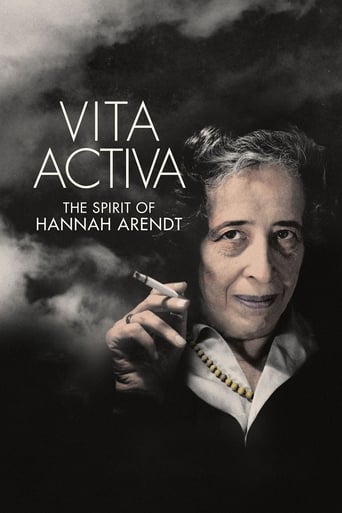
The life and work of German political philosopher of Jewish descent Hannah Arendt (1906-75), who caused a stir when she coined a subversive concept, the banality of evil, in her 1963 book on the trial of Nazi war criminal Adolph Eichmann (1906-62), held in Israel in 1961, which she covered for the New Yorker magazine.
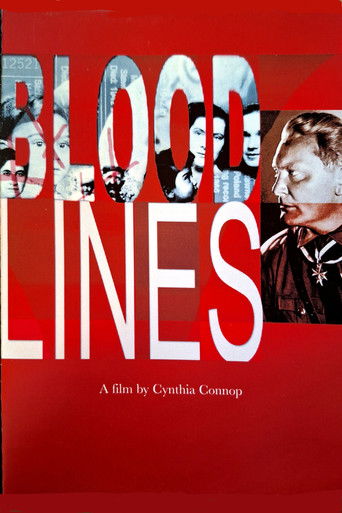
A moving meditation on guilt and reconciliation, Bloodlines explores the unwritten cost of war and genocide on future generations - of both victims and perpetrators. As Bettina Goering, grandniece of Nazi war criminal Herman Goering, searches for a way to come to terms with her heritage, she meets Ruth Rich, a painter and daughter of Holocaust survivors. At a time when seemingly irreconcilable divisions between groups are tearing the world apart, this deeply hopeful film is a beautiful testament to the power of dialogue and post-conflict reconciliation.