

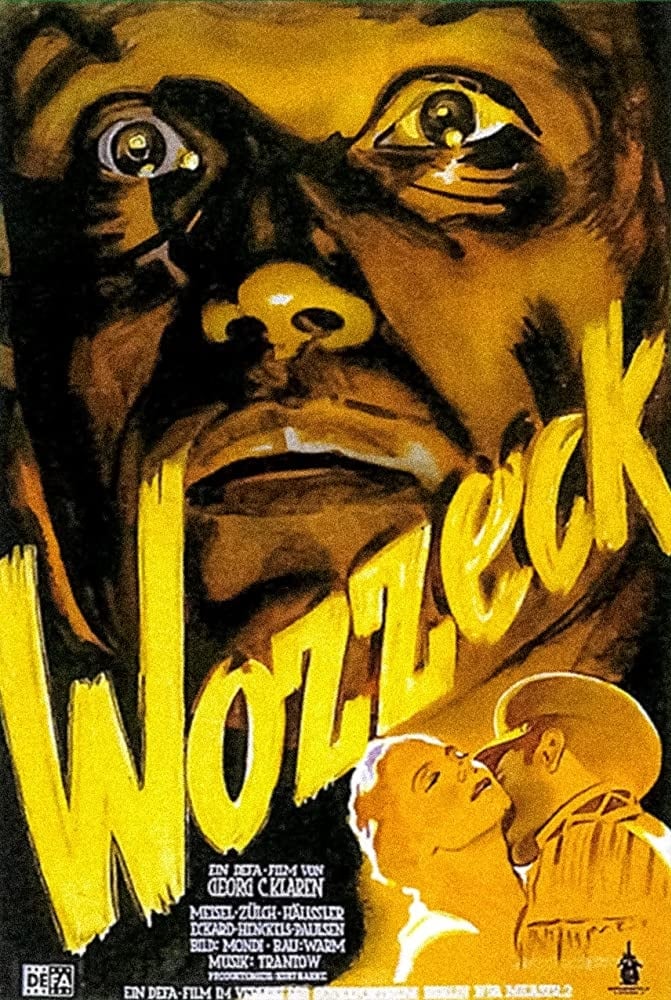
Wozzeck
Drama
Overview
While an anatomy seminar prepares to examine the cadaver of Franz Wozzeck in the name of scientific progress, medical student Büchner excoriates humanity for having allowed Wozzeck’s fate. The tragic story unfolds in flashbacks, as Büchner narrates.




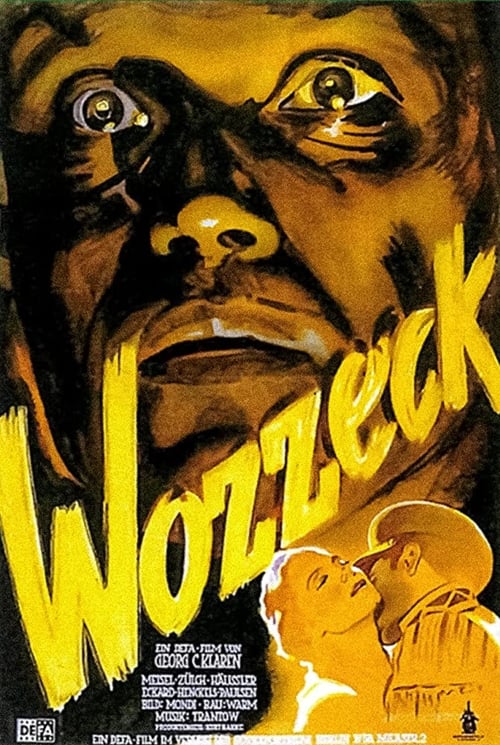

Kurt Meisel
Kurt Meisel
Wozzeck
Kurt Meisel
Wozzeck
Helga Zülch
Helga Zülch
Maria
Helga Zülch
Maria
Max Eckard
Max Eckard
Büchner
Max Eckard
Büchner

Paul Henckels
Paul Henckels
Arzt
Paul Henckels
Arzt
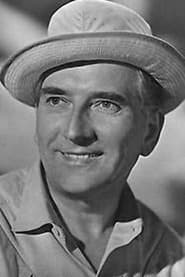
Willi Rose
Willi Rose
Andres
Willi Rose
Andres
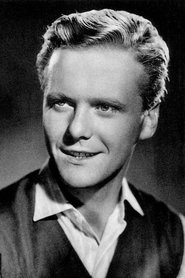
Gunnar Möller
Gunnar Möller
3. Student
Gunnar Möller
3. Student
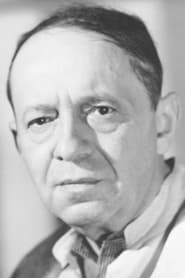
Alfred Balthoff
Alfred Balthoff
1. Handwerksbursche
Alfred Balthoff
1. Handwerksbursche
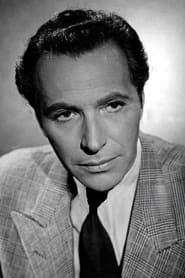
Richard Häussler
Richard Häussler
Tambour-Major
Richard Häussler
Tambour-Major

Arno Paulsen
Arno Paulsen
Hauptmann
Arno Paulsen
Hauptmann
Claire Reigbert
Claire Reigbert
Margret
Claire Reigbert
Margret
Similar Movies
In this classic German thriller, Hans Beckert, a serial killer who preys on children, becomes the focus of a massive Berlin police manhunt. Beckert's heinous crimes are so repellant and disruptive to city life that he is even targeted by others in the seedy underworld network. With both cops and criminals in pursuit, the murderer soon realizes that people are on his trail, sending him into a tense, panicked attempt to escape justice.
Hanns Heinz Ewers' grim science-fiction novel Alraune has already been filmed twice when this version was assembled in 1928. In another of his "mad doctor" roles, Paul Wegener plays Professor Brinken, sociopathic scientist who combines the genes of an executed murderer with those of a prostitute. The result is a beautiful young woman named Alraune (Brigitte Helm), who is incapable of feeling any real emotions -- least of all guilt or regret. Upon attaining adulthood, Alraune sets about to seduce and destroy every male who crosses her path. Ultimately, Professor Brinken is hoist on his own petard when he falls hopelessly in love with Alraune himself. Alraune was remade in 1930, with Brigitte Helm repeating her role, and again in 1951, with Hildegarde Knef as the "heroine" and Erich von Stroheim as her misguided mentor.
Prim professor Immanuel Rath finds some of his students ogling racy photos of cabaret performer Lola Lola and visits a local club, The Blue Angel, in an attempt to catch them there. Seeing Lola perform, the teacher is filled with lust, eventually resigning his position at the school to marry the young woman. However, his marriage to a coquette -- whose job is to entice men -- proves to be more difficult than Rath imagined.
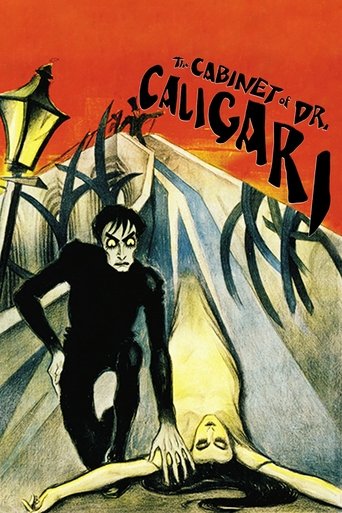
Francis, a young man, recalls in his memory the horrible experiences he and his fiancée Jane recently went through. Francis and his friend Alan visit The Cabinet of Dr. Caligari, an exhibit where the mysterious doctor shows the somnambulist Cesare, and awakens him for some moments from his death-like sleep.
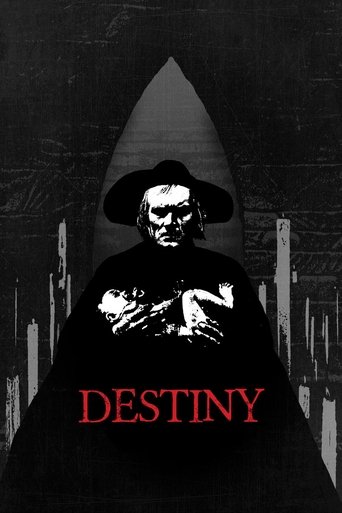
As a young couple stops and rests in a small village inn, the man is abducted by Death and is sequestered behind a huge doorless, windowless wall. The woman finds a mystic entrance and is met by Death, who tells her three separate stories set in exotic locales, all involving circumstances similar to hers.

Nick Hart is a struggling American artist who lives amongst the expatriate community in 1920s Paris. He spends most of his time drinking and socializing in local café's and pestering gallery owner Libby Valentin to sell his paintings. He becomes involved in a plot by wealthy art patroness Nathalie de Ville to forge three paintings. This leads to several run-ins with American rubber magnate Bertram Stone, who happens to be married to Hart's ex-wife Rachel.

In Edo-era Japan, a ukiyo-e artist languishes in his master’s shadow. Creatively stifled, he finds consolation in the company of a prostitute, and becomes entangled in a love triangle. A mystery emerges involving two portraits and the sudden disappearance of the artist Sharaku. Helmed by Cannes-selected director Tatsuji Yamazaki, the film employs kabuki-inspired sequences and stylised sets.
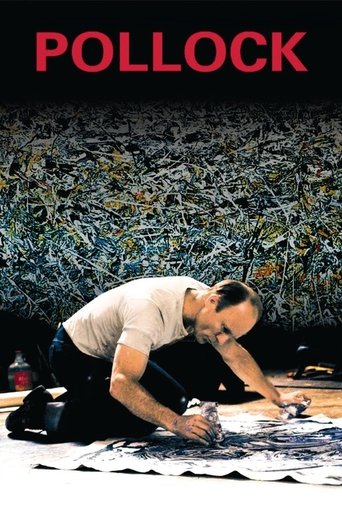
In August of 1949, Life Magazine ran a banner headline that begged the question: "Jackson Pollock: Is he the greatest living painter in the United States?" The film is a look back into the life of an extraordinary man, a man who has fittingly been called "an artist dedicated to concealment, a celebrity who nobody knew." As he struggled with self-doubt, engaging in a lonely tug-of-war between needing to express himself and wanting to shut the world out, Pollock began a downward spiral.