

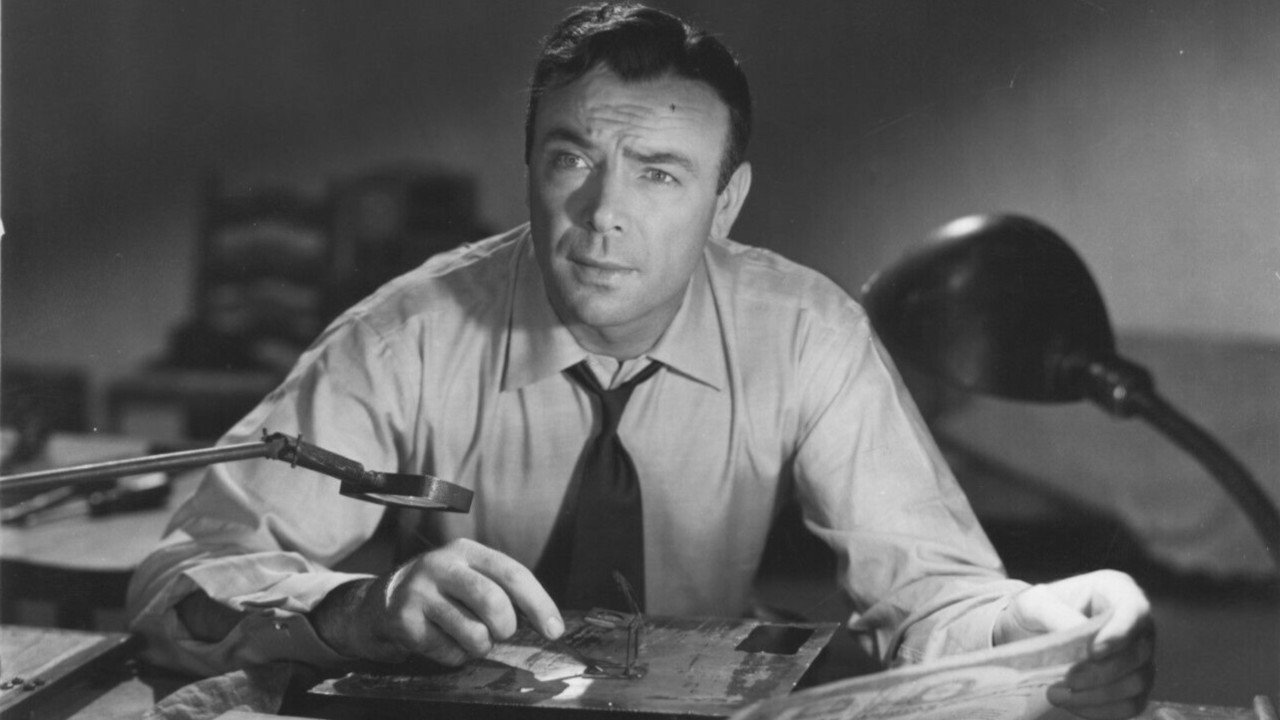
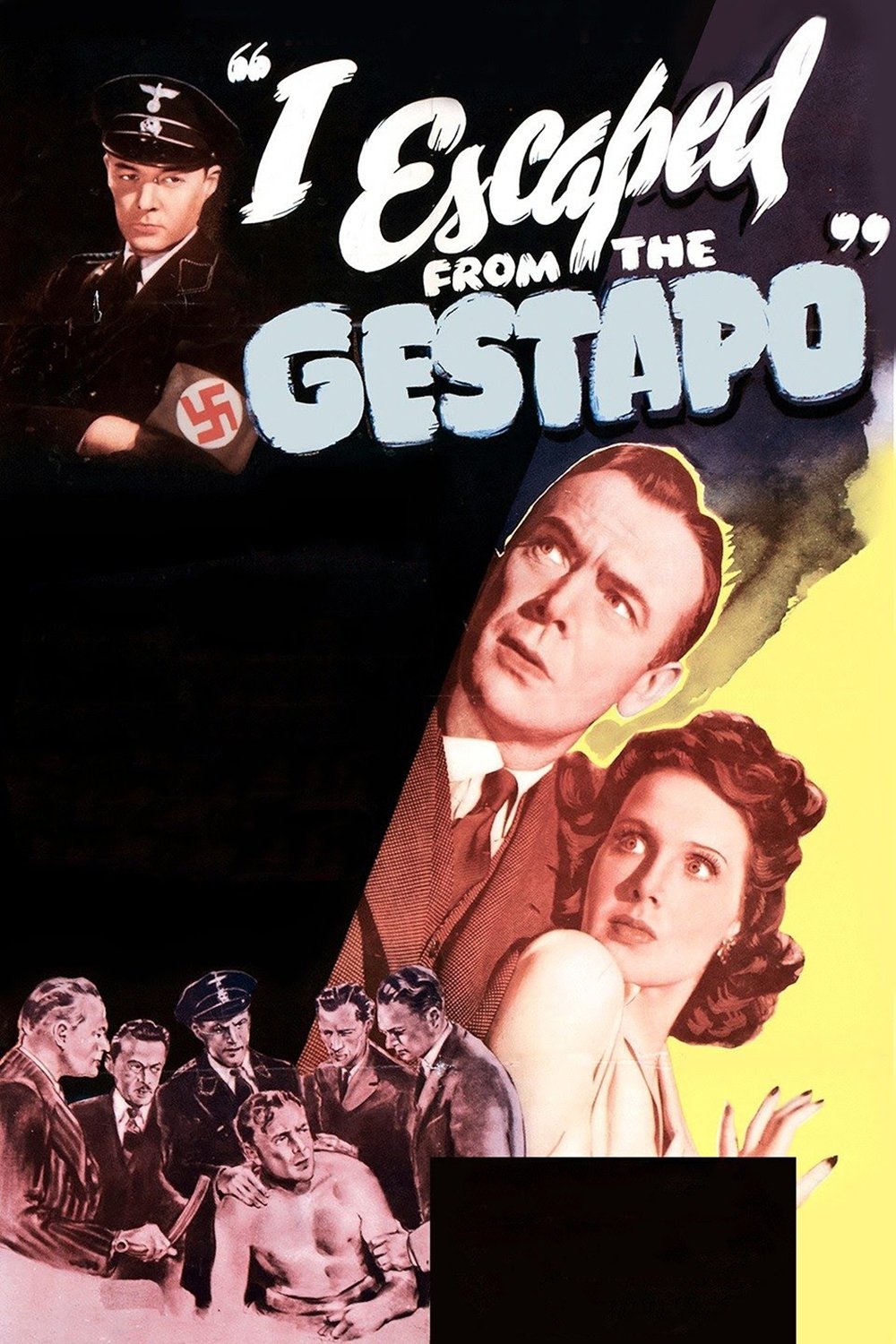
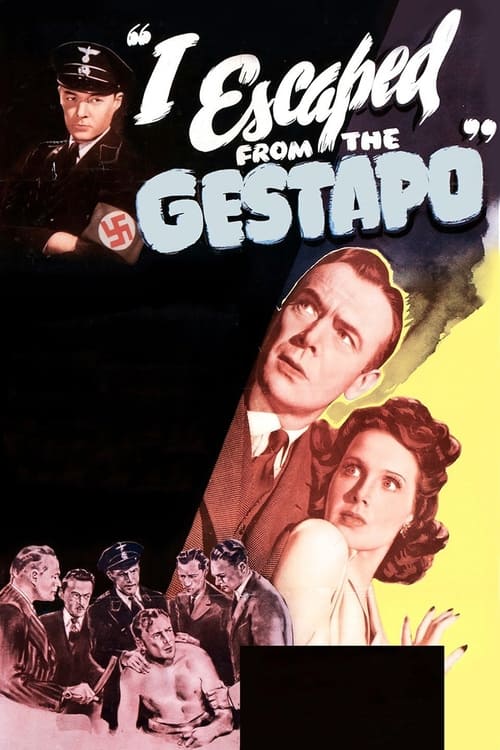
I Escaped from the Gestapo
Mystery · Drama
Overview
A forger is forced to work for a Nazi spy ring. His conscience gets the better of him, though, and he secretly conspires with the FBI to turn over the gang.







Dean Jagger
Dean Jagger
Torgut Lane
Dean Jagger
Torgut Lane
John Carradine
John Carradine
Martin
John Carradine
Martin

Mary Brian
Mary Brian
Helen
Mary Brian
Helen

William Henry
William Henry
Gordon
William Henry
Gordon

Sidney Blackmer
Sidney Blackmer
Bergen
Sidney Blackmer
Bergen

Ian Keith
Ian Keith
Gerard
Ian Keith
Gerard

Anthony Warde
Anthony Warde
Lokin
Anthony Warde
Lokin
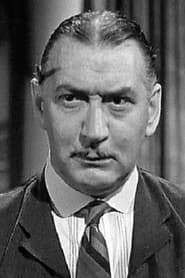
Edward Keane
Edward Keane
Domack
Edward Keane
Domack
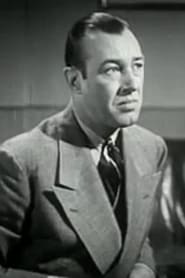
Norman Willis
Norman Willis
FBI Chief Rodt
Norman Willis
FBI Chief Rodt
Peter Dunne
Peter Dunne
Olin
Peter Dunne
Olin
Similar Movies
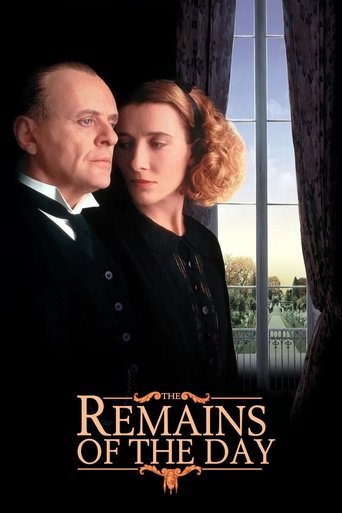
A rule-bound head butler's world of manners and decorum in the household he maintains is tested by the arrival of a housekeeper who falls in love with him in post-WWI Britain. The possibility of romance and his master's cultivation of ties with the Nazi cause challenge his carefully maintained veneer of servitude.

Budapest in the 1930s. Restaurant owner Laszlo hires pianist András to play in his restaurant. Both men fall in love with the beautiful waitress Ilona who inspires András to his only composition. His song of Gloomy Sunday is, at first, loved and then feared, for its melancholic melody sets off a chain of suicides. The fragile balance of the erotic ménage à trois is sent off kilter when the German Hans falls in love with Ilona as well.

Edward Wilson, the only witness to his father's suicide and member of the Skull and Bones Society while a student at Yale, is a morally upright young man who values honor and discretion, qualities that help him to be recruited for a career in the newly founded OSS. His dedication to his work does not come without a price though, leading him to sacrifice his ideals and eventually his family.
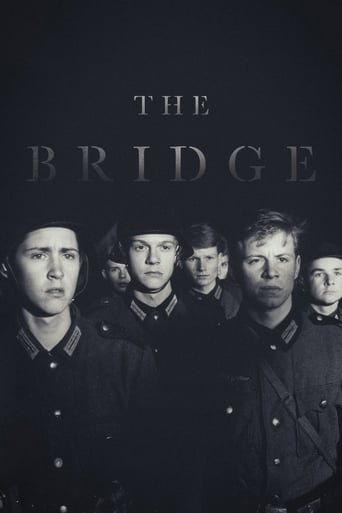
A group of German boys are ordered to protect a small bridge in their home village during the waning months of the second world war. Truckloads of defeated, cynical Wehrmacht soldiers flee the approaching American troops, but the boys, full of enthusiasm for the "blood and honor" Nazi ideology, stay to defend the useless bridge. The film is based on a West German anti-war novel of the same name, written by Gregor Dorfmeister.
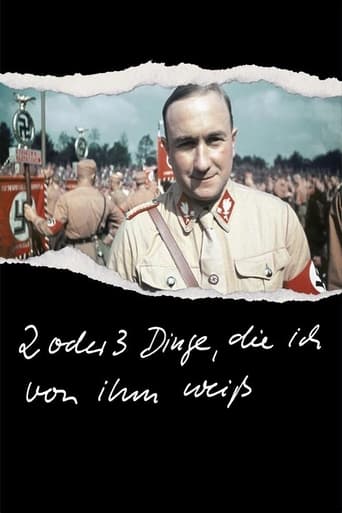
What would your family reminiscences about dad sound like if he had been an early supporter of Hitler’s, a leader of the notorious SA and the Third Reich’s minister in charge of Slovakia, including its Final Solution? Executed as a war criminal in 1947, Hanns Ludin left behind a grieving widow and six young children, the youngest of whom became a filmmaker. It's a fascinating, maddening, sometimes even humorous look at what the director calls "a typical German story." (Film Forum)
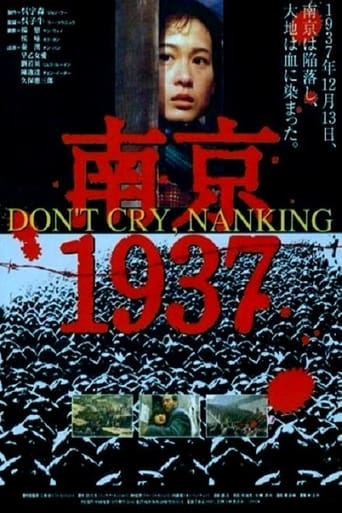
In December 1937, during the Second Japanese-Sino War, a Chinese doctor, his Japanese pregnant wife, their teenage daughter and their young son travel from Shanghai to Nanjing seeking shelter in the Capital during the Japanese invasion. The family faces the Rape of Nanking by the Imperial Japanese Army, with rapes, mass murder of prisoners of war and civilians including women, children and elders, and disrespect of international conventions.

The movie's plot is based on the true story of a group of young computer hackers from Hannover, Germany. In the late 1980s the orphaned Karl Koch invests his heritage in a flat and a home computer. At first he dials up to bulletin boards to discuss conspiracy theories inspired by his favorite novel, R.A. Wilson's "Illuminatus", but soon he and his friend David start breaking into government and military computers. Pepe, one of Karl's rather criminal acquaintances senses that there is money in computer cracking - he travels to east Berlin and tries to contact the KGB.
During the Slovak National Uprising, even ordinary people were determined to perform heroic deeds, even though they knew they were exposing themselves to great danger. The heroine of this film, a simple country woman, has a hard time paying for her bravery: she is sentenced to death, postponed for now so that she can nurse her recently born baby. She is even offered salvation if she betrays, but the presence of a member of the Soviet army infuses her with determination and hope. Early Spring belongs to the usual schematic, lifeless staged views of the subject that the communist regime has elevated to the level of sacred matter.