

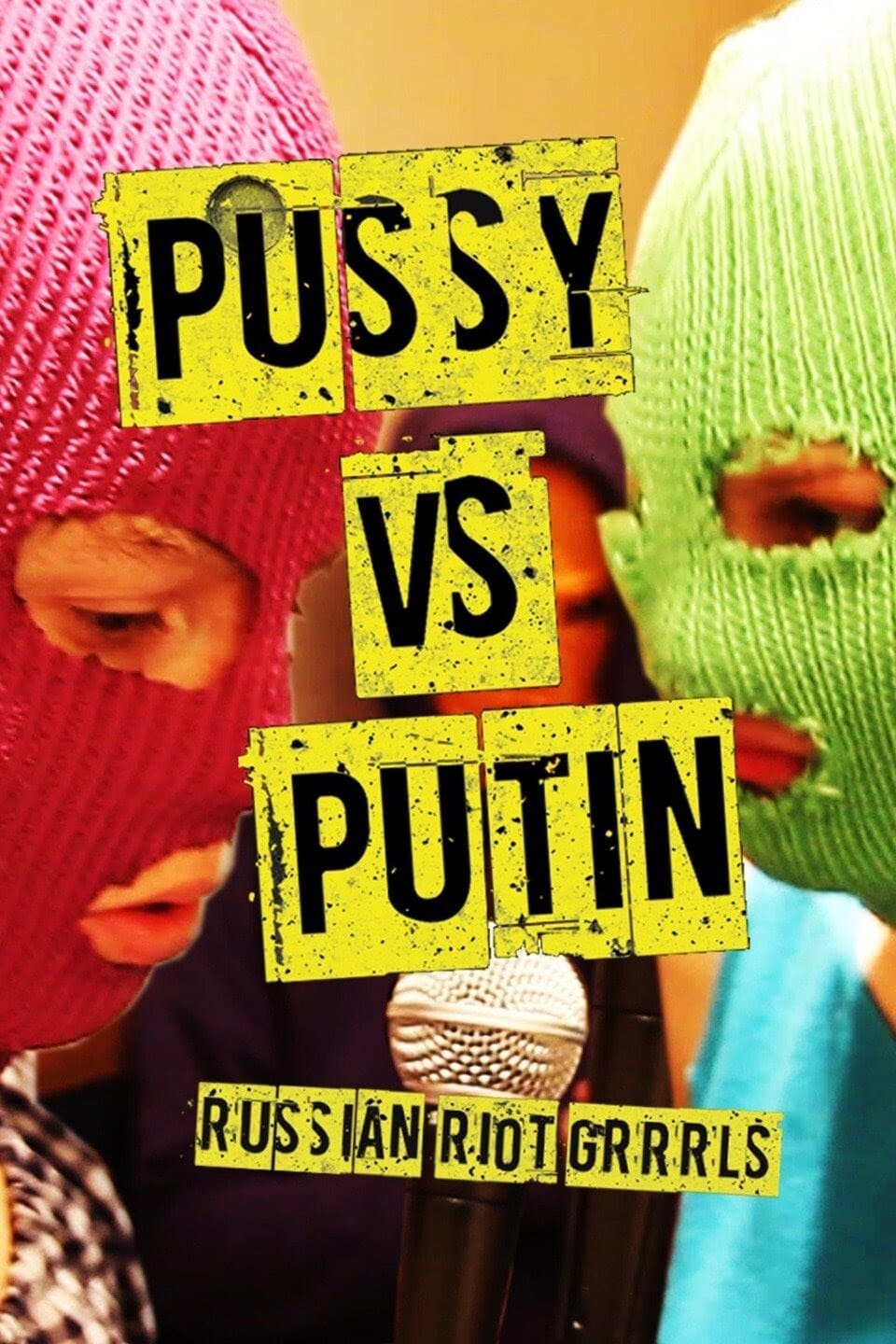
Pussy Versus Putin
Documentary · Music
Overview
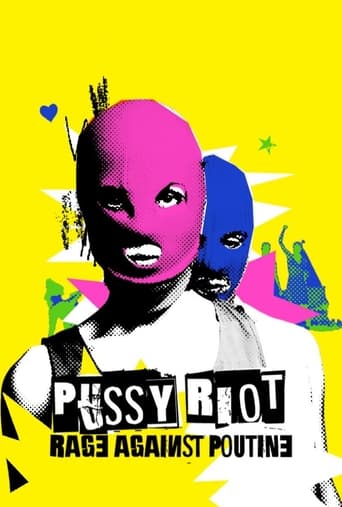
In 2012 two members of anarchistic female band Pussy Riot were sentenced to two years in a Mordovian labor camp for "hooliganism motivated by religious hatred". Russian film collective Gogol’s Wives follow each step of the feminist punk band’s battle against Putin including their first disruptive performances on a trolley bus, shooting a video about transparent elections, a controversial performance in a Red Square cathedral, and footage shot in a jail cell. Support comes from many corners including Madonna who painted the words "Pussy Riot" on her back and wore a balaclava during her Moscow show. The documentary portrays the grim state of present-day Russia, a country starkly divided between conservatism and anarchy. Pussy Riot believes that art has to be free and they're willing to take it to extremes. "Pussycat made a mess in the house," they say, and the house is Russia. The filmmakers do not seek to moralize, they simply edit events and leave viewers to draw their own conclusions.




Mariya Alyokhina
Mariya Alyokhina
Mariya Alyokhina
Mariya Alyokhina
Mariya Alyokhina

Nadezhda Tolokonnikova
Nadezhda Tolokonnikova
Nadezhda Tolokonnikova
Nadezhda Tolokonnikova
Nadezhda Tolokonnikova

Yekaterina Samutsevich
Yekaterina Samutsevich
Yekaterina Samutsevich
Similar Movies
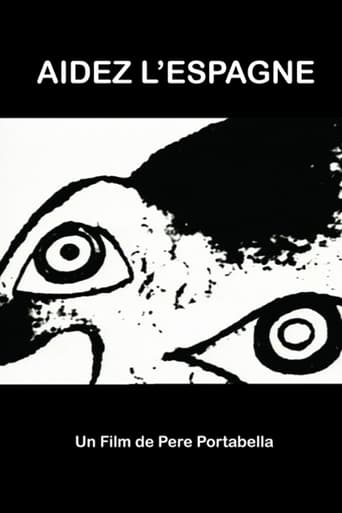
The Colegio de Arquitectos de Catalunya commissioned Pere Portabella to make this film for the Joan Miró retrospective exhibit in 1969. There were heated discussions on whether it would be prudent to screen the film during the exhibit. Portabella took the following stance: "either both films are screened or they don't screen any" and, finally, both Miro l'Altre and Aidez l'Espagne were shown. The film was made by combining newsreels and film material from the Spanish Civil War with prints by Miró from the series "Barcelona" (1939-1944). The film ends with the painter's "pochoir" known as Aidez l'Espagne.

Henry Rollins narrates Lilly Scourtis Ayers' no-holds-barred profile of volatile Bay Area punk legend Marian Anderson, whose hypnotic beauty, devil-may-care rebellion and shocking sexual exploits onstage launched her to infamy before tragically dying of a heroin overdose at the tender age of 33.
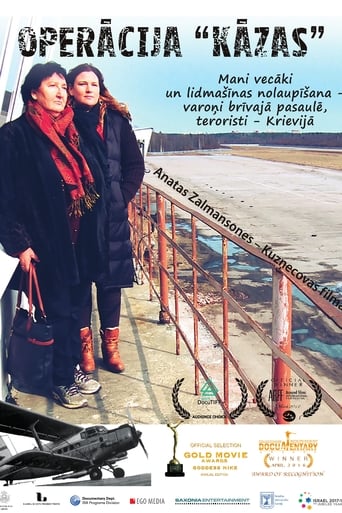
Leningrad, 1970. A group of young Jewish dissidents plot to hijack an empty plane and escape the USSR. Caught by the KGB a few steps from boarding, they were sentenced to years in the gulag and two were sentenced to death; they never got on a plane. 45 years later, filmmaker Anat Zalmanson-Kuznetsov reveals the compelling story of her parents, leaders of the group, "heroes" in the West but "terrorists" in Russia, even today.
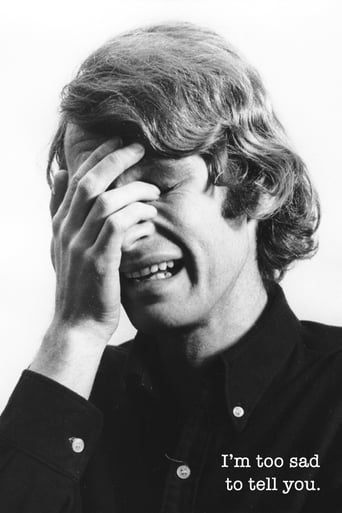
This short film is part of a mixed media artwork of the same name, which also included postcards of Ader crying, sent to friends of his, with the title of the work as a caption. The film was initially ten minutes long, and included Ader rubbing his eyes to produce the tears, but was cut down to three and a half minutes. This shorter version captures Ader at his most anguished. His face is framed closely. There is no introduction or conclusion, no reason given and no relief from the anguish that is presented.
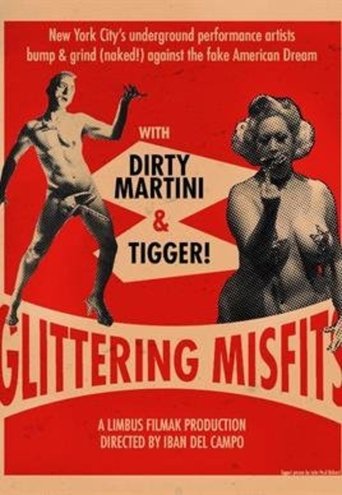
Dirty Martini and Tigger!, stars of the New York underground scene, reveal some of the secrets of their provocative and remonstrative forms of artistic expression in New York’s Off-Off-Broadway. Meanwhile, they will help us to understand from their everyday intimacy the reasons, the struggles and the keys that keep them in their place as the figures and references of the burlesque revival, more than 20 years after the phenomenon exploded in the New York of the 90s.

Following the release of Bérurier Noir's album "Concerto pour détraqués" on the Bondage label in 1985, the French punk scene began to organize itself and attract media attention. Following Bondage's example, François Hadji Lazaro founded the Boucherie Production label. The departure of bands to major companies, Bérurier Noir's lawsuit against its label Bondage, and above all the breakup of the band marked the end of an era.