

The Sounds of Kaleva
Documentary
Overview
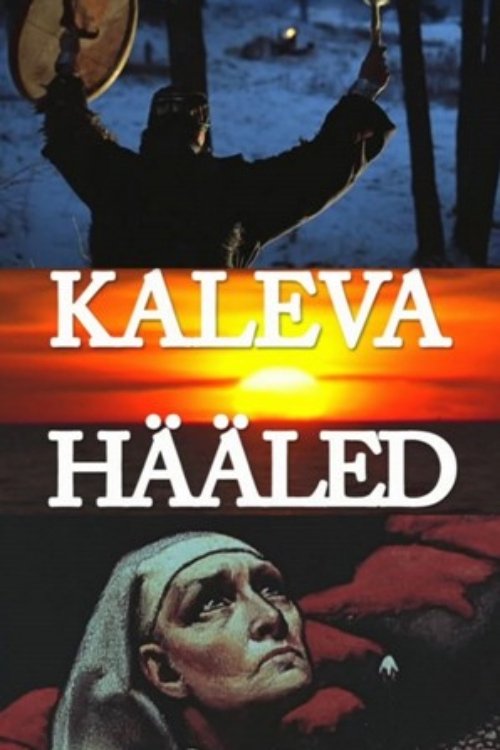
A three-act film-essay about memory and the historical-cultural ties of the Finno- Ugric peoples. The first chapter is dedicated to ancient Bearese of memory, such as Karelian cliff drawings, Kalevala runo song and Khanty bear feast rituals. the second act portrays the visit of Elias Lonnrot, compiler of the Finnish national epic Kalevala, to Estonia and his meetings with local intellectuals. Part three re-enacts an ancient smelting and blacksmith ritual set to Veljo Tormis' cantata 'curse upon iron'. Filmed in 1985 in Uhtuo, Karelia; in Khantia-Mansia at the Agan river, a tributary of the Ob; and in Estonia (Tallinn, Kuusalu, Tartu, Voru, Litsmetsa in Voru county, Lullemae, Karula, Rongu, Narva, and at a bend of the Pirita river). The third documentary in Lennart Meri's "Encyclopaedia Cinematographica Gentium Fenno - Ugricarum" series.




Tõnu Kaljuste
Tõnu Kaljuste
Arbuja
Tõnu Kaljuste
Arbuja
Heino Müller
Heino Müller
Vana sepp
Heino Müller
Vana sepp

Sulev Teppart
Sulev Teppart
Noor sepp
Sulev Teppart
Noor sepp
Similar Movies
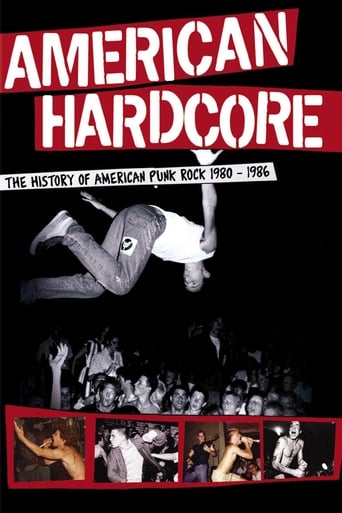
Inspired by Steven Blush's book "American Hardcore: A tribal history" Paul Rachman's feature documentary debut is a chronicle of the underground hardcore punk years from 1979 to 1986. Interviews and rare live footage from artists such as Black Flag, Bad Brains, Minor Threat, SS Decontrol and the Dead Kennedys.
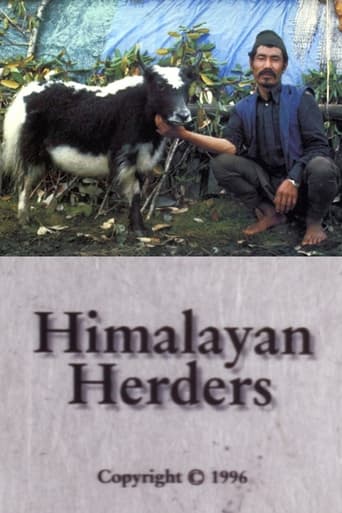
John Bishop and Naomi Bishop present a portrait a peculiar life style of the Himalayan indigenous Sherpa people in their documentary , the Himalayan Herders. The 76 minutes long film is about the diverse culture and life style of herders community near Mt. Everest region of Nepal.The film was made in 1997 as a part of Case Studies in Cultural Anthropology Series.
In 1968, the fury and violence of the Democratic National Convention in Chicago propelled us toward a tipping point in politics. Martin Luther King Jr. and Robert F. Kennedy were assassinated, America suffered its bloodiest year in Vietnam and drugs seduced us. Yet idealism--and hope--flourished. Explore the significance of that turbulent year and the way it continues to affect the American landscape. Tom Brokaw offers his perspective on the era and shares the rich personal odysseys of some of the people who lived through that chaotic time, along with the stories of younger people now experiencing its aftershocks. Includes archival footage and interviews with former Atlanta Mayor Andrew Young, who was talking to King when he was assassinated and rushed to his side to try to staunch the wound; Olympic gold medalist Rafer Johnson, who wrestled RFKs' assassin to the ground; and Arlo Guthrie, best known for his song "Alice's Restaurant.

An unprejudiced portrait of Spanish folklore and a crude analysis in black and white of its intimate relationship with atavism and superstition, with violence and pain, with blood and death; a story of terror, a journey to the most sinister and ancestral Spain; the one that lived far from the most visited tourist destinations, from the economic miracle and unstoppable progress, relentlessly promoted by the Franco regime during the sixties.
The film discusses the traits and originators of some of metal's many subgenres, including the New Wave of British Heavy Metal, power metal, Nu metal, glam metal, thrash metal, black metal, and death metal. Dunn uses a family-tree-type flowchart to document some of the most popular metal subgenres. The film also explores various aspects of heavy metal culture.
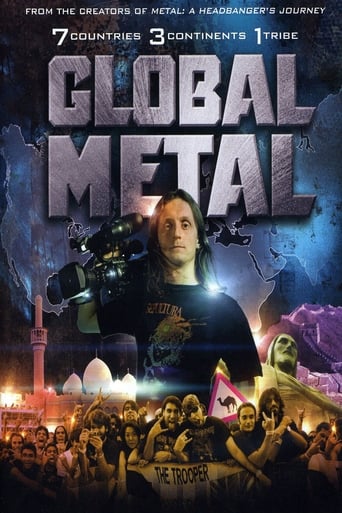
In GLOBAL METAL, directors Scot McFadyen and Sam Dunn set out to discover how the West's most maligned musical genre - heavy metal - has impacted the world's cultures beyond Europe and North America. The film follows metal fan and anthropologist Sam Dunn on a whirlwind journey through Asia, South America and the Middle East as he explores the underbelly of the world's emerging extreme music scenes; from Indonesian death metal to Chinese black metal to Iranian thrash metal. GLOBAL METAL reveals a worldwide community of metalheads who aren't just absorbing metal from the West - they're transforming it - creating a new form of cultural expression in societies dominated by conflict, corruption and mass-consumerism.
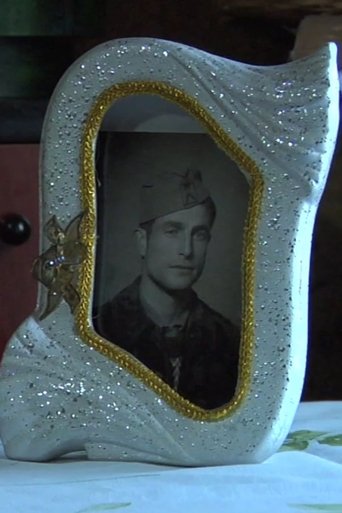
Avelino Chillarón was 12 or 13 years old when he realized that his surnames and those of his cousins didn't match, so he decided to ask his uncle. This is how he learned that, although his father and aunt were siblings, they didn't have the same father, so he and his cousins didn't share the same grandfather. In this way, Avelino realized that there was a part of his family he didn't know. The protagonist of this story feels partially mutilated from a part of his family history, a part that was taken away from him by a regime that established, over the years, a long period of widespread social amnesia about a series of corpses and missing persons throughout the spanish geography.
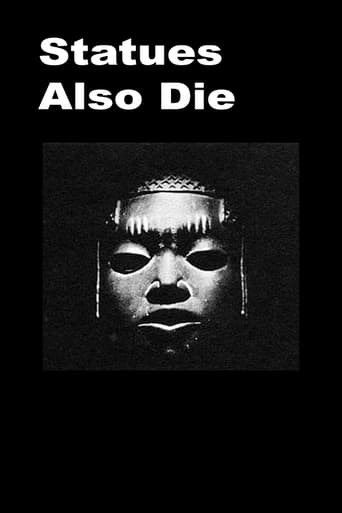
Commissioned by the journal Présence Africaine, this short documentary examines how African art is devalued and alienated through colonial and museum contexts. Beginning with the question of why African works are confined to ethnographic displays while Greek or Egyptian art is celebrated, the film became a landmark of anti-colonial cinema and was banned in France for eight years.
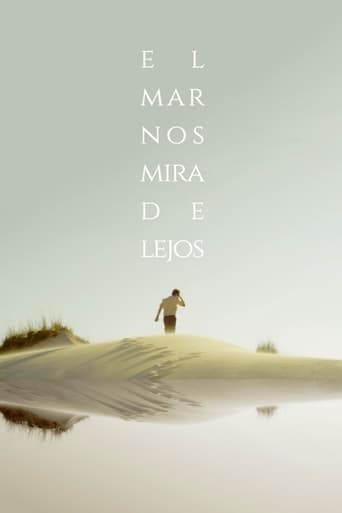
Huelva, Spain, an isolated region lost in time. The grass, the sand and the sky are the same that those foreigners saw in the spring of 1895, when they crossed the sea from a distant country to mark the unspoiled terrain and extract its wealth, when the tower was new, when people could climb to the top of the highest dune and imagine that the city of Tartessos was still there, in the distance, almost invisible in the morning brume.