


Drama · History · War
Overview
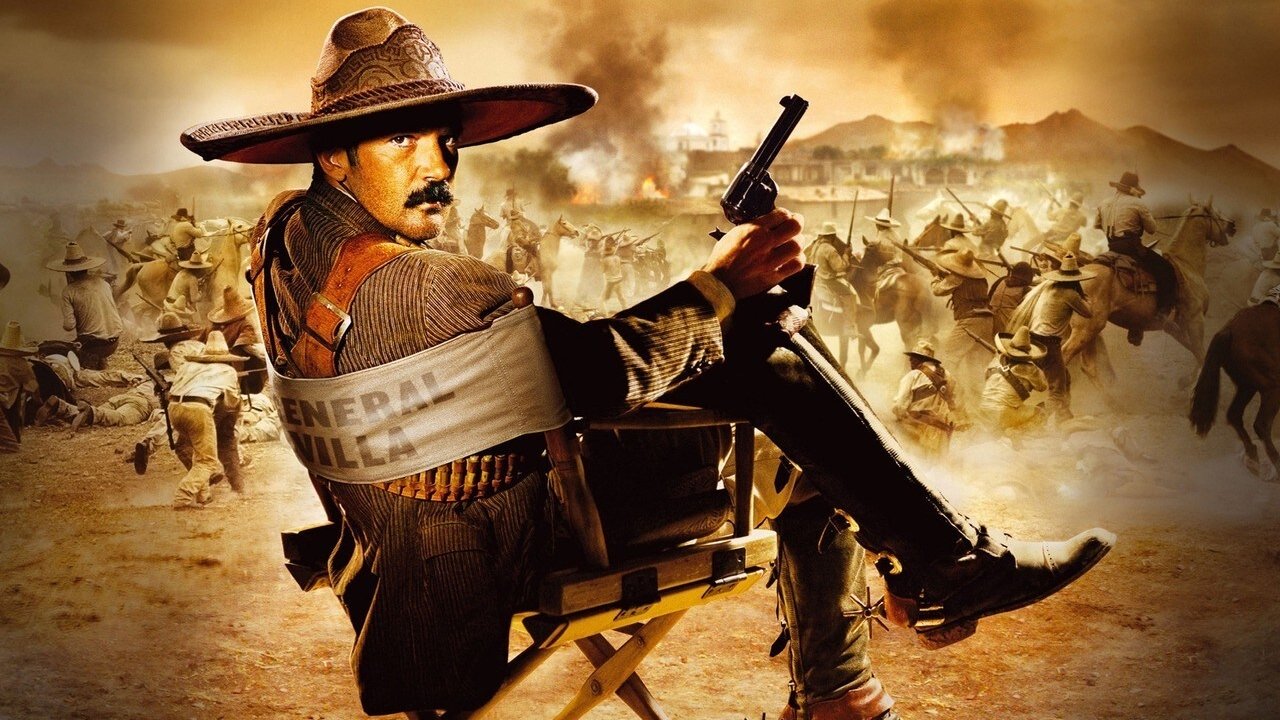
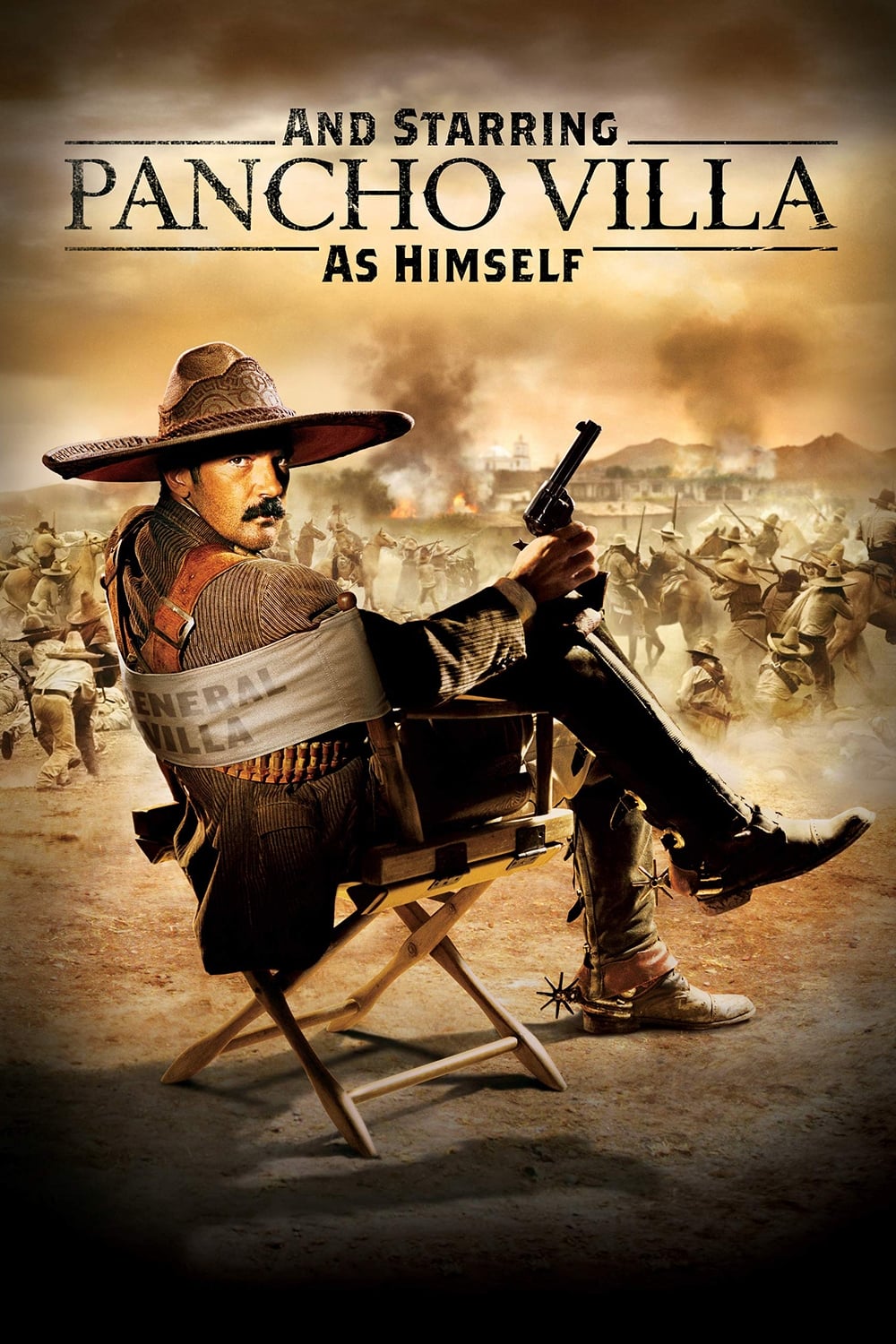
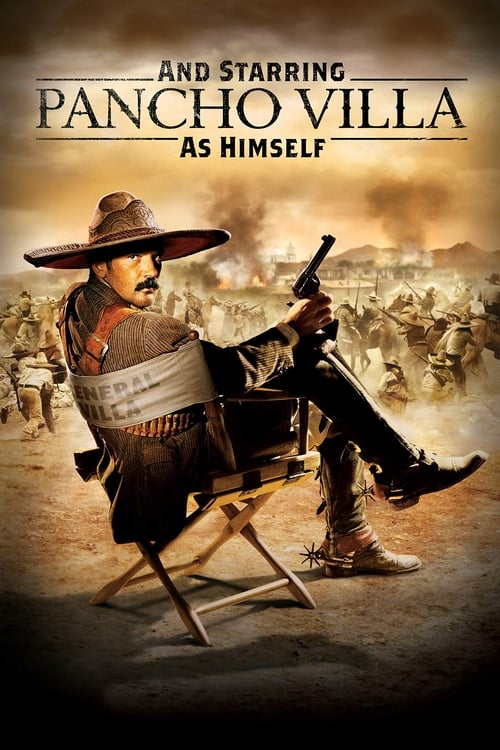
In 1914, the Mexican revolutionary Pancho Villa invites studios to shoot his actual battles against Porfírio Diaz army to raise funds for financing guns and ammunition. The Mutual Film Corporation, through producer D.W. Griffith, interests for the proposition and sends the filmmaker Frank Thayer to negotiate a contract with Pancho Villa himself.
Top Cast

Antonio Banderas
Pancho Villa

Eion Bailey
Frank Thayer

Alan Arkin
Sam Drebben
Jim Broadbent
Harry Aitken

Matt Day
John Reed

Michael McKean
William Christy Cabanne

Kyle Chandler
Raoul Walsh

Alexa Davalos
Teddy Sampson

Colm Feore
D. W. Griffith

Anthony Stewart Head
William Benton

Saul Rubinek
Eli Morton
Lilia Zelinna
Rosita











Antonio Banderas
Antonio Banderas
Pancho Villa
Antonio Banderas
Pancho Villa
Eion Bailey
Eion Bailey
Frank Thayer
Eion Bailey
Frank Thayer
Alan Arkin
Alan Arkin
Sam Drebben
Alan Arkin
Sam Drebben
Jim Broadbent
Jim Broadbent
Harry Aitken
Jim Broadbent
Harry Aitken
Matt Day
Matt Day
John Reed
Matt Day
John Reed
Michael McKean
Michael McKean
William Christy Cabanne
Michael McKean
William Christy Cabanne
Kyle Chandler
Kyle Chandler
Raoul Walsh
Kyle Chandler
Raoul Walsh
Alexa Davalos
Alexa Davalos
Teddy Sampson
Alexa Davalos
Teddy Sampson
Colm Feore
Colm Feore
D. W. Griffith
Colm Feore
D. W. Griffith
Anthony Stewart Head
Anthony Stewart Head
William Benton
Anthony Stewart Head
William Benton
Similar Movies
During the Mexican Revolution, the people tired of living in poverty and enduring the atrocities committed by the federals, decide to follow one of their own, General Demetrio Macias, a thief with tricks he learned in jail and who along with "La Pintada" decides to take his people to victory. Led by Captain Anastacio Montañez, the newly formed army fight and honor their code at the same time as they loot houses to spread the wealth.
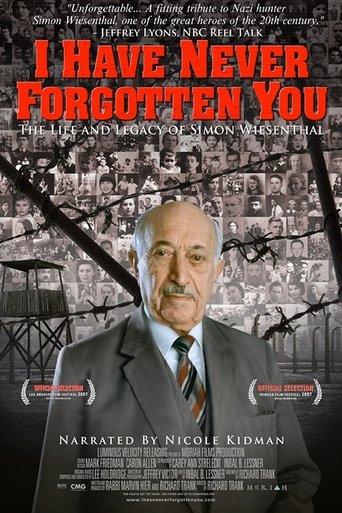
"I Have Never Forgotten You" is a comprehensive look at the life and legacy of Simon Wiesenthal, the famed Nazi hunter and humanitarian. Narrated by Academy Award winning actress Nicole Kidman, it features interviews with longtime Wiesenthal associates, government leaders from around the world, friends and family members--many of whom have never discussed the legendary Nazi hunter and humanitarian on camera. Previously unseen archival film and photos also highlight the film. What was the driving force behind his work? What kept him going when for years the odds were against his efforts? What is his legacy today, more than 60 years after the end of World War Two?
It is 1945. Enrico Piaggio’s Pontedera factory is in ruins and the 12,000 people who worked there are condemned to unemployment and misery. Piaggio feels the enormous responsibility resting on his shoulders: the lives of so many families depend on his ability to create new jobs. A project is born in the mind of the entrepreneur: a small, robust, agile and affordable means of transport, capable of relaunching mobility, giving impetus to the recovery of the country’s economic and civil life. To make this dream come true, Piaggio turns to engineer Corradino D’Ascanio, a brilliant designer who uses the experience gained in the field of aeronautics to create the scooter that remains today the symbol of Italian creativity and design: the Vespa!