

I Still Being
Documentary · Music
Overview
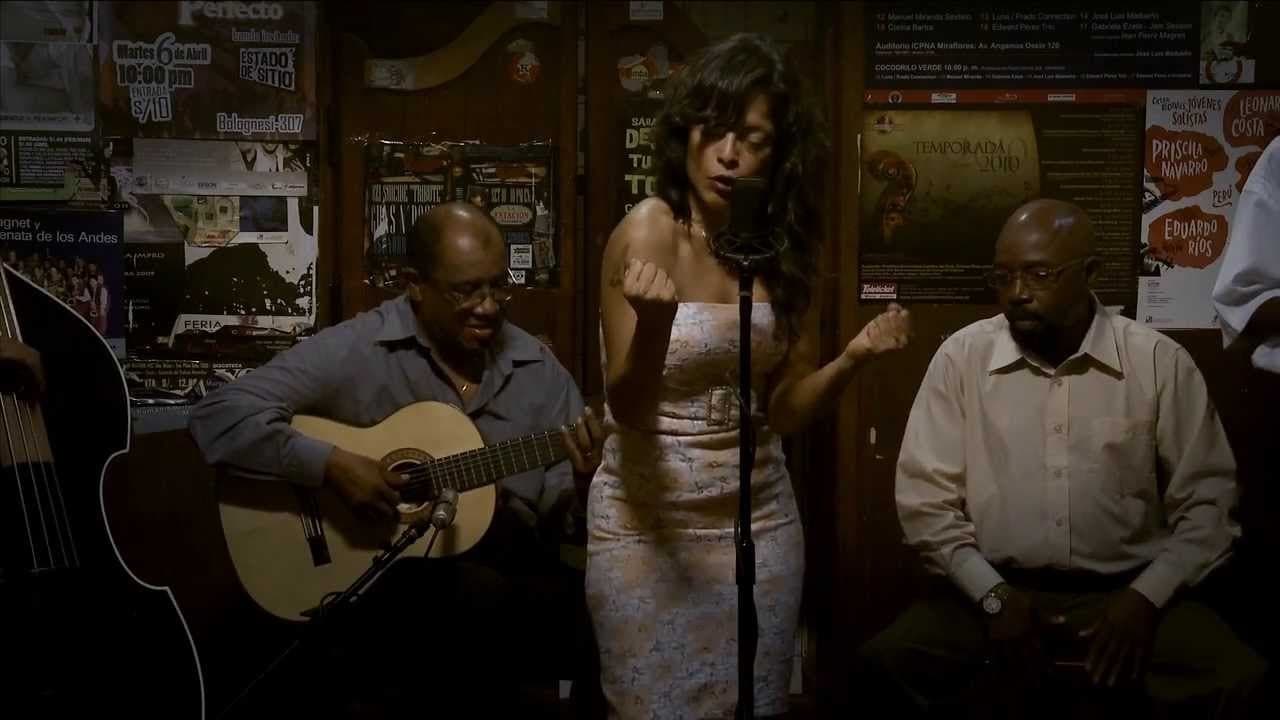
A trip through the diversity of black and native Peruvian music. Character-driven film, one where the characters are integral to the nation itself. This movie delves into music and musicians, yet it's not strictly a musical; rather, it's a tapestry of seemingly disparate personal narratives woven together in a country also striving to define itself and sketch its identity



Amelia Panduro
Amelia Panduro
Amelia Panduro
César Calderón
César Calderón
César Calderón
Jaime Guardia
Jaime Guardia
Jaime Guardia
Máximo Damián
Máximo Damián
Máximo Damián
Andrés Lares
Andrés Lares
Andrés Lares

Magaly Solier
Magaly Solier
Herself
Magaly Solier
Herself
Amelia Panduro
Amelia Panduro
Herself
Amelia Panduro
Herself
César Calderón
César Calderón
Himself
César Calderón
Himself
Jaime Guardia
Jaime Guardia
Himself
Jaime Guardia
Himself
Máximo Damián
Máximo Damián
Himself
Máximo Damián
Himself
Similar Movies
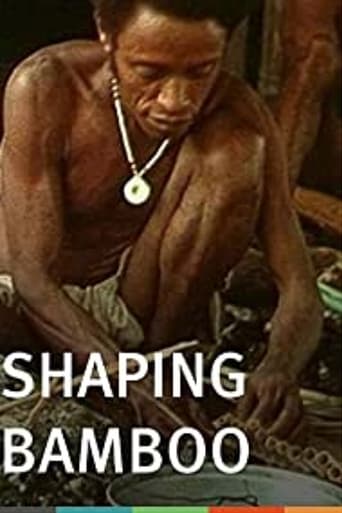
For the 'Are'are people of the Solomon Islands, the most valued music is that of the four types of panpipe ensembles. With the exception of slit drums, all musical instruments are made of bamboo; therefore the general word for instruments and the music performed with them is "bamboo" ('au). This film shows the making of panpipes, from the cutting the bamboo in the forest to the making of the final bindings. The most important part of the work consists in shaping each tube to its necessary length. Most 'Are'are panpipe makers measure the length of old instruments before they shape new tubes. Master musician 'Irisipau, surprisingly, takes the measure using his body, and adjusts the final tuning by ear. For the first time we can see here how the instruments and their artificial equiheptatonic scale-seven equidistant degrees in an octave-are practically tuned.
Don Emilio is a humble, 63-year-old man who lives in the Amazon rainforest, seven miles from the city of Iquitos, Peru. For all of his adult life he has worked as a curandero and vegetalista, a traditional healer. He estimates that in his career he has treated more than 2,500 clients. Through the camera lens of anthropologist Luis Eduardo Luna, Don Emilio tells us about his practice, his beliefs, his community, and his life. He shows us how he prepares ayahuasca and other herbal medicines. Finally, we see Don Emilio treat a man who has come to him for help, and hear from a poor woman who has brought her infant son for medical care.
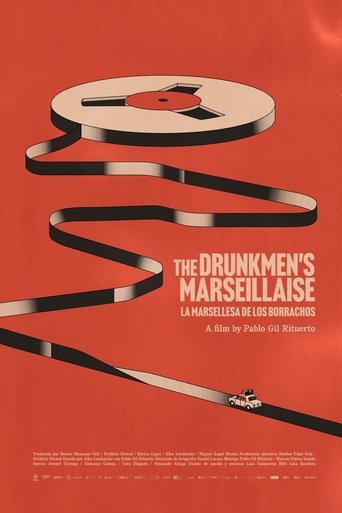
In the summer of 1961, a group of young Italian anthropologists made a clandestine journey through Spain, in order to record popular songs that supported anti-Franco resistance. As a result of their work, they were prosecuted and their recordings were censored. Sixty years later, and guided by Emilio Jona, aged 92, the last living member of that group of travellers, we recover the unpublished recordings and reconstruct the journey, today, across an emotional and political landscape, regaining historical memories through these songs, as relevant today as they were then.
In the panorama of Kurdish music, Koma Berxwedan (Group Resistance) is one of the most interesting, innovative, experimental groups. To a deep love for music research the group has always associated a strong political commitment. Some of its members have joined the PKK guerrillas in the mountains of Kurdistan. Three of them died in combat. Some have been forced to live in exile and others continued to challenge the Turkish authorities by carrying out their work in Kurdistan.
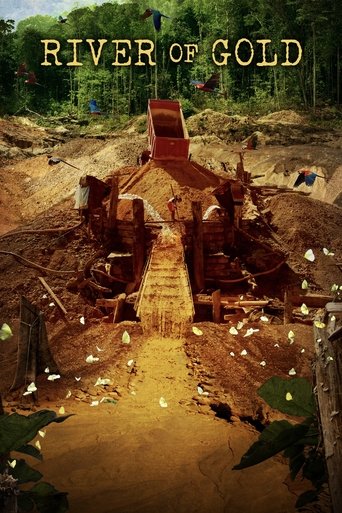
Narrated by Academy Award winners Sissy Spacek and Herbie Hancock, River of Gold is the disturbing account of a clandestine journey into Peru's Amazon rainforest to uncover the savage unraveling of pristine jungle. What will be the fate of this critical region of priceless biodiversity as these extraordinarily beautiful forests are turned into a hellish wasteland?
Karel Plicka was also cinematographer of this short movie. Editor in charge was Alexander Hackenschmied. There is an extraordinary emotional charge, every shot is working on its own, such as photographs, paintings and poetic complement intertitles in this short. From the perspective of nature and the perspective is shifting to the people and their habits, work and clothes. Peculiar documentary shots underscore Ruthenians (men, women and children) who are interested in looking into the camera and the curious "eye" showing off their habits.