

De occulta philosophia
Documentary · Music
Overview
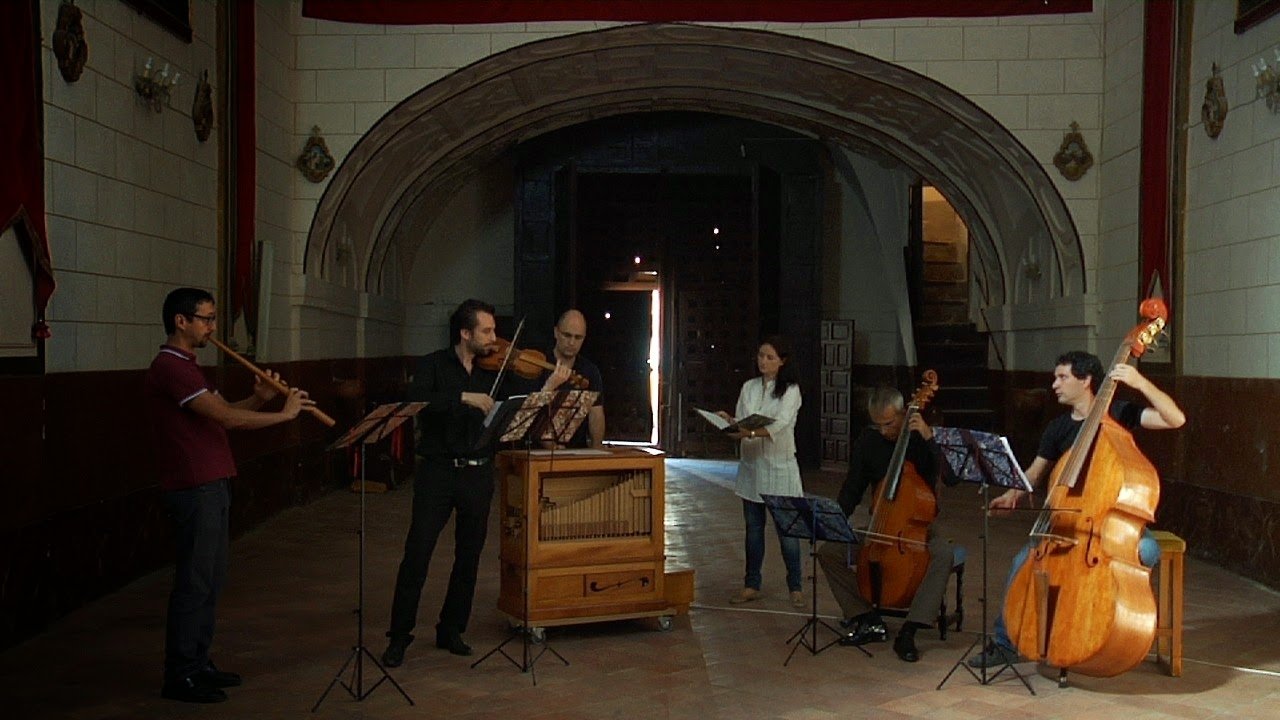
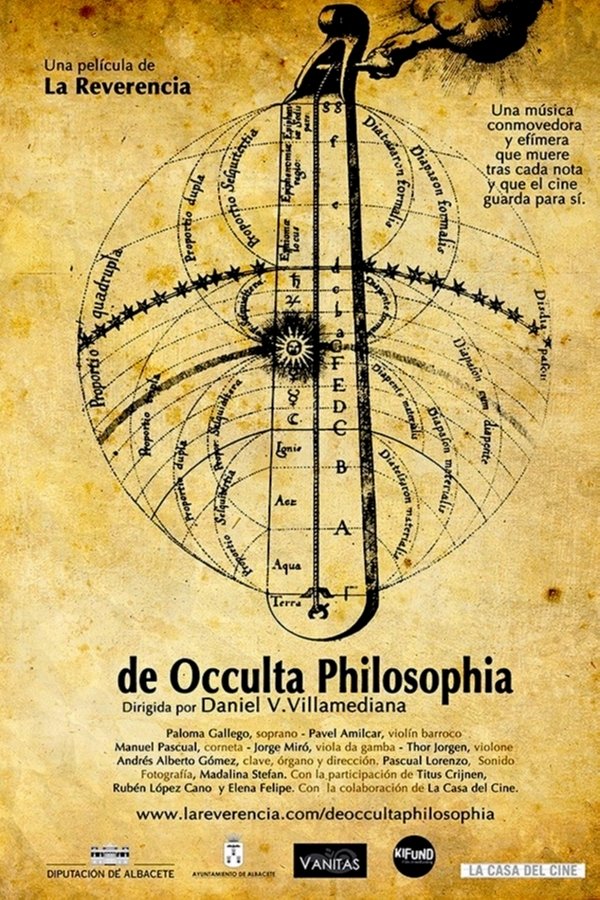
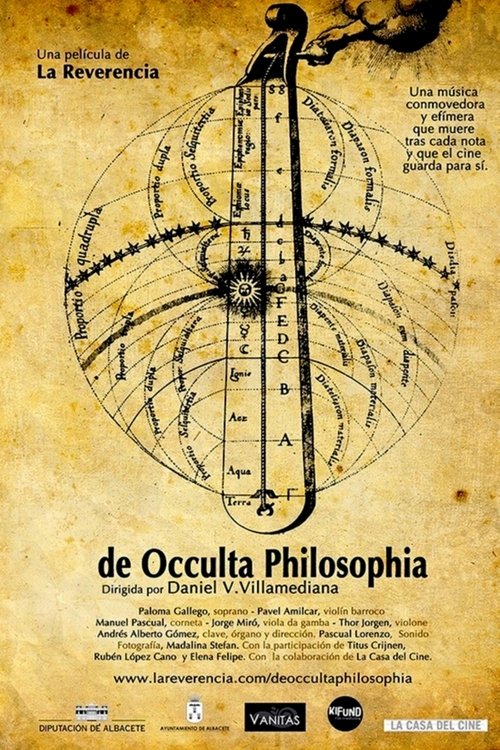
A memorable intellectual journey to rediscover Baroque music, from the handmade fabrication of a harpsichord by master luthier Titus Crijnen to the interpretation of several scores by Bach and other Baroque composers by the Spanish ensemble La Reverencia.
Top Cast



Paloma Gallego
Paloma Gallego
Herself - Singer
Paloma Gallego
Herself - Singer
Pavel Amilcar
Pavel Amilcar
Himself - Musician
Pavel Amilcar
Himself - Musician
Manuel Pascual
Manuel Pascual
Himself - Musician
Manuel Pascual
Himself - Musician
Jorge Miró
Jorge Miró
Himself - Musician
Jorge Miró
Himself - Musician
Thor Jorgen
Thor Jorgen
Himself - Musician
Thor Jorgen
Himself - Musician
Andrés Alberto Gómez
Andrés Alberto Gómez
Himself - Musician
Andrés Alberto Gómez
Himself - Musician
Titus Crijnen
Titus Crijnen
Himself - Luthier
Titus Crijnen
Himself - Luthier
Rubén López Cano
Rubén López Cano
Himself - Musicologist
Rubén López Cano
Himself - Musicologist
Elena Felipe
Elena Felipe
Herself - Painter
Elena Felipe
Herself - Painter
Similar Movies
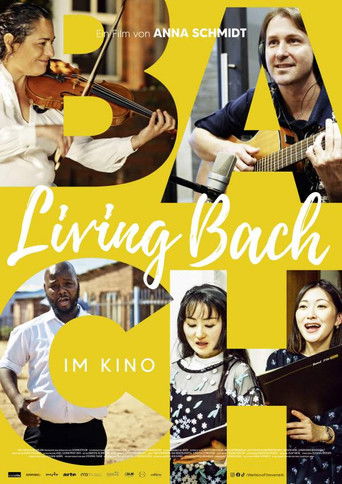
There are more than 300 Bach choirs and Bach ensembles worldwide, most of which are made up of amateurs. For many, their lives are inextricably linked with the music of Johann Sebastian Bach. What do people seek and find in his music? What connects them across continents? What fascination lies in the music of the famous German composer, which manages to transcend borders, cultures, religions and centuries? The film embarks on a journey through six continents to meet amateur musicians and singers who have made Bach their "centerpiece".
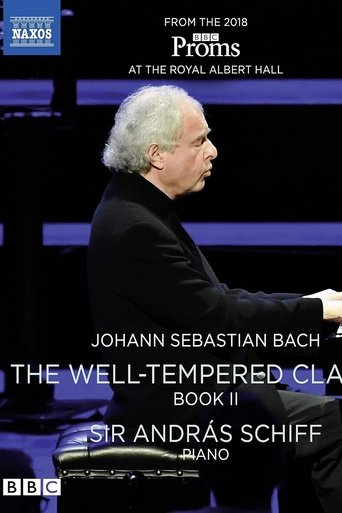
Distinguished Bach specialist Sir András Schiff returned to the BBC Proms in 2018 to present Book II of The Well-Tempered Clavier. Bach's effortless brilliance and new-found sonorities push harmony and counterpoint further than ever with a combination of ancient and modern styles, church austerity and galant lightness. Schiff has said that no-one combines the sacred and the secular as Bach does, and this is comprehensively demonstrated in Bach's fascinating and challenging sequence. This performance in the Royal Albert Hall was described as a musical meditation for our troubled times by the Independent.
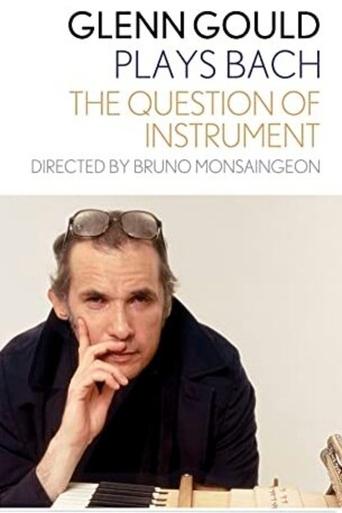
Part I of the series "Glenn Gould Plays Bach" is devoted to Bach's "Art of Fugue." Gould's performance is followed by a lively repartee with Monsaingeon, in which the pianist provides dazzling insights illustrated by music examples. He explains, for example, why he plays some pieces extremely slowly, and bemoans the "musicological overkill" of scholars who insist that Bach's keyboard music should only be played on a harpsichord.

In this 130-minute documentary film, Dr. David Chin will be joined by 15 prominent German Bach scholars and musicians and visit the important Bach-landmarks throughout Central Germany, discovering the interesting stories and wonderful music of Johann Sebastian Bach, with musical excerpts performed by renowned musicians from Malaysia, Singapore, Hong Kong, the United States, Germany, Switzerland, the Netherlands, and others.

Leipzig, December 1734: Christmas brings the Bach family together. The first snow has fallen and the children Gottfried and Elisabeth are delighted about the arrival of their older brothers Friedemann and Emanuel. The Thomaskantor has retired to his music room. Anna Magdalena supports her husband, as there are only a few days left and his latest work, the six-part "Christmas Oratorio", must be finished on time. It is awaited with suspicion by the city council and the gentlemen of the consistory, who have long found Bach's waywardness a thorn in their side and fear that, after the premiere of the St. Matthew Passion a few years earlier, the St. Thomas Church will once again be filled with "operatic" music. With the oratorio, Johann Sebastian Bach hopes that he will finally become court composer in Dresden. And, as always, he demands that all members of the family join forces to help him. But differences of opinion are increasingly delaying the completion of Bach's most famous work.

A beautiful, sometimes faintly bonkers celebration and contemplation of the role Bach’s music plays in the world today. Blending historical reconstruction with very loosely linked ‘dramatic’ scenes and documentary sequences, the film constitutes a playful, painterly sequence of variations on the argument that Johann Sebastian changed the way the world hears thanks to his extraordinary ear for harmony.