

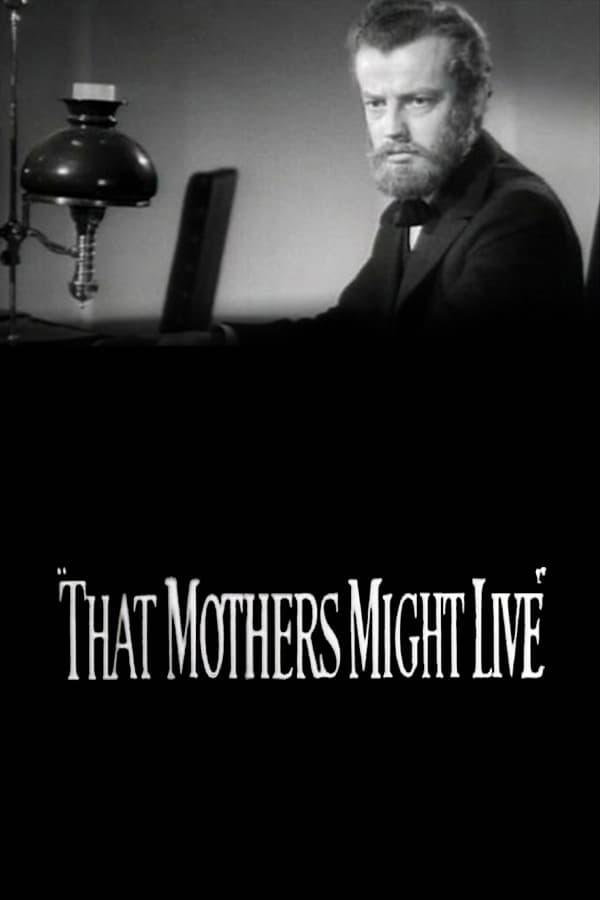
That Mothers Might Live
Drama
Overview
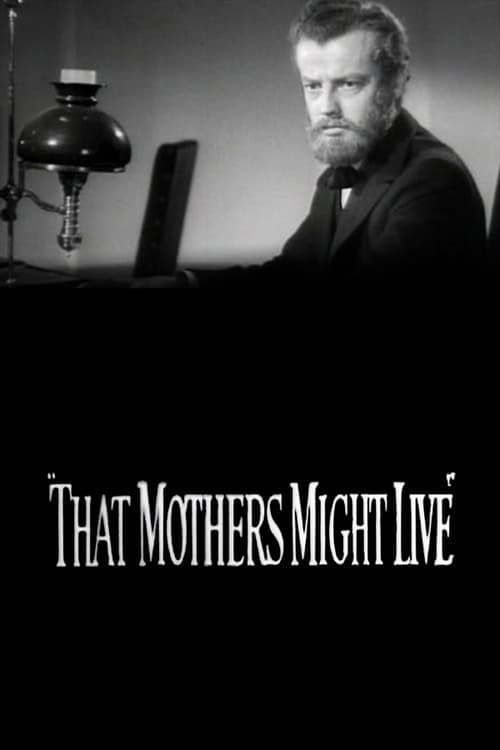
That Mothers Might Live is a 1938 American short drama film directed by Fred Zinnemann. The short is a brief account of Hungarian physician Ignaz Semmelweis and his discovery of the need for cleanliness in 19th-century maternity wards, thereby significantly decreasing maternal mortality, and of his struggle to gain acceptance of his idea. Although Semmelweis ultimately failed in his lifetime, later scientific luminaries advanced his work in spirit like microbiologist Louis Pasteur, who provided a scientific theoretical explanation of Semmelweis' observations by helping develop the germ theory of disease and the British surgeon, Dr. Joseph Lister who revolutionized medicine putting Pasteur's research to practical use. In 1939, at the 11th Academy Awards, the film won an Oscar for Best Short Subject (One-Reel).
Top Cast

John Nesbitt
Narrator (voice)
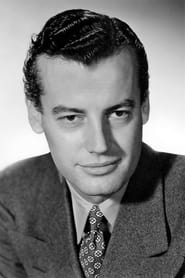
Shepperd Strudwick
Dr. Semmelweis
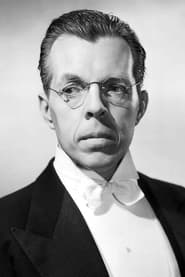
Rudolph Anders
Doctor (uncredited)
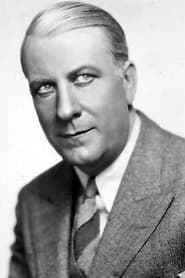
King Baggot
Passerby (uncredited)
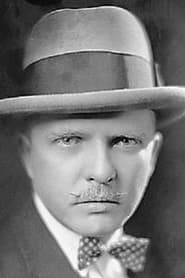
William Bailey
Passerby (uncredited)
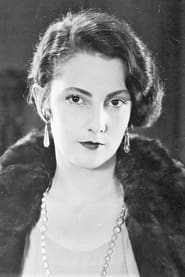
Barbara Bedford
Nun Reading Book (uncredited)
Ralph Brooks
Medical Student at Lecture (uncredited)
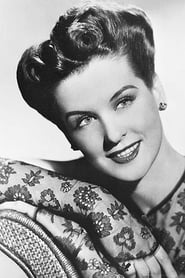
Mary Howard
Young Stricken Mother (uncredited)
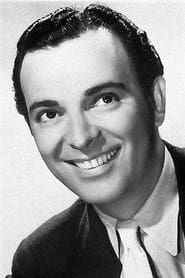
Leonard Penn
Semmelweis' Assistant (uncredited)
Beatrice Roberts
Passerby (uncredited)
Edward Van Sloan
Hospital Chief of Staff (uncredited)
E. Alyn Warren
Professor (uncredited)









John Nesbitt
John Nesbitt
Narrator (voice)
John Nesbitt
Narrator (voice)
Shepperd Strudwick
Shepperd Strudwick
Dr. Semmelweis
Shepperd Strudwick
Dr. Semmelweis
Rudolph Anders
Rudolph Anders
Doctor (uncredited)
Rudolph Anders
Doctor (uncredited)
King Baggot
King Baggot
Passerby (uncredited)
King Baggot
Passerby (uncredited)
William Bailey
William Bailey
Passerby (uncredited)
William Bailey
Passerby (uncredited)
Barbara Bedford
Barbara Bedford
Nun Reading Book (uncredited)
Barbara Bedford
Nun Reading Book (uncredited)
Ralph Brooks
Ralph Brooks
Medical Student at Lecture (uncredited)
Ralph Brooks
Medical Student at Lecture (uncredited)
Mary Howard
Mary Howard
Young Stricken Mother (uncredited)
Mary Howard
Young Stricken Mother (uncredited)
Leonard Penn
Leonard Penn
Semmelweis' Assistant (uncredited)
Leonard Penn
Semmelweis' Assistant (uncredited)
Beatrice Roberts
Beatrice Roberts
Passerby (uncredited)
Beatrice Roberts
Passerby (uncredited)
Similar Movies
Set six months after a deadly outbreak has all but ended the human race, a man and woman have survived by isolating themselves in a remote cabin and never opening the door. Now they don’t have a choice. Starved for resources, they must confront the horrors that threaten them… but what’s inside may be even more toxic than what remains outside. When it all ends, this is what remains.
The novelist Shiga Naoya lives with his wife Haruko and their 4-year-old daughter Saeko. He is paranoid about Saeko’s health, making her wear heavy clothes even in summer in order to prevent her from catching a cold. Their child before Saeko died due to an epidemic, and he believes thorough enforcement is a natural consequence. In 1918, the Spanish flu reaches Japan. As the number of infected people grows, Shiga starts to suspect their servant Ishi might have gone to watch a travelling entertainment troupe’s performance which drew a great number of villagers. It is something Ishi is likely to do. But when Shiga questions her, she says that she did not go. However, she makes him have misgivings on a regular basis and he decides to take this opportunity to make her quit. An uproar ensues. Shiga feels that he has become a tyrant and refrains from kicking her out but he loses all reason and faith in humanity amid the pandemic…
Claire is a midwife and has devoted her life to others. At a moment when she is preoccupied by the imminent closure of the maternity clinic where she works, her life is further turned upside down when Béatrice, her father's former mistress, turns up on the scene. Béatrice is a capricious and selfish woman, Claire's exact opposite.
Robert Neville is a scientist who was unable to stop the spread of the terrible virus that was incurable and man-made. Immune, Neville is now the last human survivor in what is left of New York City and perhaps the world. For three years, Neville has faithfully sent out daily radio messages, desperate to find any other survivors who might be out there. But he is not alone.
A journalist lives his smooth citizen life, married to a woman from respected family. But, conflicts with manager at work are becoming more often, his marriage is unstable and the outer manifestation of all this is a strange skin disease. Doctors recommend resting in nature and self-examination. In the mountains, in a lonely house near the lake, he meets a woman, also unadjusted and lonely. The consequences of this encounter are beneficial. Capable to love again, he gets his moral strength, and disease retreats. He breaks off his contacts with his wife's family and with "petit bourgeois" of his former life, confronts his boss and wins, realizing that this is only a first victory which has straightened him up.
Vada Sultenfuss is obsessed with death. Her mother is dead, and her father runs a funeral parlor. She is also in love with her English teacher, and joins a poetry class over the summer just to impress him. Thomas J., her best friend, is "allergic to everything", and sticks with Vada despite her hangups. When Vada's father hires Shelly, and begins to fall for her, things take a turn to the worse...
An unprecedented epidemic of rabies is breaking out in the taiga. Infected wolves become more and more ferocious, and even the slightest bite brings certain death. At the same time, a desperate father decides to forcibly isolate his son in one of the hunting lodges in order to save him from addiction. Soon, he and several local residents will have to fight not only with a rabid pack, but also with the most dangerous predator of the forest.