

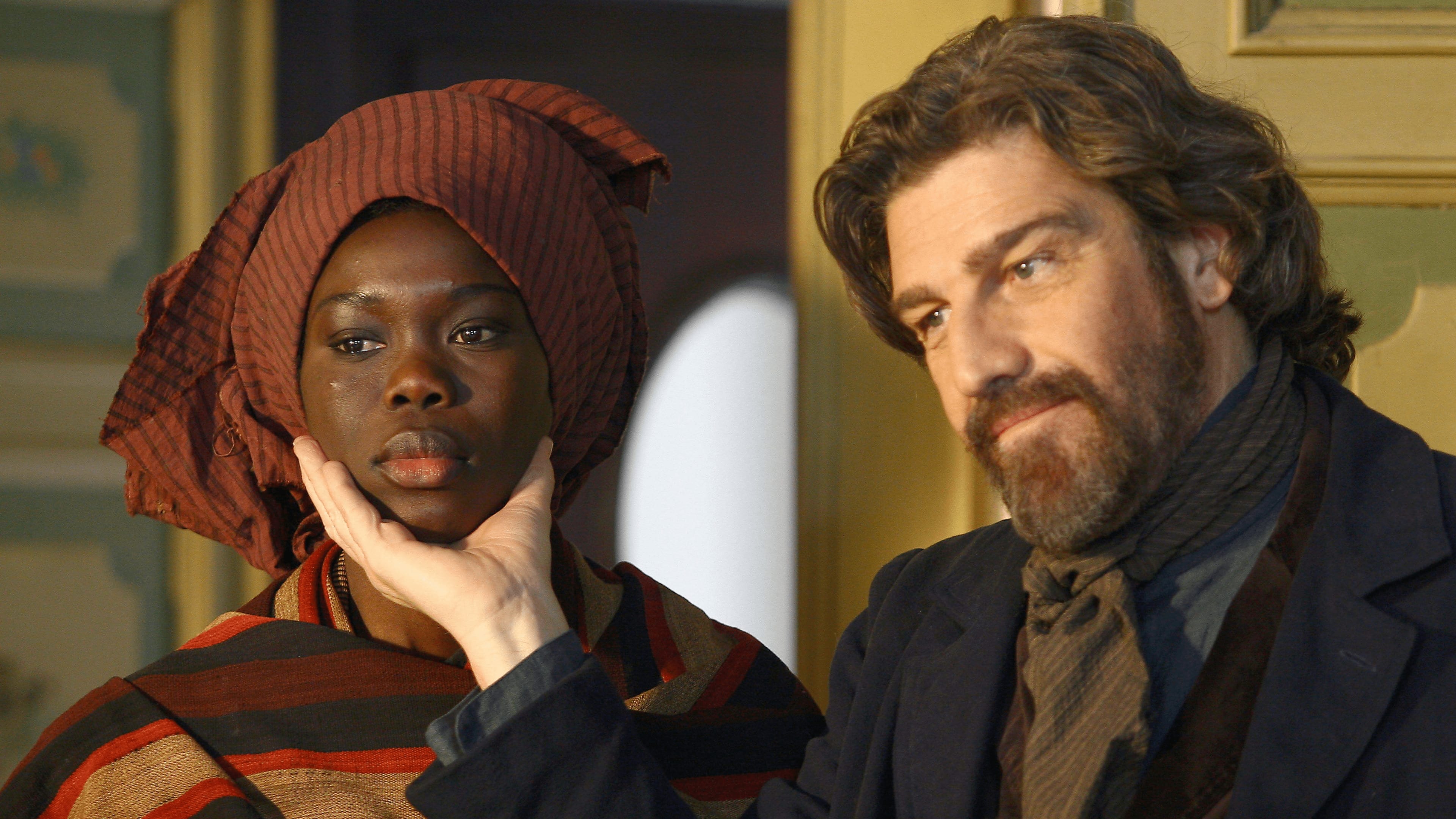

Bakhita
History · Adventure
Overview
Born in a village in Sudan, kidnapped by slavers, often beaten and abused, and later sold to Federico Marin, a Venetian merchant, Bakhita then came to Italy and became the nanny servant of Federico's daughter, Aurora, who had lost her mother at birth. She is treated as an outcast by the peasants and the other servants due to her black skin and African background, but Bakhita is kind and generous to others. Bakhita gradually comes closer to God with the help of the kind village priest, and embraces the Catholic faith. She requests to join the order of Canossian sisters, but Marin doesn't want to give her up as his servant, treating her almost as his property. This leads to a moving court case that raised an uproar which impacts Bakhita's freedom and ultimate decision to become a nun. Pope John Paul II declared her a saint in the year 2000.






Fatou Kine Boye
Fatou Kine Boye
Bakhita
Fatou Kine Boye
Bakhita

Teresa Acerbis
Teresa Acerbis
Suor Teresa
Teresa Acerbis
Suor Teresa
Ettore Bassi
Ettore Bassi
Guido
Ettore Bassi
Guido

Federica Bau
Federica Bau
Young Aurora Marin
Federica Bau
Young Aurora Marin

Sonia Bergamasco
Sonia Bergamasco
Angelica Marin
Sonia Bergamasco
Angelica Marin
Similar Movies
In the early years of the 20th century, Mohandas K. Gandhi, a British-trained lawyer, forsakes all worldly possessions to take up the cause of Indian independence. Faced with armed resistance from the British government, Gandhi adopts a policy of 'passive resistance', endeavouring to win freedom for his people without resorting to bloodshed.
Based on actual events that took place on 26 April 1974, former debutante turned IRA member Rose Dugdale and three comrades carried out an armed raid on Russborough House, Wicklow, in which nineteen masterpieces were stolen in an effort to support the IRA’s armed struggle. The film plays out over the course of the days following the raid, when Rose is in hiding in a remote cottage.
The Queen is an intimate behind the scenes glimpse at the interaction between HM Elizabeth II and Prime Minister Tony Blair during their struggle, following the death of Diana, to reach a compromise between what was a private tragedy for the Royal family and the public's demand for an overt display of mourning.