

The Disappeared
Documentary
Overview
"The Disappeared" relives the horrors of Argentina's Dirty War (1976-83) through the experience of Horacio Pietragalla, a young man raised by the maid of the officer who kidnapped him after the military brutally murdered his parents. The film follows Horacio as he reconstructs the cause for which his real parents gave their lives, and, through this search, reclaims his true identity. This personal journey internalizes the tragedy that ravaged the country for seven years and exposes polarized views on state-driven terrorism in groundbreaking interviews with top military officials, concentration camp victims, human rights activists, journalists who covered the events, and members of Horacio's surrogate and biological families.



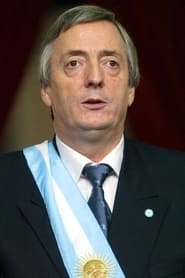
Néstor Kirchner
Néstor Kirchner
Self
Néstor Kirchner
Self
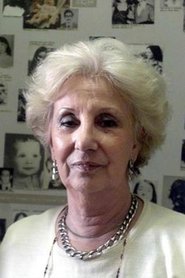
Estela de Carlotto
Estela de Carlotto
Self
Estela de Carlotto
Self
Andrew Graham Yooll
Andrew Graham Yooll
Self
Andrew Graham Yooll
Self
Robert Cox
Robert Cox
Self
Robert Cox
Self
Martín Malharro
Martín Malharro
Self
Martín Malharro
Self
Similar Movies
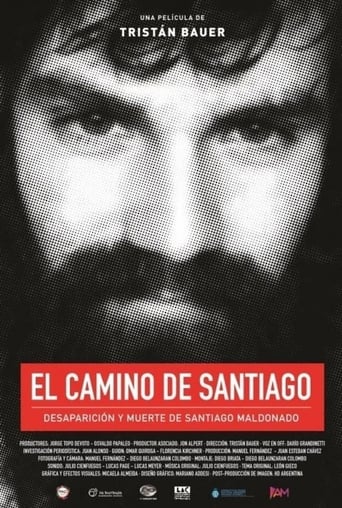
A chronicle on the days without Jorge Julio López, key witness and complainant on the first trial on genocide in Argentina, dated in 2006. López, who had survived through concentration camps on the late seventies argentinian dictatorship, disappeared for the second time the day the court decision meant to condemn his kidnappers was about to be read.
After the fall of the military dictatorship in 1983, successive democratic governments launched a series of reforms purporting to turn Argentina into the world's most liberal and prosperous economy. Less than twenty years later, the Argentinians have lost literally everything: major national companies have been sold well below value to foreign corporations; the proceeds of privatizations have been diverted into the pockets of corrupt officials; revised labour laws have taken away all rights from employees; in a country that is traditionally an important exporter of foodstuffs, malnutrition is widespread; millions of people are unemployed and sinking into poverty; and their savings have disappeared in a final banking collapse. The film highlights numerous political, financial, social and judicial aspects that mark out Argentina's road to ruin.
A young man decides to join the army. He becomes the drummer in the military band, and his everyday life is now a combination of military training and music. What does the Argentine Army do these days, more than thirty years after the dictatorship? What does it mean to be a soldier in a country without wars?
Documentary about the Football World Cup held in Argentina in 1978, focusing on the competition and behind the scenes of the most important soccer competition in the world. Two versions of the 1978 official film exist, the first "Copa 78 - O Poder do Futebol" was made by Brazilian directors Maurício Sherman and Victor di Mello in 1979 but was later withdrawn by FIFA because of its controversial content. The film includes an interview with Rodolfo Galimberti, one of the leaders of the Montoneros guerrilla group and also made accusations that the Argentinian competition organisation committee had deliberately hindered Brazilian chances of success by tampering with the pitch at Mar del Plata.

His teachers, coaches, childhood friends and Barça teammates, together with journalists, writers and prominent figures from the history of football, come together in a restaurant to analyze and pick apart Messi's personality both on and off the field, and to look back at some of the most significant moments in his life. Viewed from Álex de la Iglesia's unique perspective, Messi recreates the player's childhood and teenage years, from his very first steps, with a football always at his feet, through to the decision to leave Rosario for Barcelona, the separation from his family, and the role played in his career by individuals such as Ronaldinho, Rijkaard, Rexach and Guardiola.
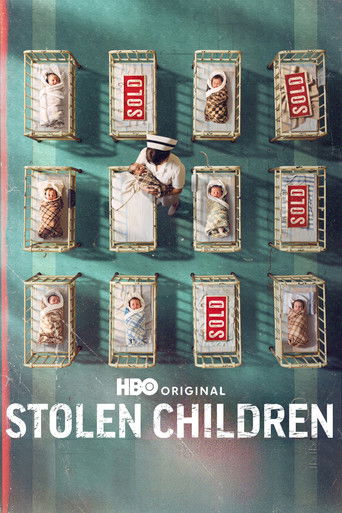
The film takes us to Georgia, where the shadows of the post-Soviet past still loom large. At its center is investigative reporter Tamuna Museridze, who sets out to unravel a profoundly personal mystery. As she follows the trail of a widespread 1990s scheme in which newborns were taken from Georgian maternity wards and trafficked across the world, she exposes networks, mechanisms, and long-buried secrets along with family tragedies that remain just as painful today. The scale of the practice is staggering: as many as 100,000 children were stolen from hospitals and sold. Among them were Amy and Ano, twin sisters separated at birth who finally found each other in 2024 through social media.