

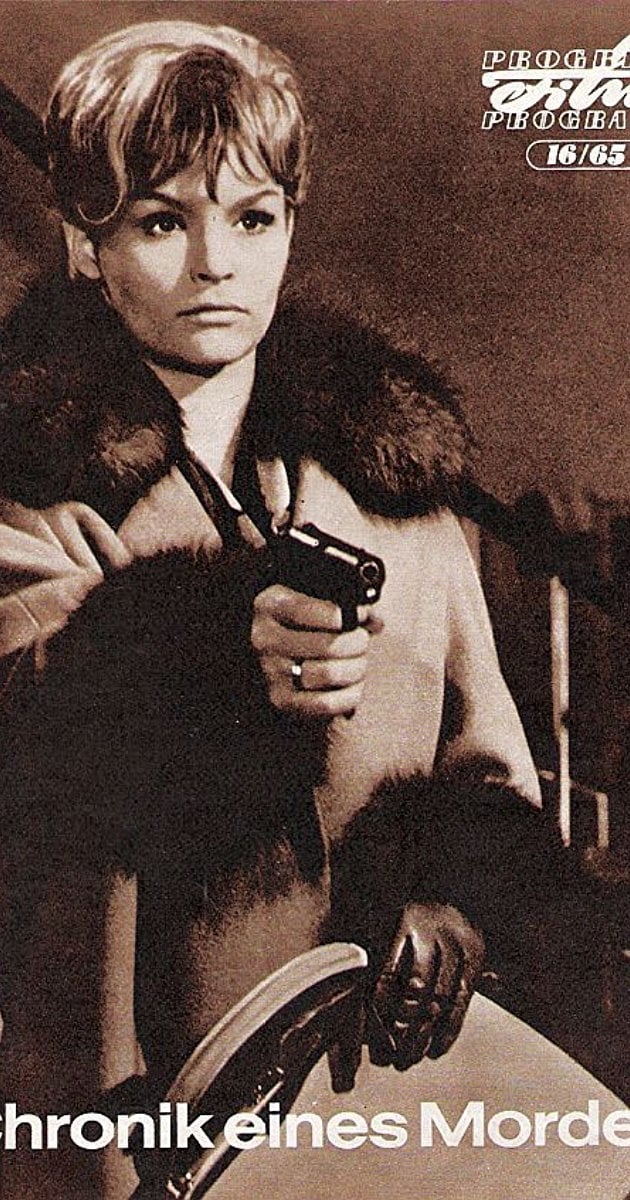
Chronicle of a Murder
Drama
Overview
In the mid-1950s, mayor Zwischenzahl is killed on the day of his inauguration in a West German town. The killer is Ruth Bodenheim, a Jewish woman, who wanted to avenge the death of her parents. Zwischenzahl, a former SA member, was apparently involved in the deportation of her parents to a concentration camp during the war. Ruth cannot bear the horrible events and the death of her parents and wants to open the eyes of the town′s residents.





Angelica Domröse
Angelica Domröse
Ruth Bodenheim
Angelica Domröse
Ruth Bodenheim
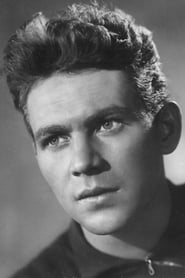
Ulrich Thein
Ulrich Thein
Dr. Martin
Ulrich Thein
Dr. Martin
Jiří Vršťala
Jiří Vršťala
Dr. Hoffmann
Jiří Vršťala
Dr. Hoffmann
Bohumil Šmída
Bohumil Šmída
Dr. Schäure
Bohumil Šmída
Dr. Schäure
Siegfried Weiß
Siegfried Weiß
Dr. Rotholz
Siegfried Weiß
Dr. Rotholz
Martin Flörchinger
Martin Flörchinger
Zwischenzahl
Martin Flörchinger
Zwischenzahl
Willi Schwabe
Willi Schwabe
Lion
Willi Schwabe
Lion
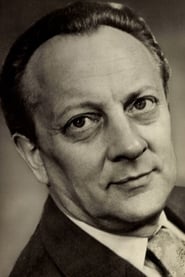
Hans Klering
Hans Klering
Direktor
Hans Klering
Direktor
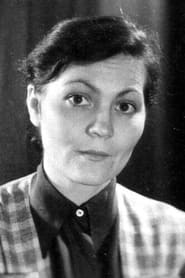
Antje Ruge
Antje Ruge
Esther
Antje Ruge
Esther
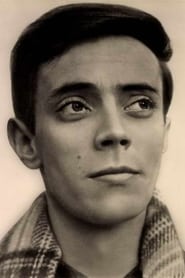
Arno Wyzniewski
Arno Wyzniewski
David
Arno Wyzniewski
David
Similar Movies
An American journalist and his cameraman are caught in the combat zone during the first Russian airstrikes against Georgia. Rescuing Tatia, a young Georgian schoolteacher separated from her family during the attack, the two reporters agree to help reunite her with her family in exchange for serving as their interpreter. As the three attempt to escape to safety, they witness--and document--the devastation from the full-scale crossfire and cold-blooded murder of innocent civilians.
The rise of Charles Manson and his "family," who are responsible for a series of famous murders in the late 1960s. Manson, a magnetic and mysterious man, attracts road-weary single mother Linda Kasabian to join his collection of outcasts on a ranch outside of Los Angeles. After murdering actress Sharon Tate, Manson and his followers are investigated by district attorney Vincent Bugliosi.
In 1937, during the height of the Second Sino-Japanese War, the Imperial Japanese Army has just captured Nanjing, then-capital of the Republic of China. What followed was known as the Nanking Massacre, or the Rape of Nanking, a six week period wherein tens of thousands of Chinese soldiers and civilians were killed.
When his family moves from their home in Berlin to a strange new house in Poland, young Bruno befriends Shmuel, a boy who lives on the other side of the fence where everyone seems to be wearing striped pajamas. Unaware of Shmuel's fate as a Jewish prisoner or the role his own Nazi father plays in his imprisonment, Bruno embarks on a dangerous journey inside the camp's walls.
In the class-obsessed and religiously divided UK of the early 1920s, two determined young runners train for the 1924 Paris Olympics. Eric Liddell, a devout Christian born to Scottish missionaries in China, sees running as part of his worship of God's glory and refuses to train or compete on the Sabbath. Harold Abrahams overcomes anti-Semitism and class bias, but neglects his beloved sweetheart in his single-minded quest.
Beginning just after the bloody Sioux victory over General Custer at Little Big Horn, the story is told through two unique perspectives: Charles Eastman, a young, white-educated Sioux doctor held up as living proof of the alleged success of assimilation, and Sitting Bull the proud Lakota chief whose tribe won the American Indians’ last major victory at Little Big Horn.