

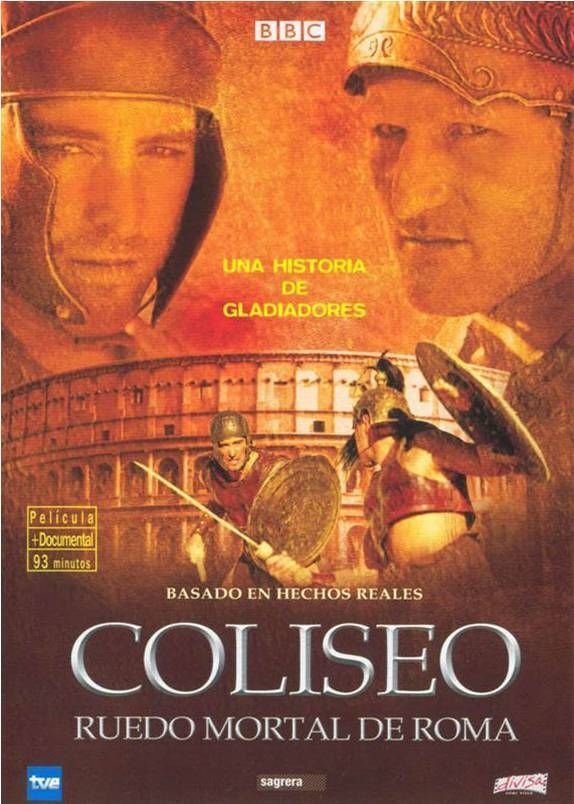
Colosseum - Rome's Arena of Death
Documentary
Overview
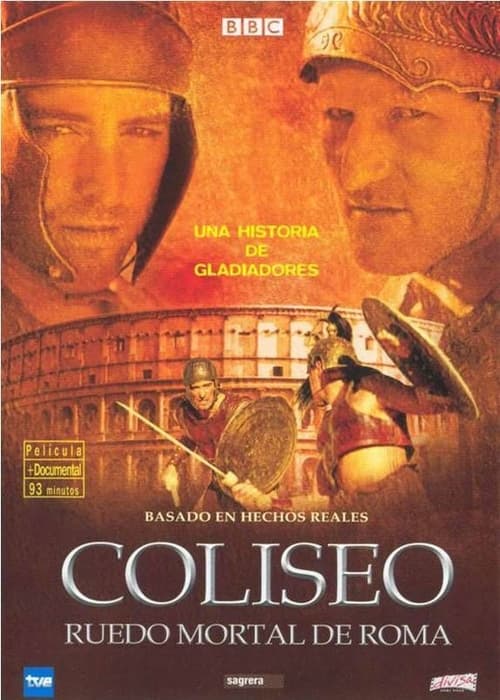
Colosseum: Rome's Arena of Death aka Colosseum: A Gladiator's Story is a 2003 BBC Television docudrama which tells the true story of Verus a gladiator who fought at the Colosseum in Rome.
Top Cast
Robert Shannon
Verus
Jamel Aroui
Titus
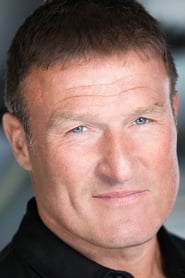
Derek Lea
Priscus
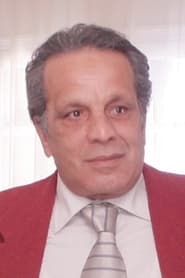
Lotfi Dziri
Trainer
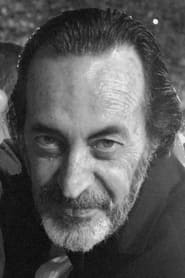
Hichem Rostom
Lanista

Dorra Zarrouk
Imperial Lady
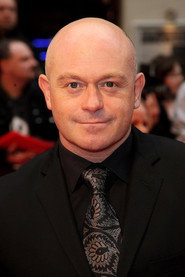
Ross Kemp
Verus (UK version) (voice)
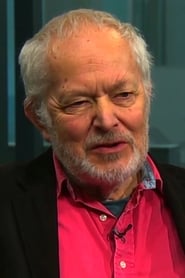
Michael Pennington
Narrator (UK version) (voice)
Jeffrey Gibson
The Poet Martial (voice)
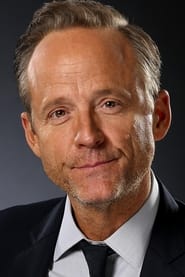
John Benjamin Hickey
Verus (voice)
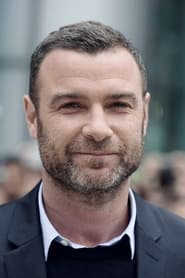
Liev Schreiber
Self - Narrator (voice)
Aykut Hilmi
Main Gladiator (uncredited)


Robert Shannon
Robert Shannon
Verus
Robert Shannon
Verus
Jamel Aroui
Jamel Aroui
Titus
Jamel Aroui
Titus
Derek Lea
Derek Lea
Priscus
Derek Lea
Priscus
Lotfi Dziri
Lotfi Dziri
Trainer
Lotfi Dziri
Trainer
Hichem Rostom
Hichem Rostom
Lanista
Hichem Rostom
Lanista
Dorra Zarrouk
Dorra Zarrouk
Imperial Lady
Dorra Zarrouk
Imperial Lady
Ross Kemp
Ross Kemp
Verus (UK version) (voice)
Ross Kemp
Verus (UK version) (voice)
Michael Pennington
Michael Pennington
Narrator (UK version) (voice)
Michael Pennington
Narrator (UK version) (voice)
Jeffrey Gibson
Jeffrey Gibson
The Poet Martial (voice)
Jeffrey Gibson
The Poet Martial (voice)
John Benjamin Hickey
John Benjamin Hickey
Verus (voice)
John Benjamin Hickey
Verus (voice)
Similar Movies
Once upon a time there was a garden, a refuge, a safe haven - 'The Garden of the Finzi Continis'. It came to life in Giorgio Bassani's 1962 semi-autobiographical novel recounting an unfulfilled love story between two young Jews in Ferrara, while fascism was raging in Italy in the late 1930's. In 1972, Vittorio De Sica's film adaptation of the book won the Oscar for Best Foreign Language Film. Since then, the fictional space of the garden became so tangible that people from all over the world come to Ferrara to look for it. Fifty years after winning the Oscar, reality and fiction come together once more, as we walk through an imaginary garden and bring to life the book, its author, its main protagonists, history, love, friendships and betrayals.
It adroitly tells the story of a "counter culture" young man who when his grandfather dies, packs the body in dry ice, and stores him in a Tuff Shed, waiting for the time when advances in modern medicine can bring him back to life. I am not making this up. Then our young men gets deported back to Norway on unrelated charges. Then, quite a while later, people look up and take notice ... "Hey ... there appears to be a frozen dead guy in that shed over there."
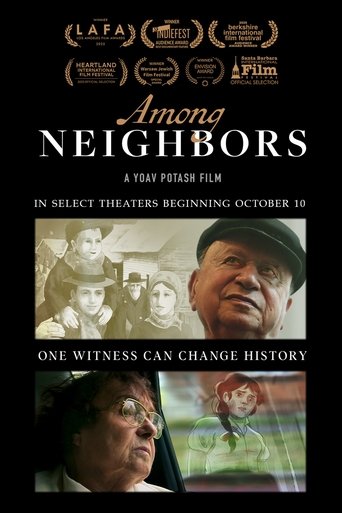
Combining magical realism and evocative hand-drawn animation with revelatory interviews and verité footage, "Among Neighbors" examines the story of a small, rural town where Jews and Polish Catholics lived side by side for centuries before World War II. The film brings the Polish response to the Holocaust to life through the last living eyewitnesses, revealing both love and betrayal as it zeroes in on one of the last living Holocaust survivors from the town, and an aging eyewitness who saw Jews murdered there — not by Nazis, but by her own Polish neighbors. Produced and directed by award-winning filmmaker Yoav Potash ("Crime After Crime," Sundance Film Festival).
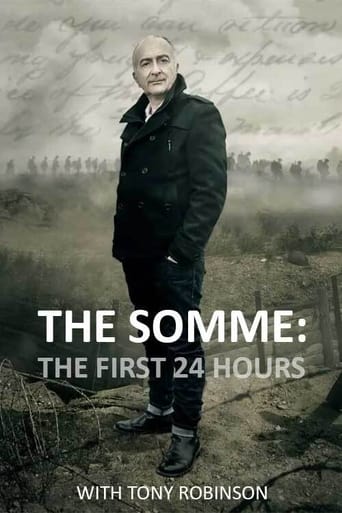
Hosted by actor and historian Sir Tony Robinson, this one-off special tells the powerful and moving story of five men, all members of a unique volunteer army – the Sheffield City battalion – as it recounts the soldiers’ last days, leaving their homes and loved ones to go and serve alongside their friends and neighbours, completely unaware of what lay ahead of them. Central to the programme is the story of Private Frank Meakin, who recorded his unique personal testimony of the war. Frank and his friends could never have anticipated what they would experience, but 100 years on we know in detail, thanks to his diary – an account that shouldn’t have existed, because keeping one was forbidden for servicemen on active duty on the Western Front. Frank’s diary, which was smuggled back from the Front, reveals the intimate details and dramatic stories of one battalion – and one British city – in the words of one man.
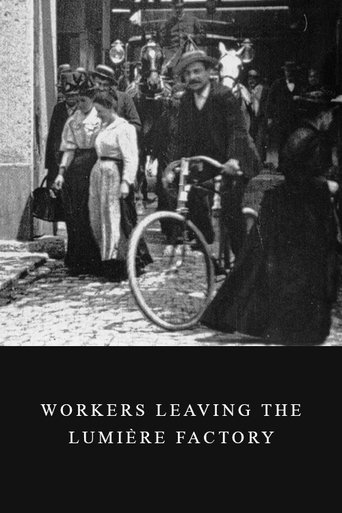
Working men and women leave through the main gate of the Lumière factory in Lyon, France. Filmed on 22 March 1895, it is often referred to as the first real motion picture ever made, although Louis Le Prince's 1888 Roundhay Garden Scene pre-dated it by seven years. Three separate versions of this film exist, which differ from one another in numerous ways. The first version features a carriage drawn by one horse, while in the second version the carriage is drawn by two horses, and there is no carriage at all in the third version. The clothing style is also different between the three versions, demonstrating the different seasons in which each was filmed. This film was made in the 35 mm format with an aspect ratio of 1.33:1, and at a speed of 16 frames per second. At that rate, the 17 meters of film length provided a duration of 46 seconds, holding a total of 800 frames.