

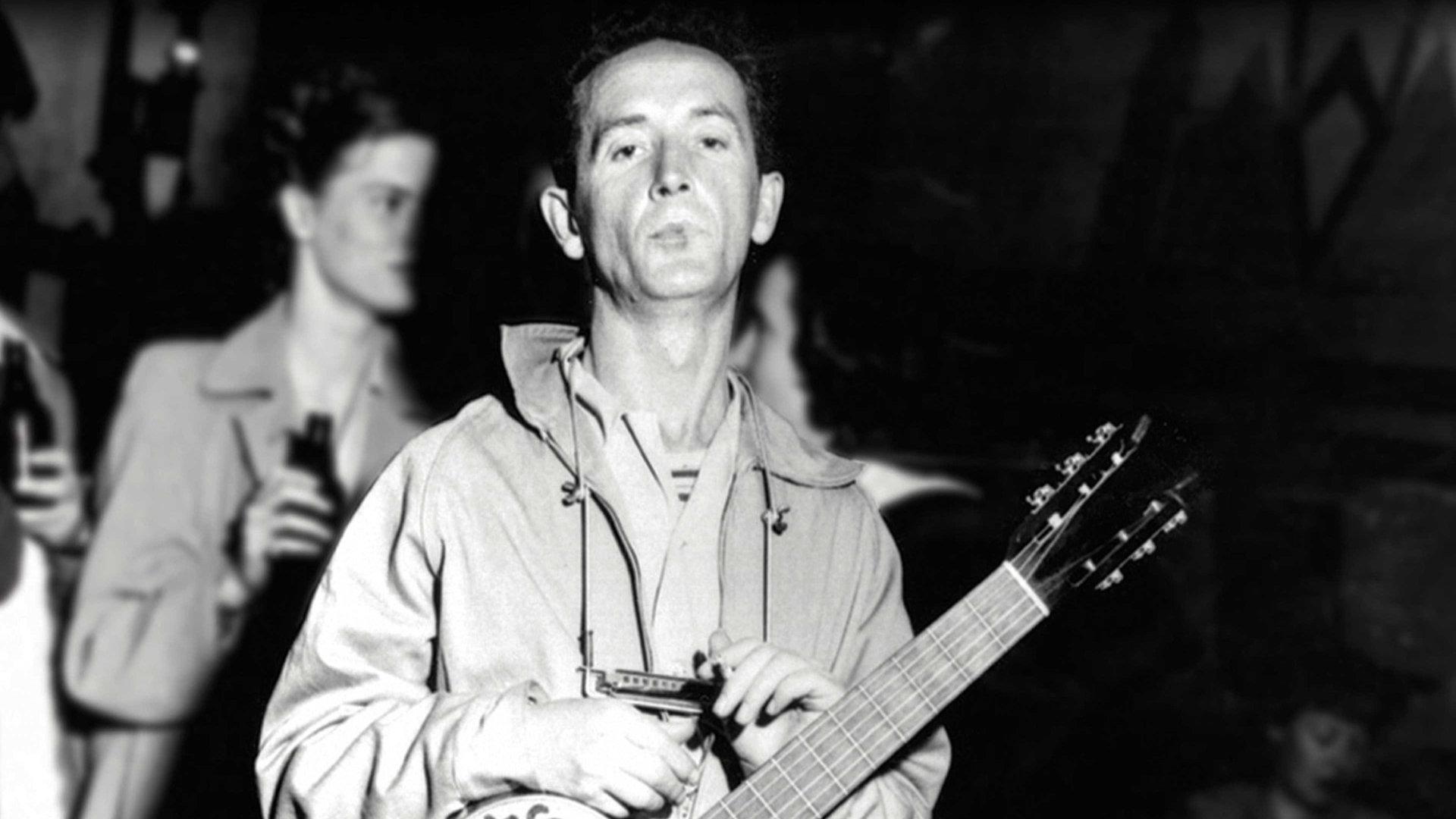

Billy Bragg & Wilco: Man in the Sand
Documentary · Music
Overview
"Man in the Sand" is a 1999 music documentary that chronicles the collaboration between Billy Bragg and Wilco, which involved the musicians creating new music to accompany lyrics that were written decades earlier by folk singer Woody Guthrie. The project, which was organized by Woody's daughter Nora, spawned two albums: "Mermaid Avenue," released in 1998, and "Mermaid Avenue Vol. II," released in 2000.








Billy Bragg
Billy Bragg
Self
Billy Bragg
Self

Jeff Tweedy
Jeff Tweedy
Self
Jeff Tweedy
Self
Ken Coomer
Ken Coomer
Self
Ken Coomer
Self

Jay Bennett
Jay Bennett
Self
Jay Bennett
Self
John Stirratt
John Stirratt
Self
John Stirratt
Self
Nora Guthrie
Nora Guthrie
Self
Nora Guthrie
Self
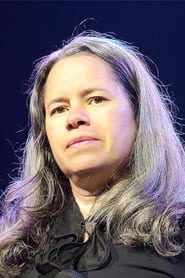
Natalie Merchant
Natalie Merchant
Self
Natalie Merchant
Self
Peter Jenner
Peter Jenner
Self
Peter Jenner
Self
Corey Harris
Corey Harris
Self
Corey Harris
Self

Arlo Guthrie
Arlo Guthrie
Self
Arlo Guthrie
Self
Similar Movies
Spies of Mississippi tells the story of a secret spy agency formed by the state of Mississippi to preserve segregation and maintain white supremacy. The anti-civil rights organization was hidden in plain sight in an unassuming office in the Mississippi State Capitol. Funded with taxpayer dollars and granted extraordinary latitude to carry out its mission, the Commission evolved from a propaganda machine into a full blown spy operation. How do we know this is true? The Commission itself tells us in more than 146,000 pages of files preserved by the State. This wealth of first person primary historical material guides us through one of the most fascinating and yet little known stories of America's quest for Civil Rights.
"My Own Breathing" is the final documentary of the trilogy, The Murmuring about comfort women during the World War II directed by BYUN Young-joo. This is the completion of her seven years work. BYUN's first and second documentaries spoke of grandmothers' everyday life through the origin of their torment, while My Own Breathing goes back to their past from their everyday life. Deleting any device of narration or music, the camera lets grandmothers talk about themselves. Finally, the film revives their deep voices trampled by harsh history.

Rahul Seth is a dashing young millionaire who believes he is "western" enough to rebel against his mother and grandmother. They are not too keen about his Caucasian girlfriend Kimberly who, to make matters worse, is a pop star. Before you can say "karmic intervention," Kimberly dies in a freak accident and Rahul is devastated. Instead of allowing him to mourn in peace, Rahul's mother sees the opportunity she's been waiting for. She threatens to call off his sister's wedding unless he finds himself a "nice Indian girl." Rahul enlists the services of Sue, a fiercely independent escort whom he believes to be Hispanic, and therefore not "married" to the conventions taught to young Indian women. With a wink in her eye, Sue accepts the deal to pose as his Indian bride-to-be. She needs the money and having never been a fan of the typical Indian male, she feels her heart is safe. The charade begins....
Two religious maniacs, Judas and Corned Beef, are visited by two aliens, Madeline Virbasius and Dion. Virbasius, dressed as the Virgin Mary, tells the two to kill people for Jesus and to drain the puss from their heads and bring it back to them. Fleming and Hammer set out to bring "the Virgin Mary" back as much puss as possible in a bucket.
Starting with a long and lyrical overture, evoking the origins of the Olympic Games in ancient Greece, Riefenstahl covers twenty-one athletic events in the first half of this two-part love letter to the human body and spirit, culminating with the marathon, where Jesse Owens became the first track and field athlete to win four gold medals in a single Olympics.

China's top drama academy stages the American musical "Fame," China's first official collaboration with Broadway, as the graduation showcase for its senior class. During the eight-month rehearsal, five students compete for roles, struggle with pressure from family and authority, and prepare to graduate into China's corrupt entertainment industry.

Appalachian Journey is one of five films made from footage that Alan Lomax shot between 1978 and 1985 for the PBS American Patchwork series (1991). It offers songs, dances, stories, and religious rituals of the Southern Appalachians. Preachers, singers, fiddlers, banjo pickers, moonshiners, cloggers, and square dancers recount the good times and the hard times of rural life there. Performers include Tommy Jarrell, Janette Carter, Ray and Stanley Hicks, Frank Proffitt Jr., Sheila Kay Adams, Nimrod Workman and Phyllis Boyens, Raymond Fairchild, and others, with a bonus of a few African-Americans from the North Carolina Piedmont.