

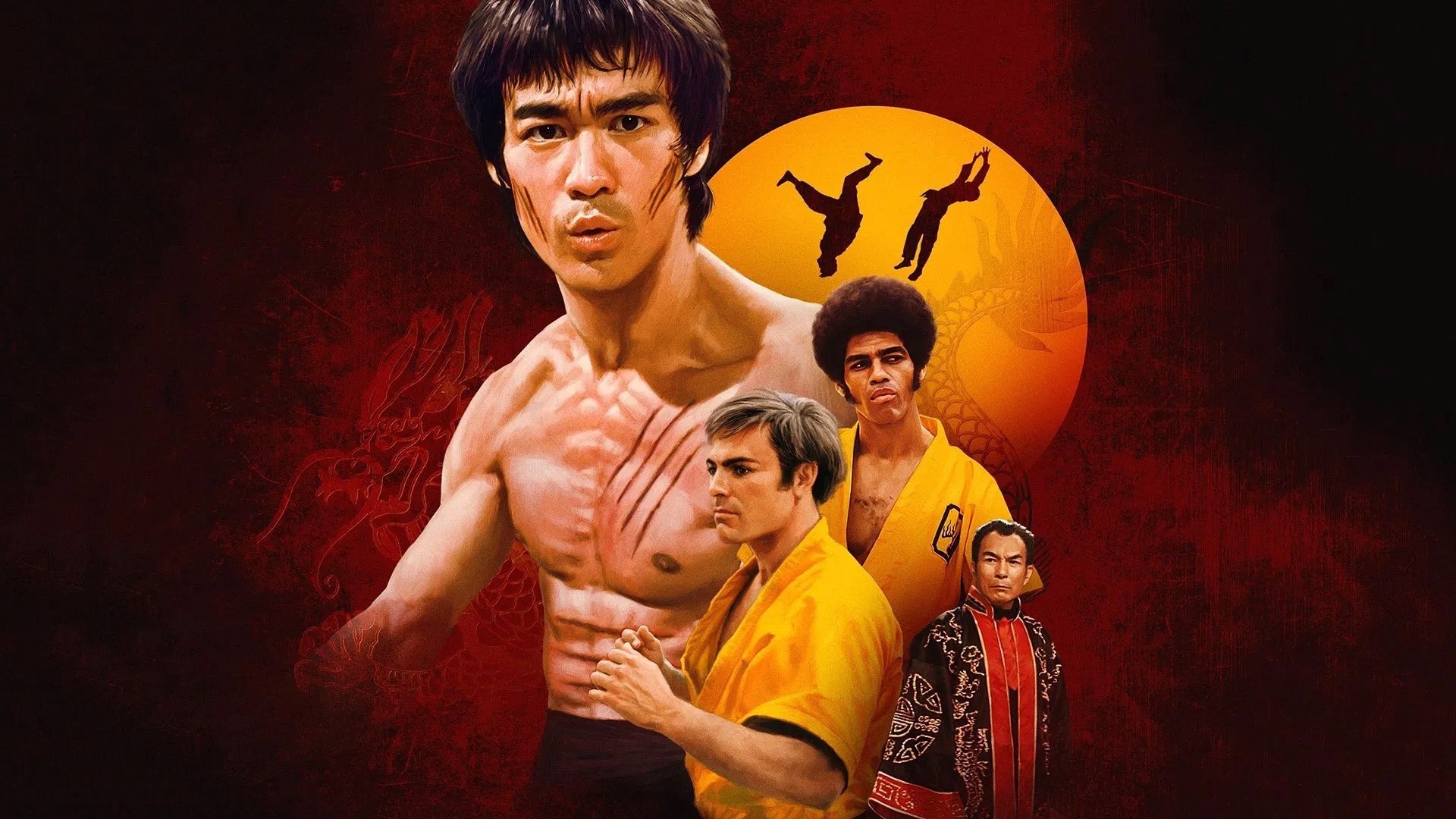
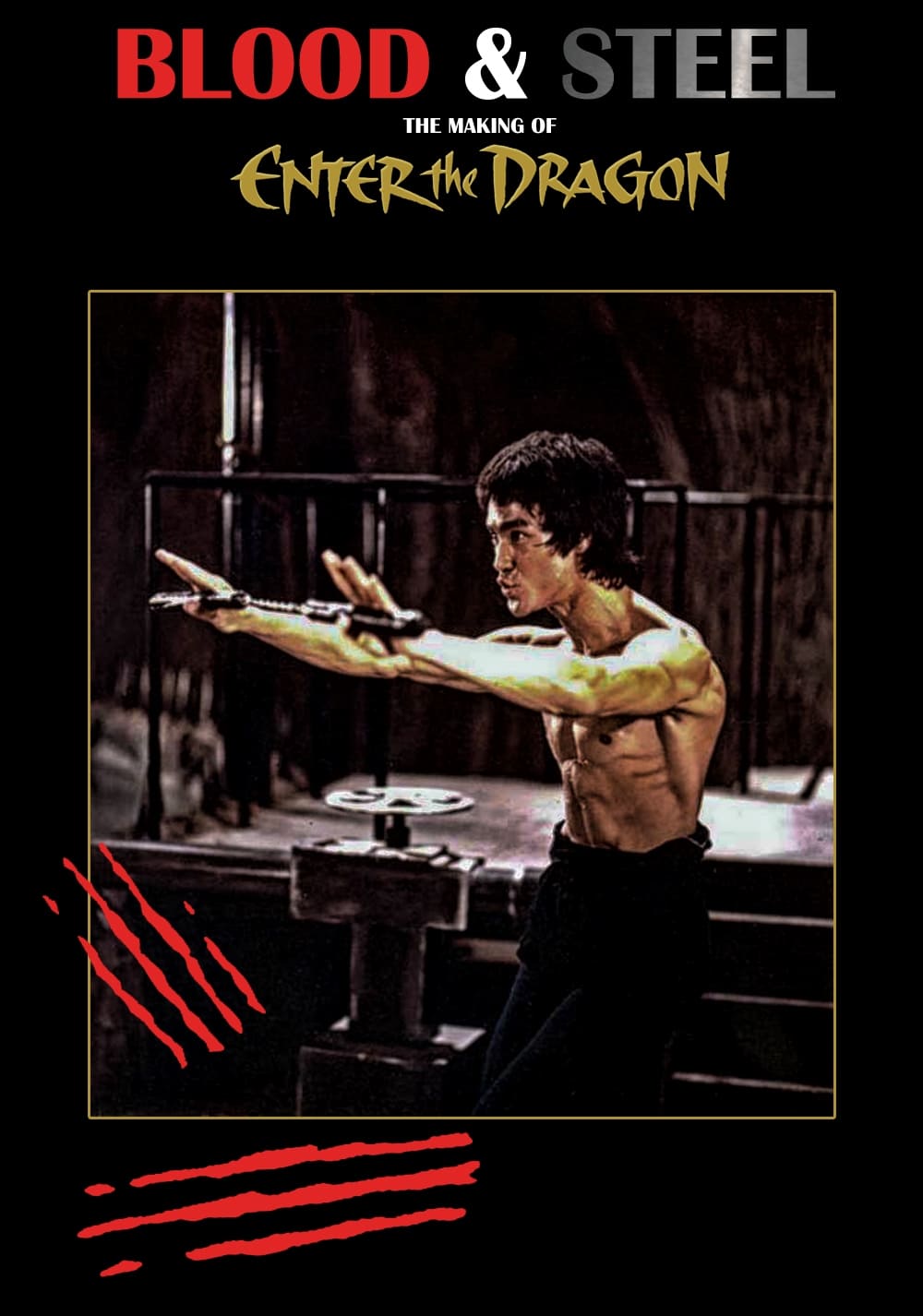
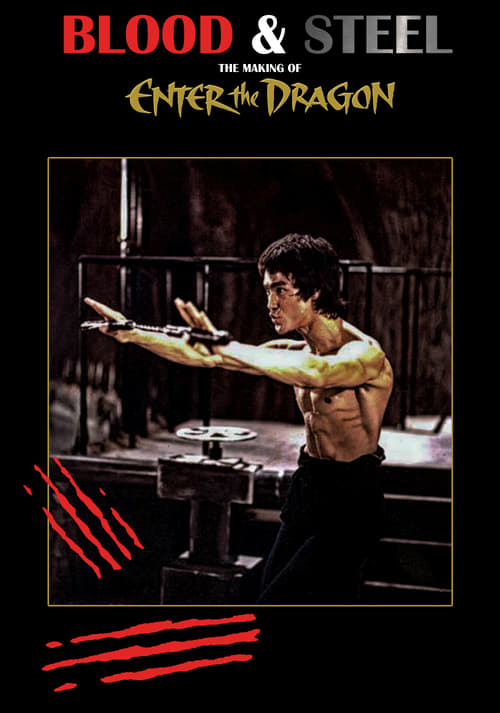
Blood and Steel: The Making of Enter the Dragon
Documentary
Overview
Documentary on the making of Bruce Lee's Enter the Dragon (1973).









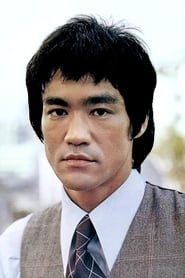
Bruce Lee
Bruce Lee
Self (archival)
Bruce Lee
Self (archival)
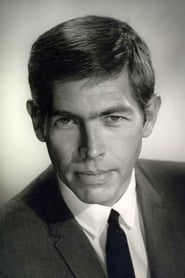
James Coburn
James Coburn
Self
James Coburn
Self
Paul M. Heller
Paul M. Heller
Self
Paul M. Heller
Self
Fred Weintraub
Fred Weintraub
Self
Fred Weintraub
Self
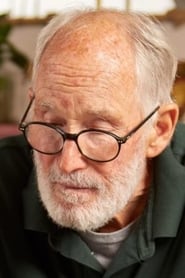
Michael Allin
Michael Allin
Self
Michael Allin
Self
Gil Hubbs
Gil Hubbs
Self
Gil Hubbs
Self
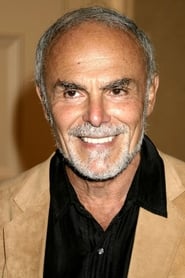
John Saxon
John Saxon
Self
John Saxon
Self
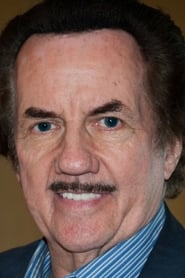
Robert Wall
Robert Wall
Self
Robert Wall
Self
Peter Archer
Peter Archer
Self
Peter Archer
Self

Sammo Hung Kam-Bo
Sammo Hung Kam-Bo
Self
Sammo Hung Kam-Bo
Self
Similar Movies
Co-curated by Jenni Olson and the late Black gay activist Karl Knapper, this entertaining showcase of vintage movie trailers traces the evolution of African American cinema through its most crucial period, 1952-1976. Filled with insights on race and social dynamics, this fascinating compendium of coming attractions explores an extensive range of stylistic approaches—Blaxploitation, Comedy, Music Bio, Plantation Drama and more—offering an outrageous joyride through motion picture history. Beyond mere camp, these marvelously condensed gems crystallize a range of African American identities and personalities, tracking the meteoric careers of Sidney Poitier, James Earl Jones, Billy Dee Williams, Richard Pryor, Pam Grier and others through their bold performances in movies both hugely popular and practically forgotten. Afro Promo provides a compact glimpse at the representation of African Americans through twenty-five dynamic years of American cinema history.
Working men and women leave through the main gate of the Lumière factory in Lyon, France. Filmed on 22 March 1895, it is often referred to as the first real motion picture ever made, although Louis Le Prince's 1888 Roundhay Garden Scene pre-dated it by seven years. Three separate versions of this film exist, which differ from one another in numerous ways. The first version features a carriage drawn by one horse, while in the second version the carriage is drawn by two horses, and there is no carriage at all in the third version. The clothing style is also different between the three versions, demonstrating the different seasons in which each was filmed. This film was made in the 35 mm format with an aspect ratio of 1.33:1, and at a speed of 16 frames per second. At that rate, the 17 meters of film length provided a duration of 46 seconds, holding a total of 800 frames.
At the age of 74, many people retire themselves or go and spend the rest of their life in elderly’s house. But Kim Dong-Ho has made the decision to live like a young and energetic man until the end of his life. He gets up early around 4 am every morning. He does his exercise for an hour. Then he checks the news and respond to his emails. After that, he takes the bus to his work. He is currently working in a university of film and media, which he has launched himself two years ago. KIM is the same man whom established the largest Asian Film Festival when he was almost 60 years old. Now that he is 74 years old, he has just decided to make his first film as a director.
Despite the anti-Semitic campaign launched by the Polish People's Government in the late 1960s, director Jerzy Hoffman finishes working on the film Pan Wołodyjowski. It becomes the ticket to the production of Potop, the most expensive film in the history of Polish cinematography. During his work, the director not only has to deal with mounting production problems, the distrust of the People's Government, but also with the expectations of millions of Poles.
The PlayStation Revolution is an independent documentary feature film that uncovers the incredible story behind the creation of the Sony PlayStation. It is an essential watch for anyone interested in video games and the history of the biggest entertainment industry on earth. The film investigates why Sony decided to enter the video games business, when it was already dominated by both Nintendo and Sega, who not only produced their own hardware but made and published fantastic games. To compete, Sony would not only have to design and build a new piece of hardware, but they would have to find a way to persuade the game development industry to take a chance and develop games for it long before it even came out!
Go behind the pre-production, production, and post-production process of making New Line Cinema's Final Destination 3, exploring the history of not only the film itself but of its filmmaking partners, Glen Morgan and James Wong, and gain insight on the production as a whole. Includes early development meetings, on-set action, interviews with cast and crew, visual effects development, test screening process as well as an elaborate ending re-shoot.