

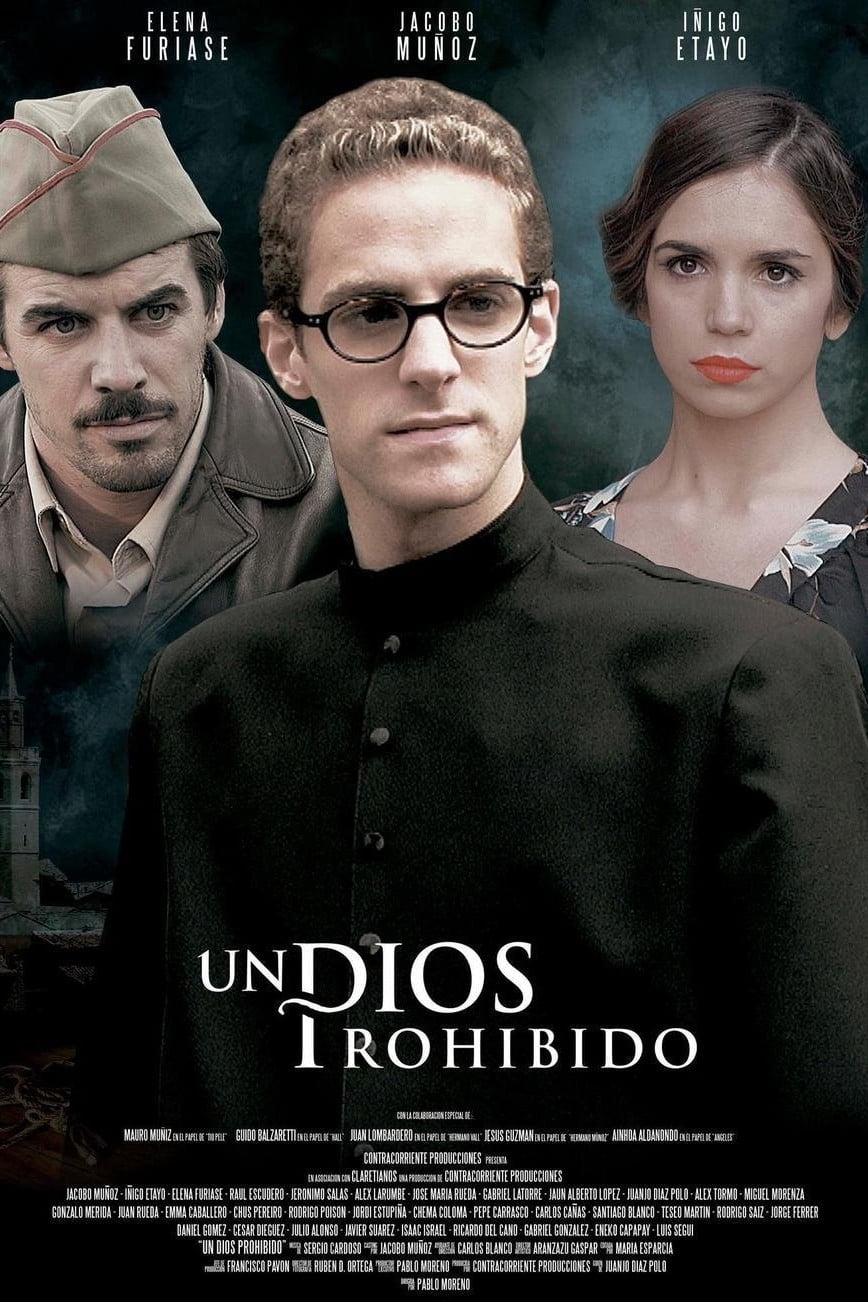
A Forbidden God
Drama · War · History
Overview
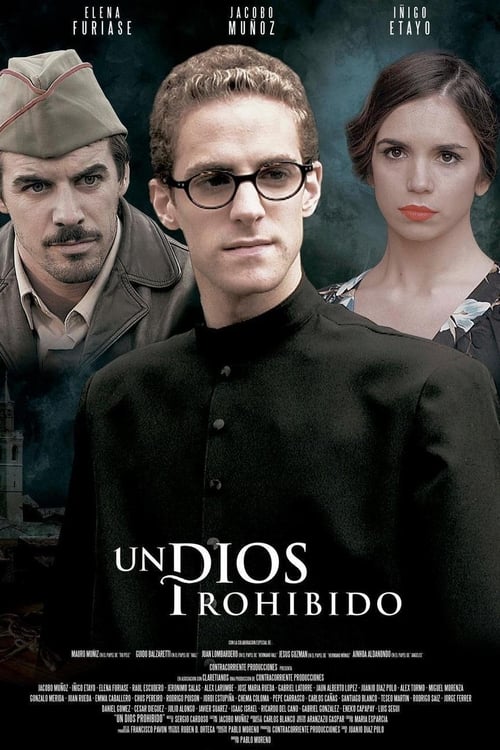
August 1936, the beginning of the Spanish Civil War. 51 members of the Claretian community of Barbastro (Huesca) are martyred, die for their faith. The film recounts the last weeks of his life, since they are held until they are finally shot. During that time, they perform various writings they talk about their situation, of his fellow captives, people who saw them. These writings have been the basic testimony used to narrate this real fact in film version.
Iñigo Etayo
Iñigo Etayo
Ramón Illa
Iñigo Etayo
Ramón Illa
Eneko Capapay
Eneko Capapay
Miguel Masip
Eneko Capapay
Miguel Masip
Jacobo Muñoz
Jacobo Muñoz
Eugenio Sopena
Jacobo Muñoz
Eugenio Sopena
Ainhoa Aldanondo
Ainhoa Aldanondo
Ángeles
Ainhoa Aldanondo
Ángeles

Guido Balzaretti
Guido Balzaretti
Hall
Guido Balzaretti
Hall

Emma Caballero
Emma Caballero
Miliciana Montse
Emma Caballero
Miliciana Montse
Chema Coloma
Chema Coloma
Chema Coloma

Elena Furiase
Elena Furiase
Trini
Elena Furiase
Trini
Jerónimo Salas
Jerónimo Salas
Faustino
Jerónimo Salas
Faustino
Álex Larumbe
Álex Larumbe
Juan Echarri
Álex Larumbe
Juan Echarri
Similar Movies
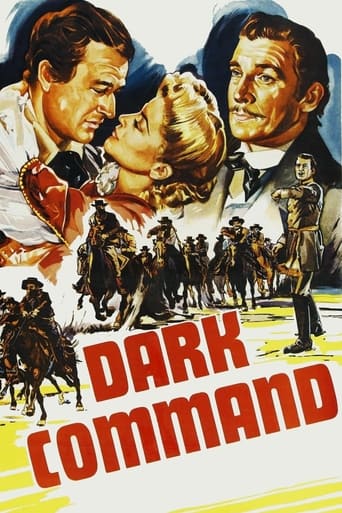
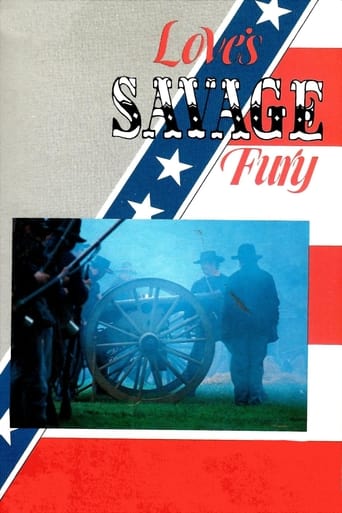
When transplanted Texan Bob Seton arrives in Lawrence, Kansas he finds much to like about the place, especially Mary McCloud, daughter of the local banker. Politics is in the air however. It's just prior to the civil war and there is already a sharp division in the Territory as to whether it will remain slave-free. When he gets the opportunity to run for marshal, Seton finds himself running against the respected local schoolteacher, William Cantrell. Not is what it seems however. While acting as the upstanding citizen in public, Cantrell is dangerously ambitious and is prepared to do anything to make his mark, and his fortune, on the Territory. When he loses the race for marshal, he forms a group of raiders who run guns into the territory and rob and terrorize settlers throughout the territory. Eventually donning Confederate uniforms, it is left to Seton and the good citizens of Lawrence to face Cantrell and his raiders in one final clash.
At the end of the Spanish civil war, Fando, a boy of about ten, tries to make sense of war and his father's arrest. His mother is religious, sympathetic to the Fascists; his father is accused of being a Red. Fando discovers that his mother may have aided in his father's arrest. Sometimes we witness Fando imagining explanations for what's going on; sometimes we see him at play, alone or with his friend Thérèse. Oedipal fantasies and a lad's natural curiosity about sex and death mix with his search for his mother's nature and his father's fate. Will Fando survive the search?

Nick is a writer in New York when he gets posted to a bureau in Greece. He has waited 30 years for this. He wants to know why his mother was killed in the civil war years earlier. In a parallel plot line we see Nick as a young boy and his family as they struggle to survive in the occupied Greek hillside. The plot lines converge as Nick's investigations bring him closer to the answers.
A biopic of Napoleon Bonaparte, tracing the Corsican's career from his schooldays (where a snowball fight is staged like a military campaign) to his flight from Corsica, through the French Revolution (where a real storm is intercut with a political storm) and the Terror, culminating in his triumphant invasion of Italy in 1797.
Denese Joy Becker, a manicurist living in Iowa, discovers she is indeed Dominga Sic Ruiz, a survivor from a 1982 Guatemalan massacre, when more than 200 people were killed in the small village of Rio Negro, after opposing the construction of a dam, sponsored by World Bank. She then tries to unveil the truth.
At the end of the Spanish Civil War, the members of a group of vaudeville performers have been stripped of everything: all they have left is hunger and the instinct to survive. Day after day, agonizingly, lost and helpless between the victors and the vanquished, the musician Jorge, the ventriloquist Enrique, the couplet singer Rocío and the orphan Miguel search tirelessly for something to eat and a safe place to live.
Henry Fleming is a young Union soldier in the American Civil War. During his unit's first engagement, Henry flees the battlefield in fear. When he learns that the Union actually won the battle, shame over his cowardice leads him to lie to his friend Tom and the other soldiers, saying that he had been injured in battle. However, when he learns that his unit will be leading a charge against the enemy, Henry takes the opportunity to face his fears and redeem himself.
In the post Spanish civil war years, Catalan kids would sit in circles among the ruins and tell stories, known as "aventis" (the film's original title in Catalan, its original language). These tales mix war stories, local gossip, comic book characters, fantasy and real events. The "aventis" told in this film are told in flashback. In the mid 80s, 45 or so years after the age of the "aventis," a doctor and a nurse-nun (who grew up together, and now are co-workers in a hospital) identify the corpse of one of the main characters of the "aventis" of their childhood and adolescence. Besides the interesting flashbacks - a chronical of the Civil War in a "typical" Barcelona microcosm itself, the discovery of this body (belonging to someone long presumed dead) leads to other surprises and unresolved doubts, several decades later

Legendary writer Ambrose Bierce was known to be brilliant, cantankerous and romantic in all his life's passions, and was revered as one of the top storytellers of the late 19th Century. In 1890, he presented his recently published collection of Civil War Stories to novelist Gertrude Atherton and fledgling young publisher William Randolph Hearst during an infamous meeting in Sonol, California. This meeting sets the forum for the presentation of three of Bierce's most popular stories including "One Kind Of Officer", "Story Of A Conscience" and "An Occurrence At Owl Creek Bridge." This acclaimed collection features epic battle sequences, deeply conflicted drama and the signature "surprise endings" that characterized most of the short stories by Ambrose Bierce.