



Grigris
Drama · Crime
Overview
Souleymane, 25, dreams of being a dancer in spite of having a paralyzed leg. At nightclubs, he transforms into the beloved dancer Grigris, impressing people with his moves. However, when his stepfather falls seriously ill, Souleymane desperately needs money and decides to work for petrol smugglers.
Top Cast
Souleymane Démé
Grigris

Anaïs Monory
Mimi
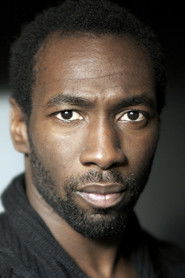
Cyril Gueï
Moussa
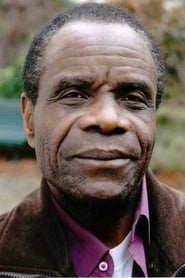
Marius Yelolo
Ayoub

Hadje Fatime N'Goua
La mère
Abakar M'Baïro
Homme de main Moussa
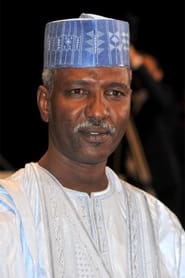
Youssouf Djaoro
Alhadj
Rémadji Adèle Ngaradoumbaye
Fifi
Emmanuel M'Baide Rotoubam
Imprésario Grigris
Achouackh Abakar
Copine de Mimi
Abdel Salam Mahamat
Client copine Mimi
Ahidjo Mahamat Moussa
Faux témoin













Souleymane Démé
Souleymane Démé
Grigris
Souleymane Démé
Grigris
Anaïs Monory
Anaïs Monory
Mimi
Anaïs Monory
Mimi
Cyril Gueï
Cyril Gueï
Moussa
Cyril Gueï
Moussa
Marius Yelolo
Marius Yelolo
Ayoub
Marius Yelolo
Ayoub
Hadje Fatime N'Goua
Hadje Fatime N'Goua
La mère
Hadje Fatime N'Goua
La mère
Abakar M'Baïro
Abakar M'Baïro
Homme de main Moussa
Abakar M'Baïro
Homme de main Moussa
Youssouf Djaoro
Youssouf Djaoro
Alhadj
Youssouf Djaoro
Alhadj
Rémadji Adèle Ngaradoumbaye
Rémadji Adèle Ngaradoumbaye
Fifi
Rémadji Adèle Ngaradoumbaye
Fifi
Emmanuel M'Baide Rotoubam
Emmanuel M'Baide Rotoubam
Imprésario Grigris
Emmanuel M'Baide Rotoubam
Imprésario Grigris
Achouackh Abakar
Achouackh Abakar
Copine de Mimi
Achouackh Abakar
Copine de Mimi
Similar Movies
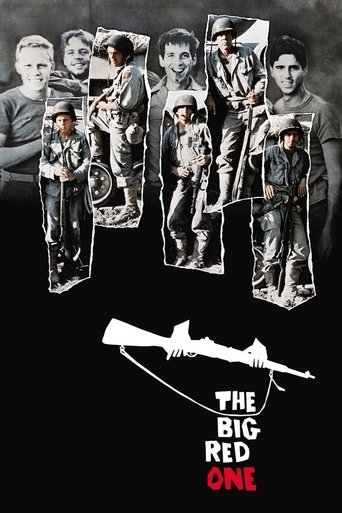
A veteran sergeant of World War I leads a squad in World War II, always in the company of the survivor Pvt. Griff, the writer Pvt. Zab, the Sicilian Pvt. Vinci and Pvt. Johnson, in Vichy French Africa, Sicily, D-Day at Omaha Beach, Belgium and France, and ending in a concentration camp in Czechoslovakia where they face the true horror of war.
A film about the difficulty for even the most well-intentioned person to know and respect another culture. In this case, the problem is so acute that there is even heated debate over what to call that 'other.' The subtitles in the film use the familiar word 'pygmies,' a relatively pejorative European term; the Bantu or villagers' expression for the same group, Babingas, carries similar negative connotations. These highly specialized, tropical rainforest hunter-gatherers should perhaps be called by their own ethnonym, Aka, MoAka (sing.) and BaAka (pl.)

Beginning of the 20th century in the east of Sudan. Tajouj is the beautiful cousin of a young tribesman who falls in love with her and proclaims his love out loud in a song. However, the traditions of his tribe forbid such love, and his uncle refuses his request to marry Tajouj. But after the young man leaves the village and declares his remorse, the marriage is finally allowed after all. In the meantime, however, another man has expressed interest in Tajouj. A story full of jealousy ensues, which ends in tragedy.
After brilliant studies in France and a 15-year absence from his homeland, Adama, a young graduate of the Ecole Polytechnique, rushes back to Senegal. He is alarmed by a message informing him of the sudden decline in his grandmother's health. Upon arriving in Dakar, Adama discovers that his grandmother is in perfect shape... Was this a deliberate ploy to get him back home, and if so, why?
The story of the post-independence nationalization of the mill of Monsieur Fabre, an old man attached to the land of Algeria where he was born. In this small town in eastern Algeria, there was nothing else to nationalize and they were actively preparing for the arrival of high dignitaries who would elevate the mill to the rank of an industrial flour mill even though it was threatened with ruin. The comedy gets worse when the football player from the local team withdraws for love, the officials' visit is canceled and Mr. Fabre returns.
Berlin at the end of the 19th Century. Alexander Hoffmann is an ambitious PhD student of Ethnology. When a delegation of the Herero and Nama tribes travels to Berlin during a ‘Colonial Exhibition’, he takes a special interest in their young female translator Kezia Kambazembi as subject for his studies.