

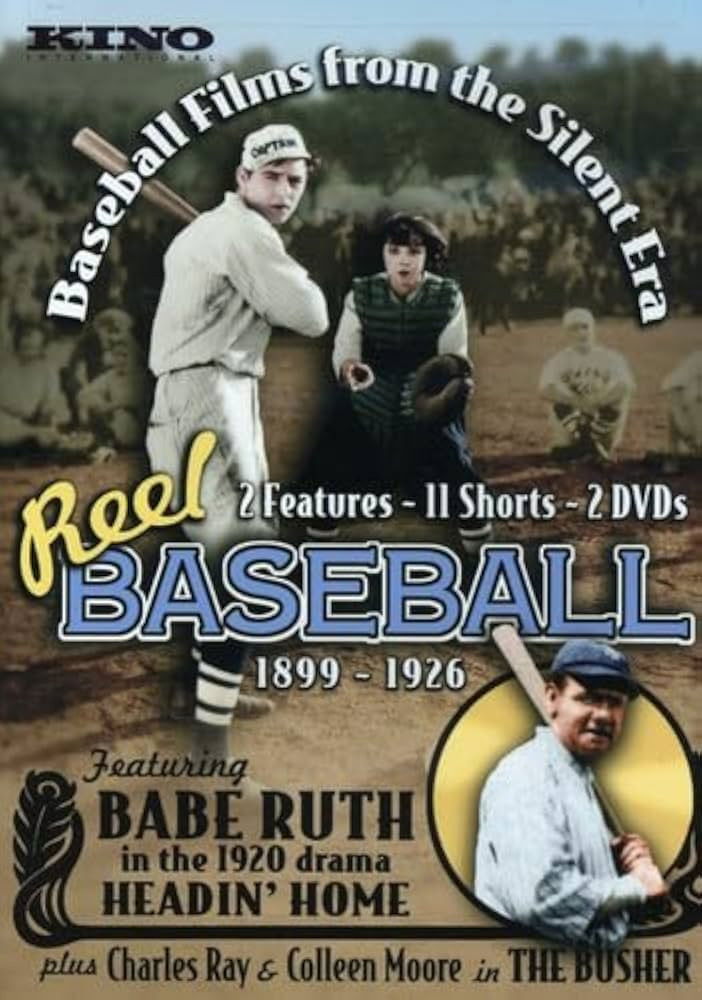
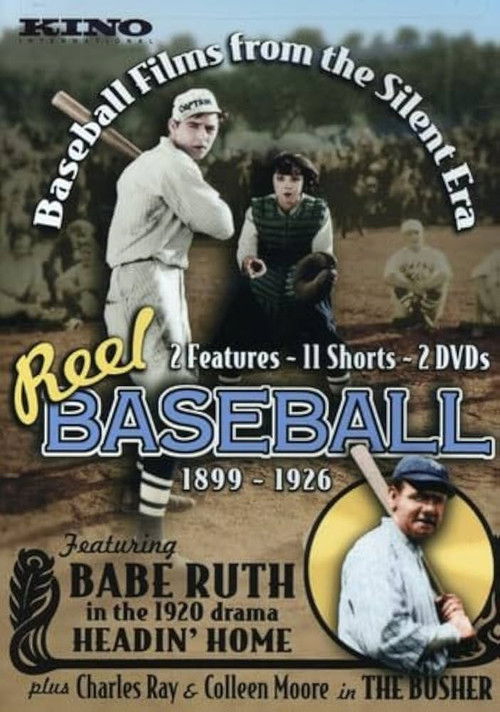
Reel Baseball - 1899-1926
Overview
A cornucopia of early - and, in many cases, extremely rare - baseball films, offering privileged peeks into early twentieth century American lifestyles and values. It includes newly remastered and scored versions of two important early baseball features: The Busher (1919), a delightful comedy-drama featuring silent cinema legends Charles Ray, Colleen Moore, and John Gilbert; and Headin' Home (1920), spotlighting a young, shockingly svelte Babe Ruth in his first motion picture starring role.
Top Cast



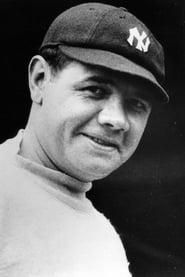
Babe Ruth
Babe Ruth
Himself
Babe Ruth
Himself
Similar Movies
Jess Bhamra, the daughter of a strict Indian couple in London, is not permitted to play organized soccer, even though she is 18. When Jess is playing for fun one day, her impressive skills are seen by Jules Paxton, who then convinces Jess to play for her semi-pro team. Jess uses elaborate excuses to hide her matches from her family while also dealing with her romantic feelings for her coach, Joe.
Tobi and Achim, the pride of the local crew club, have been the best of friends for years and are convinced that nothing will ever stand in the way of their friendship. They look forward to the upcoming summer camp and the crew competition. Then the gay team from Berlin arrives and Tobi is totally confused. The evening before the races begin, the storm that breaks out is more than meteorological.
This pioneering documentary film depicts the lives of the indigenous Inuit people of Canada's northern Quebec region. Although the production contains some fictional elements, it vividly shows how its resourceful subjects survive in such a harsh climate, revealing how they construct their igloo homes and find food by hunting and fishing. The film also captures the beautiful, if unforgiving, frozen landscape of the Great White North, far removed from conventional civilization.
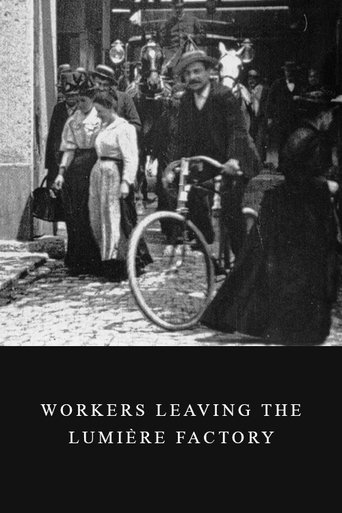
Working men and women leave through the main gate of the Lumière factory in Lyon, France. Filmed on 22 March 1895, it is often referred to as the first real motion picture ever made, although Louis Le Prince's 1888 Roundhay Garden Scene pre-dated it by seven years. Three separate versions of this film exist, which differ from one another in numerous ways. The first version features a carriage drawn by one horse, while in the second version the carriage is drawn by two horses, and there is no carriage at all in the third version. The clothing style is also different between the three versions, demonstrating the different seasons in which each was filmed. This film was made in the 35 mm format with an aspect ratio of 1.33:1, and at a speed of 16 frames per second. At that rate, the 17 meters of film length provided a duration of 46 seconds, holding a total of 800 frames.