

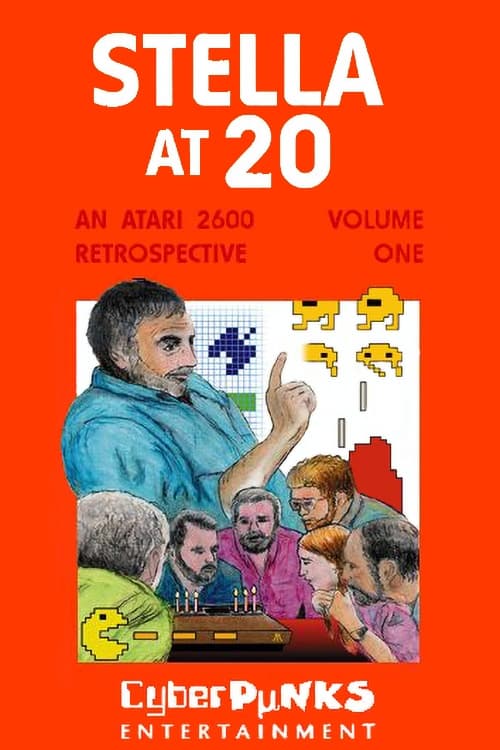
Stella at 20: An Atari 2600 Retrospective - Vol. 1
Documentary
Overview
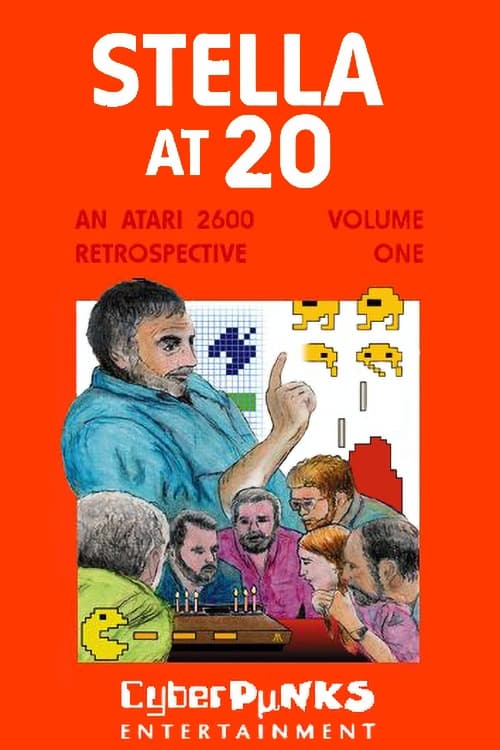
Over the course of August 1997, interviews were shot for a video documentary entitled Stella at 20: An Atari 2600 Retrospective. The founders of Atari, the original engineers, the famous programmers, and some lesser known programmers were gathered together to look back on the system that launched the home videogame industry. Volume 1 contains a roundtable discussion on the origin of the 2600 itself, from concept to finished product, as well as musings on the rise and fall of Atari and changes in the industry then vs. now.





Nolan Bushnell
Nolan Bushnell
Self
Nolan Bushnell
Self
Al Alcorn
Al Alcorn
Self
Al Alcorn
Self
Joe Decuir
Joe Decuir
Self
Joe Decuir
Self
Steve Mayer
Steve Mayer
Self
Steve Mayer
Self
Ron Milner
Ron Milner
Self
Ron Milner
Self
Jay Miner
Jay Miner
Self (archival footage)
Jay Miner
Self (archival footage)
David Crane
David Crane
Self
David Crane
Self
Larry Wagner
Larry Wagner
Self
Larry Wagner
Self
Larry Kaplan
Larry Kaplan
Self
Larry Kaplan
Self
Similar Movies
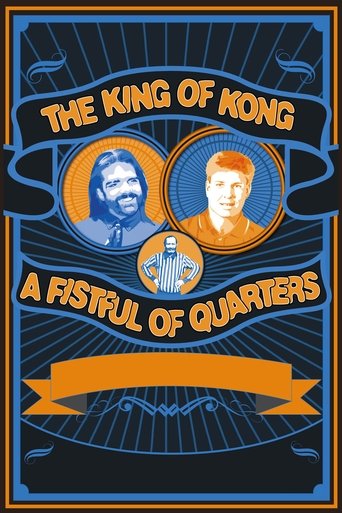
In this hilarious arcade showdown, a humble novice goes head-to-head against the reigning Donkey Kong champ in a confrontation that rocks the gaming world to its processors! For over 20 years, Billy Mitchell has owned the throne of the Donkey Kong world. No one could beat his top score until now. Newcomer Steve Wiebe claims to have beaten the unbeatable, but Mitchell isn't ready to relinquish his crown without a fight. Go behind the barrels as the two battle it out in a vicious war to earn the title of the true King of Kong.
The Xbox Originals documentary that chronicles the fall of the Atari Corporation through the lens of one of the biggest mysteries of all time, dubbed “The Great Video Game Burial of 1983.” Rumor claims that millions of returned and unsold E.T. cartridges were buried in the desert, but what really happened there?

The PlayStation Revolution is an independent documentary feature film that uncovers the incredible story behind the creation of the Sony PlayStation. It is an essential watch for anyone interested in video games and the history of the biggest entertainment industry on earth. The film investigates why Sony decided to enter the video games business, when it was already dominated by both Nintendo and Sega, who not only produced their own hardware but made and published fantastic games. To compete, Sony would not only have to design and build a new piece of hardware, but they would have to find a way to persuade the game development industry to take a chance and develop games for it long before it even came out!
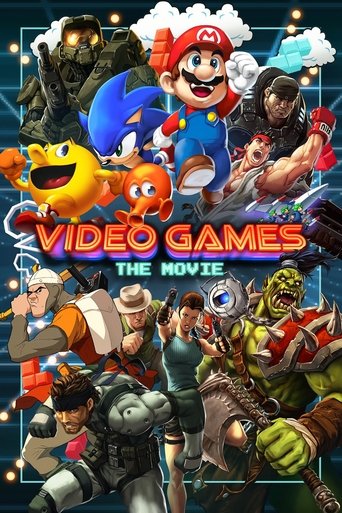
From executive producer Zach Braff and director Jeremy Snead, "Video Games: The Movie" is an epic feature length documentary chronicling the meteoric rise of video games from nerd niche to multi-billion dollar industry. Narrated by Sean Astin and featuring in-depth interviews with the godfathers who started it all, the icons of game design, and the geek gurus who are leading us into the future, "Video Games: The Movie" is a celebration of gaming from Atari to Xbox and an eye-opening look at what lies ahead.
Before Google, Yahoo and even Apple, before the Silicon Valley cliché of informal dress code, skateboards running the corridors and wild creativity became commonplace, one company embodied the digital economy lifestyle and business style: the one firm coming out of the Age of Aquarius was Atari. The story of Atari is two-thirds the story of Nolan Bushnell, founder and visionary, and one-third the first and probably biggest boom and bust of the new economy some 20 years before the new economy even existed. Atari was showing that technology is cool, way before the personal computer revolution took place and they were reaching out to an ever-growing audience with something that is still cool today: video games. Atari literally introduced the digital world to the mass consciousness.
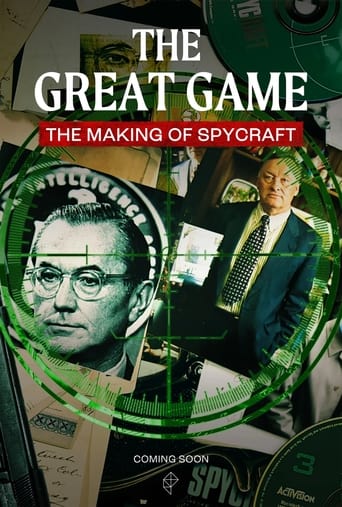
In 1995, former KGB Major General Oleg Kalugin and ex-CIA Director William Colby collaborated in an unexpected way. They made a video game. The Great Game traces how both men rose to the tops of their fields following World War II, before falling out of favor with their respectives agencies — on opposite sides of the Iron Curtain. For Kalugin, a growing discontent with the KGB’s treatment of Russians radicalized him against the institution. Meanwhile William Colby, an OSS operative and the CIA’s man on the ground in Vietnam, was fired by President Ford after testifying before Congress about controversial CIA programs like MKULTRA and CoIntelPro. After the fall of the Berlin Wall, both living on American soil, Colby and Kalugin played themselves in Spycraft, a multi-million dollar game that was among the most advanced of its time — and is now almost entirely forgotten.
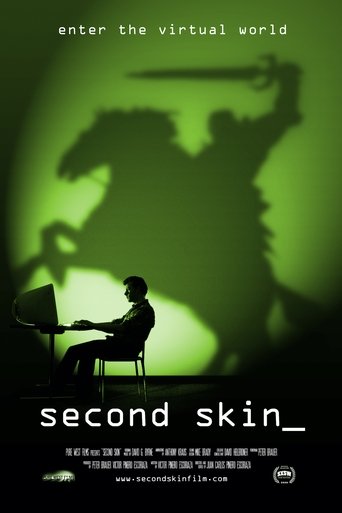
Second Skin takes an intimate look at three sets of computer gamers whose lives have been transformed by online virtual worlds. An emerging genre of computer software called Massively Multiplayer Online games, or MMOs, allows millions of users to interact simultaneously in virtual spaces. Of the 50 million players worldwide, 50 percent consider themselves addicted.
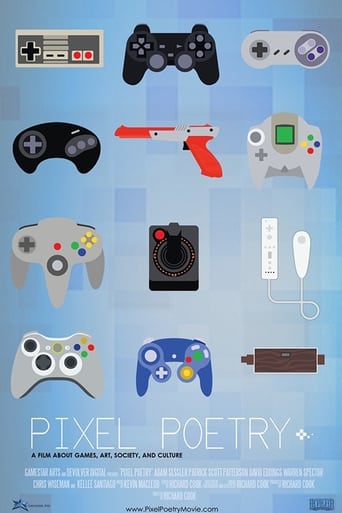
Are videogames art? Do they influence violent behavior? What effect have they had on society? How would you describe videogames to Leonardo da Vinci? These are always great questions to start a conversation. Pixel Poetry is a documentary film about progressive creative culture as it has been championed by one of its greatest advocates - videogames. Using popular debates that have long surrounded videogames as a catalyst for this, the film will analyze the misunderstood notions and arguments in art and technological advancement to bring a new perspective to a compelling discussion about the evolution of its meaning.

A critical analysis by Jacob Geller analyzing the depiction of head- (or consciouness-) transplants in video games such as Wolfenstein 2 or Soma in parallel with the history of the almost-father of head transplants (his experiences having been limited to monkeys), Robert Joseph White. How did we end up moving the center of human consciouness from the heart to the brain ? Where does the soul come in to play here? When is the body / Theseus' ship no longer the body / Theseus' ship for having had its limbs / its wood transplanted too much ?