



National Liberation Football
Documentary
Overview
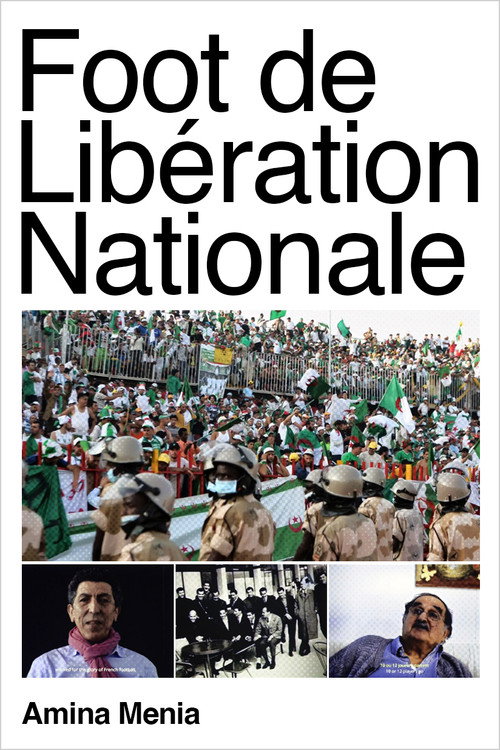
In 2009, the Algerian team won their match against Egypt, thus qualifying for the 2010 World Cup, after significant tensions during the first leg, which included the stoning of the Algerian players' bus. The artist Amina Menia recalls that the collective euphoria of these celebrations seemed almost disproportionate and unreal, reminiscent of the popular jubilation surrounding Algeria's independence in 1962. She draws a parallel between political and sporting history through the use of archival footage and two interviews, one with Rachid Mekhloufi, star of AS Saint-Étienne and an emblematic figure of Algerian football. In the second interview, Slimane Zeghidour, a writer and journalist, offers a detached and critical perspective on the impact of football on the masses. By tracing these links, she examines the relationships between national representation, sense of belonging, fervor and the destiny of a community.



Amina Menia
Amina Menia
Self
Amina Menia
Self
Rachid Mekhloufi
Rachid Mekhloufi
Self
Rachid Mekhloufi
Self
Slimane Zeghidour
Slimane Zeghidour
Self
Slimane Zeghidour
Self
Similar Movies
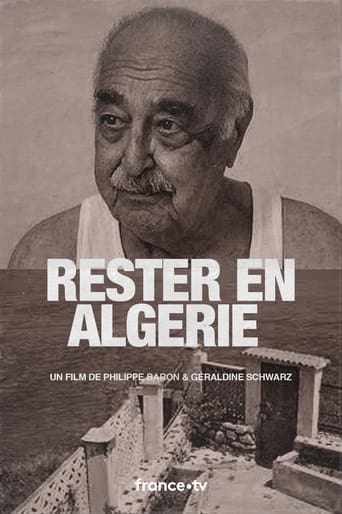
Algeria, summer 1962, eight hundred thousand French people left their native land in a tragic exodus. But 200,000 of them decided to attempt the adventure of independent Algeria. Over the following decades, political developments would push many of these pieds-noirs into exile towards France. But some never left. Germaine, Adrien, Cécile, Guy, Jean-Paul, Marie-France, Denis and Félix, Algerians of European origin, are among them. Some have Algerian nationality, others do not. Some speak Arabic, others do not. They are the last witnesses to the little-known history of these Europeans who remained out of loyalty to an ideal, a taste for adventure and an unconditional love for a land where they were born, despite all the ups and downs that the free Algeria in full construction had to go through.
Festival panafricain d'Alger is a documentary by William Klein of the music and dance festival held 40 years ago in the streets and in venues all across Algiers. Klein follows the preparations, the rehearsals, the concerts… He blends images of interviews made to writers and advocates of the freedom movements with stock images, thus allowing him to touch on such matters as colonialism, neocolonialism, colonial exploitation, the struggles and battles of the revolutionary movements for Independence.

This documentary follows the French soccer team on their way to victory in the 1998 World Cup in France. Stéphane Meunier spent the whole time filming the players, the coach and some other important characters of this victory, giving us a very intimate and nice view of them, as if we were with them.

The soccer stadium Arena Corinthians was constructed in São Paulo’s Itaquera district, approximating the club structures to the biggest stronghold of its fans. Through filming the official tour at the arena and interviewing Corinthians soccer team supporters that live on its margins, the film shows the dubious relation that takes place between them.

60 years ago, in the Algerian desert, an atomic bomb, equivalent to three or even four times Hiroshima, exploded. Named the “Blue Gerboise”, it was the first atomic bomb tested by France, and of hitherto unrivaled power. This 70 kiloton plutonium bomb was launched in the early morning, in the Reggane region, in southern Algeria, during the French colonial era. If this test allowed France to become the 4th nuclear power in the world, it had catastrophic repercussions. France had, at the time, certified that the radiation was well below the standard safety threshold. However, in 2013, declassified files revealed that the level of radioactivity had been much higher than announced, and had been recorded from West Africa to the south of Spain.
Crowds is a feature documentary that records popular events of Uruguay where thousands of people gather spontaneously, called by faith, passion, celebration and memory. What happens when we set aside our individuality to act collectively? This documentary observes the passions that draw thousands of people close in order to join in a choral character. It discovers the crowd while it transgresses and experiences catharsis, while it seeks miracles and hopes; in continuous movement it splits and rejoins... until they dissipate and individuals re-emerge in their own solitude.
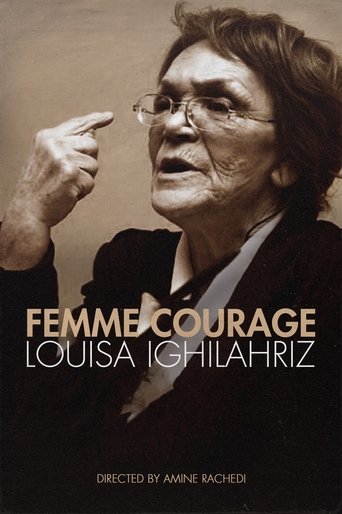
The autobiographical account of the tormented life of a witness of the century: Louisa Ighilahriz, activist and leading figure in Algerian independence. A student, she joined the independence struggle at the age of 20, joining the ranks of the FLN on the eve of the Battle of Algiers in late 1956 under the name Lila. She took part in the high school students' strike, then fled into the maquis when she was actively sought after. She was part of the French FLN support network of "suitcase carriers" during the Battle of Algiers. Seriously wounded alongside her network leader, Saïd Bakel, during an ambush in 1957, hospitalized and then imprisoned, she suffered numerous tortures in French prisons. She will be saved from certain death by an anonymous person, she will seek, for forty years, to find him just to show him her gratitude... Emblematic of the painful Franco-Algerian history, Louisa's story is poignant and imbued with humanism.

The exceptional portrait of a pacifist general, the only senior officer to have spoken out against torture. This precious testimony still remains censored in France, since no national channel has to date decided to program this documentary. Son and brother of a soldier, General Pâris de Bollardière was destined for a career in arms. He was, for many years, one of the most brilliant representatives of this adventurer career in France, from Narvik to the Algerian War. After fighting in the French maquis, he reached Indochina, where he suddenly found himself in the aggressor's camps. His beliefs are strongly shaken. But it is in Algeria, where the French army practices torture and summary executions, that he takes the big turn. He expresses his contempt to Massu, and is relieved of his command. Until his death in 1986, Jacques de Bollardière fought for world peace, from the Larzac plateaus to the Mururoa atolls.