

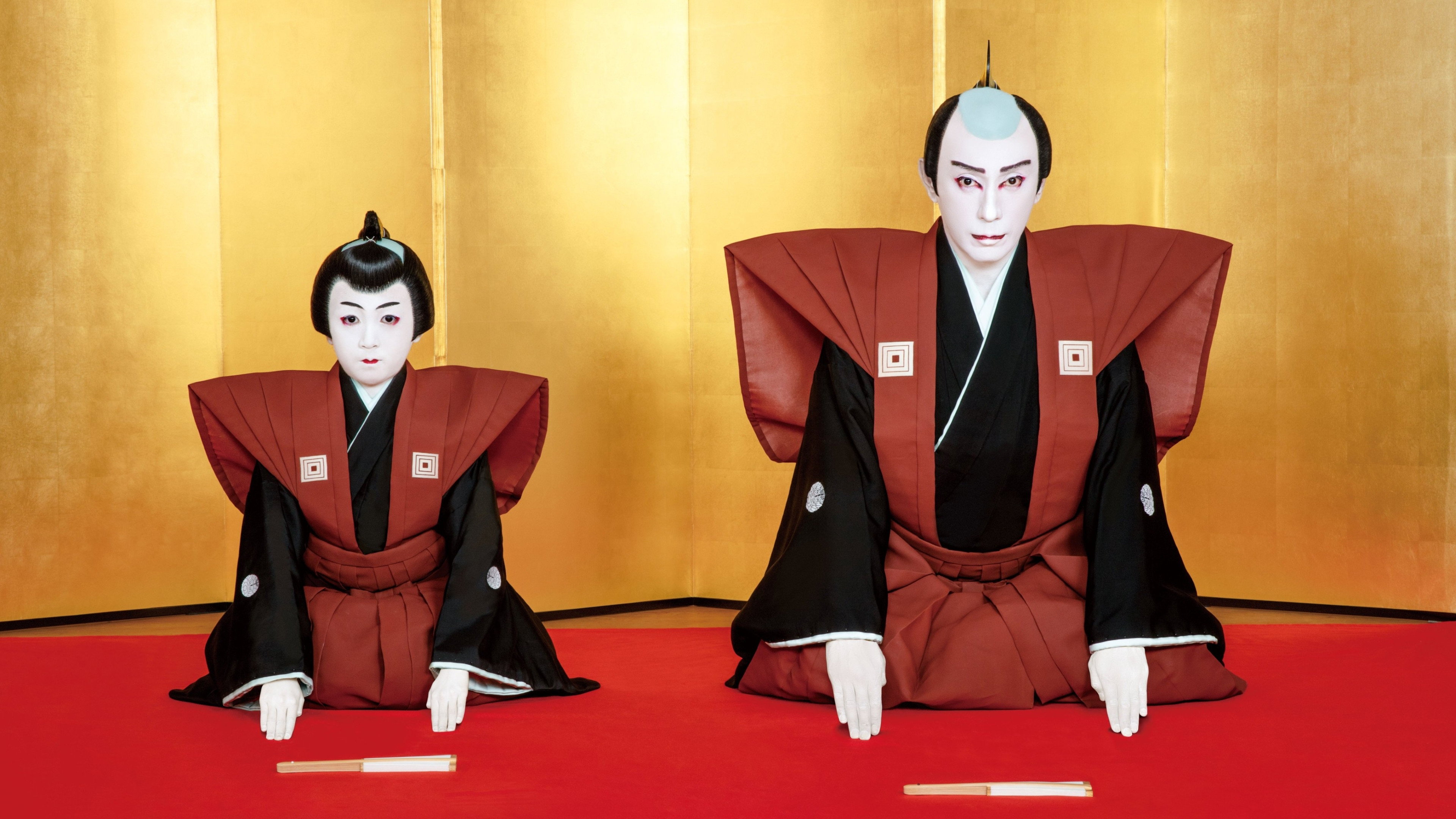
SHUMEI
Documentary
Overview
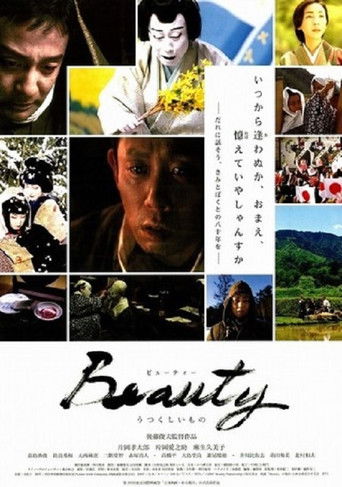
A look at the succession ceremony in which Ichikawa Danjūrō XIII formally inherited the storied Danjūrō name in Kabuki, Japan’s classical performing art. The film records the behind-the-scenes preparations for the actor’s name-inheritance debut performance.
Top Cast


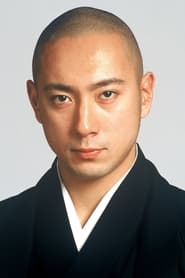
Ichikawa Ebizo XI
Ichikawa Ebizo XI
Ichikawa Ebizo XI
Similar Movies

A look back at "La Cage aux Folles", which ran non-stop for five years, from February 1973, on the stage of the Théâtre du Palais Royal in Paris. At a time when homosexuality was considered a crime by the law, Poiret and Serrault achieved great success in boulevard theater. Their success continued on the silver screen, with three Oscar nominations and a Broadway musical. Combining never-before-seen archives from the play, extracts from the film, confessions by Poiret and Serrault, and interviews with witnesses, this is the story of a wild epic.
A live performance by Charlie Jimenez & Sioul Blaphate hosted as a pre-show to Rebel Reel CineClub's 'A Most Unholy Christmas' - a screening of Alejandro Jodorowsky's The Holy Mountain (1973) at Rio Cinema, 17th December, 2024. The performance is a live-theatre and dance piece loosely inspired by Jodorowsky's film and its influenced source Mount Analogue. Through dance, masks, and live-theatre, Mount Analogue navigates a procession of ascension through transforming bodies and shapes. A primordial place of transformation, magic, and symbols.
A reel of the Noh drama Momiji-gari, in which Danjuro Ichikawa played opposite Onoe Kikugoro V as an ogress who has disguised herself as the Princess Sarashina. Filmed by Shibata Tsunekichi in the open air on a windy day in November 1899, Danjuro would allow only the one take, so that when his fan blew away in mid-performance the scene had to stay. The film re-emerged at the Kikikan theatre in 1907 where it was a great success and inspired a wave of fiction filmmaking based on traditional Japanese narratives.
Nagasaki, 1964: Following the death of his Yakuza father, 15-year-old Kikuo is taken under the wings of a famous Kabuki actor. Alongside Shunsuke, the actor’s only son, he decides to dedicate himself to this traditional form of theatre. For decades, the two young men grow and evolve together – and one will become the greatest Japanese master of the art of Kabuki.
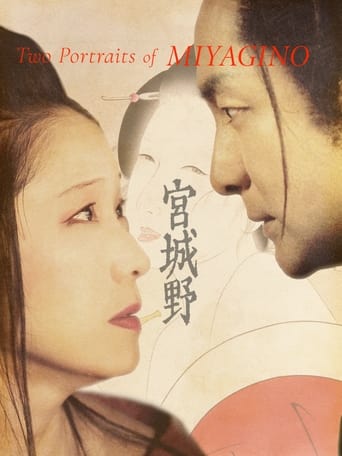
In Edo-era Japan, a ukiyo-e artist languishes in his master’s shadow. Creatively stifled, he finds consolation in the company of a prostitute, and becomes entangled in a love triangle. A mystery emerges involving two portraits and the sudden disappearance of the artist Sharaku. Helmed by Cannes-selected director Tatsuji Yamazaki, the film employs kabuki-inspired sequences and stylised sets.
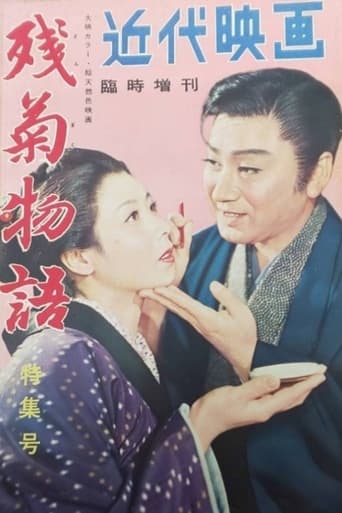
Based on the novel by Shofu Muramatsu, the film is dedicated to the actors of the renowned Japanese Kabuki theatre. Set in Japan in 1885, the story follows Kikunosuke Onoe, the adopted son of a famous Kabuki actor. Kikunosuke’s father teaches him professional acting skills, preparing him to become his successor and continue the acting dynasty. However, Kikunosuke leaves his family, much to his father’s dismay, to hone his craft outside of Tokyo and moves to Osaka.