


Ferenj
Animation
Overview
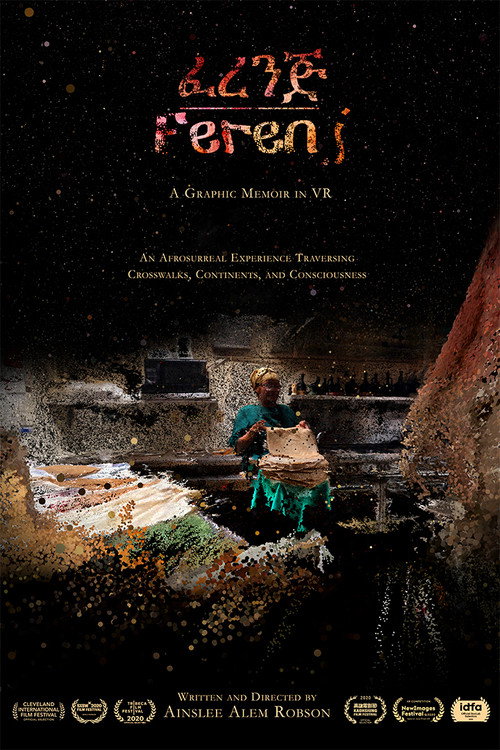
“Ferenj” is an afrosurreal dreamscape crafted from the director’s reconstructed memories questioning the meaning of home and identity as a mixed-race, Ethiopian-American growing up amidst cultural dissonance. The viewer is guided through fragments of Empress Taytu (her parents’ Ethiopian restaurant in Cleveland, OH) to the streets of Addis Ababa, Ethiopia by a speculative one-way conversation between the narrator and Empress Taytu – the restaurant personified as the historic empress. “Ferenj” harnesses photogrammetry as a tool to reclaim the 3D scanned spaces and redefine Robson’s relationship to them on her own terms.
Top Cast




Ainslee Alem Robson
Ainslee Alem Robson
Narrator
Ainslee Alem Robson
Narrator
Melkamayehu Belachew
Melkamayehu Belachew
Melkamayehu Belachew
Tewabech Belachew
Tewabech Belachew
Tewabech Belachew
Betelhem Shiferaw
Betelhem Shiferaw
Betelhem Shiferaw
Senait Robson
Senait Robson
Senait Robson
Carl A. Robson
Carl A. Robson
Carl A. Robson
Laure Michelon
Laure Michelon
Laure Michelon
Kate Stuteville
Kate Stuteville
Kate Stuteville
Spencer Daly
Spencer Daly
Spencer Daly
Cole Daly
Cole Daly
Cole Daly
Similar Movies
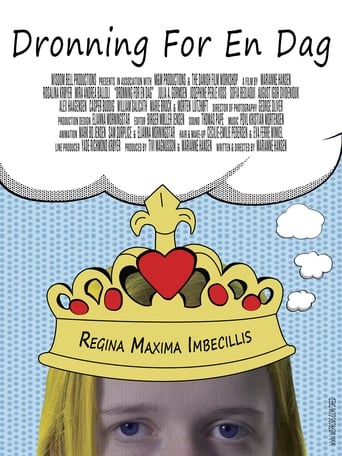
In Sara's class, the popular kids, also known as the kings and queens, are subjected to daily humiliations, which include having their pants pulled down or water thrown on them, but this is only a sign of their elevated status. Sara is the only blond and blue-eyed girl in her class, and she is completely overlooked by the kings and queens who do not have blond hair and blue eyes. She has a secret crush on one of the kings, who is way out of her league, and she doesn't have any friends either, but would like to become friends with Karen, also an outsider who aspires to a better status. One day, Sara eyes an opportunity to boost her popularity by humiliating herself and thereby become queen. Karen instantly becomes her friend, she seems to catch the eye of her kingly crush and popularity appears within her reach. However, her happiness is short-lived, and in the end she learns a far more valuable lesson than how to be queen for a day.
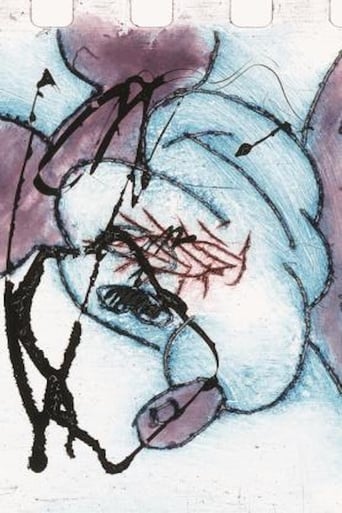
For the multimedia exhibition Tangenten I (Tangents I), Dammbeck and co-organizer, sculptor and painter Frieder Heinze had planned to collaborate on a film that would combine non-camera animation with 35mm footage of a train ride between the two Dresden districts of Radebeul and Pieschen. When the exhibition was banned in 1978, Heinze turned to other projects, but Dammbeck continued working on the film by himself. Metamorphoses I—the first experimental film ever to be shown publicly in East Germany—marks the filmic beginning of Dammbeck’s long-term art project the Herakles-Konzept (Hercules Concept).
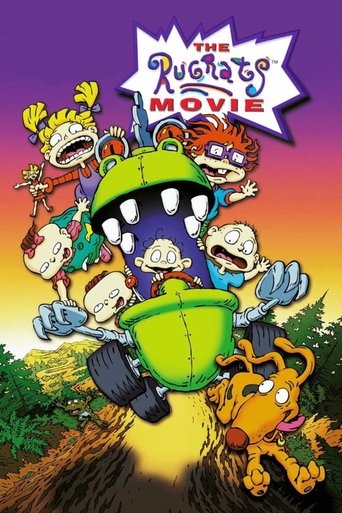
The Pickles family welcome a new arrival, Dil, whose constant crying and need for attention quickly exhaust the other toddlers. Seeking to return the "broken" baby to the hospital, the gang embarks on a journey in a Reptar Wagon that inadvertently veers off course, leaving them stranded in a vast, dangerous forest. While facing off against escaped circus monkeys and a predatory wolf, Tommy must overcome his own resentment to protect his brother and make it back home.
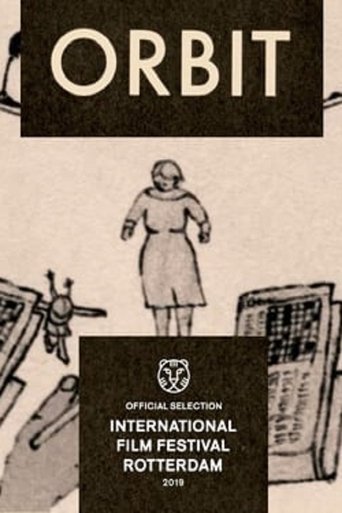
The sun’s energy circulates throughout the earth, feeding the cycle of life. Everything is connected in a natural loop, which repeats, like the circular discs of magical optical toys. This perfectly balanced rhythm is disrupted by human excess, throwing the cycle out of orbit and temporarily stopping the circulation of energy in nature.
Edan (19) and Dula (18) navigate love, identity, and self-acceptance on a journey about coming into oneself and out to the world. Confronting fear, shame, and societal expectations, the boys rediscover a sense of belonging in their own paradise, in this celebration of queer love, vulnerability, and the power of embracing who you are.
This is a didactic film in disguise. A progression of brilliant geometric shapes bombard the screen to the insistent beat of drums. The filmmaker programmed a computer to coordinate a highly complex operation involving an electronic beam of light, colour filters and a camera. This animation film, without words, is designed to expose the power of the cinematic medium, and to illustrate the abstract nature of time.