

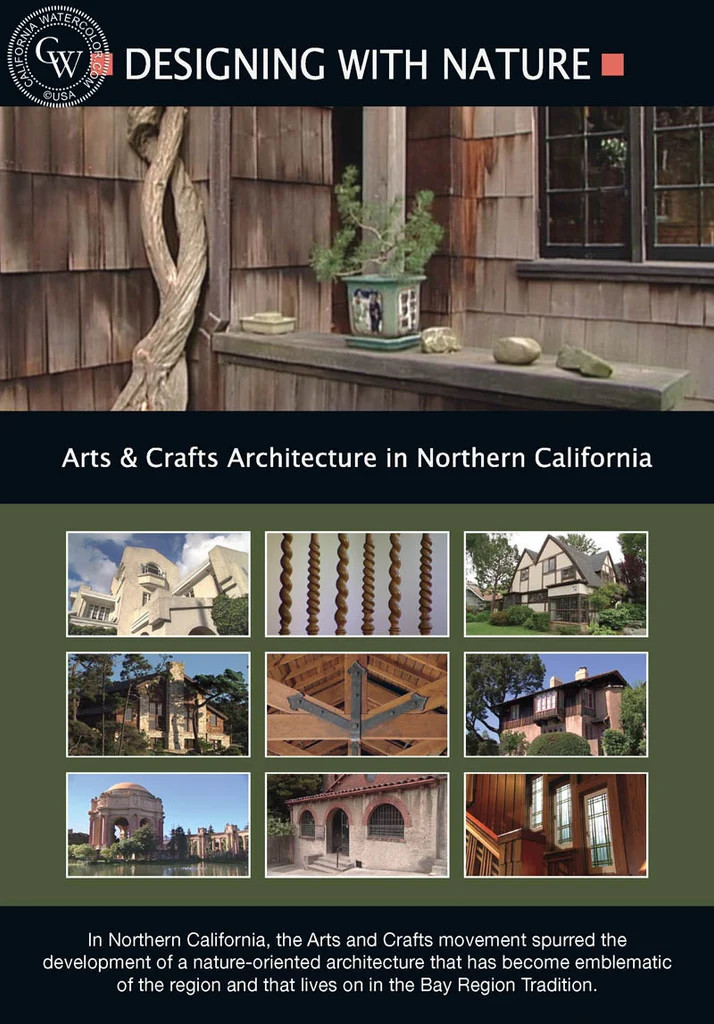
Designing With Nature: Arts & Crafts Architecture in Northern California
Documentary
Overview
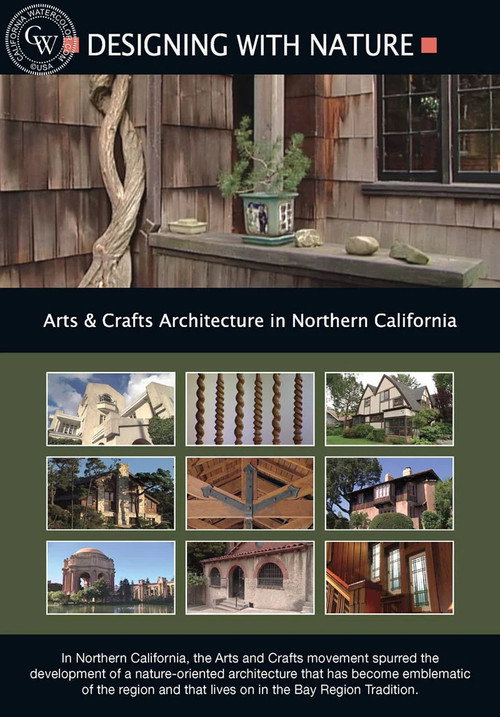
Designing with Nature provides a vivid account of a pivotal chapter in the architectural history of Northern California. Set in the late 19th and early 20th centuries, the documentary examines the work of several major architects who were influenced by Arts and Crafts ideals, as well as by the reformist ethos of the Progressive Era. These designers sought to create an architecture suited to the landscape, climate, and emerging culture of the region. Rejecting Victorian excess and the artificial separation of art and craft, they strove to create an organic architecture based on unified design and harmony with nature.
Top Cast




Richard Doyle
Richard Doyle
Narrator
Richard Doyle
Narrator
Robert Judson Clark
Robert Judson Clark
Commentary
Robert Judson Clark
Commentary
Richard Longstreth
Richard Longstreth
Commentary
Richard Longstreth
Commentary
Kenneth Cardwell
Kenneth Cardwell
Commentary
Kenneth Cardwell
Commentary
Richard Guy Wilson
Richard Guy Wilson
Commentary
Richard Guy Wilson
Commentary
Leslie Freudenheim
Leslie Freudenheim
Commentary
Leslie Freudenheim
Commentary
Susan Cerny
Susan Cerny
Commentary
Susan Cerny
Commentary
James Lawrence
James Lawrence
Commentary
James Lawrence
Commentary
John Gaul
John Gaul
Commentary
John Gaul
Commentary
Carol Ann Rogers
Carol Ann Rogers
Commentary
Carol Ann Rogers
Commentary
Similar Movies
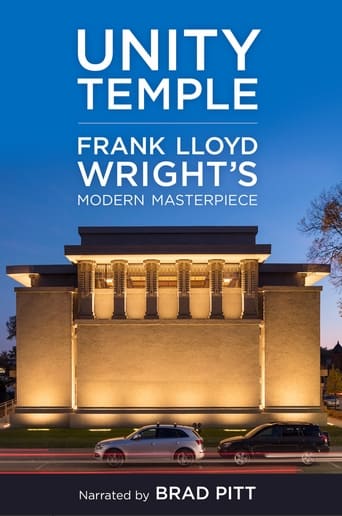
Frank Lloyd Wright’s Modern Masterpiece, Unity Temple is an homage to America’s most renowned architect. The film pulls back the curtain on Wright’s first public commission in the early 1900’s to the painstaking efforts to restore the 100 year old building back to its original beauty. The dedicated team of historians, craftspeople, members of the Unitarian congregation and Unity Temple Restoration Foundation reveal the history of one of Wright’s most innovative buildings that merged his love of architecture with his own spiritual values. The film intersperses the architect’s philosophies with quotes narrated by Brad Pitt.
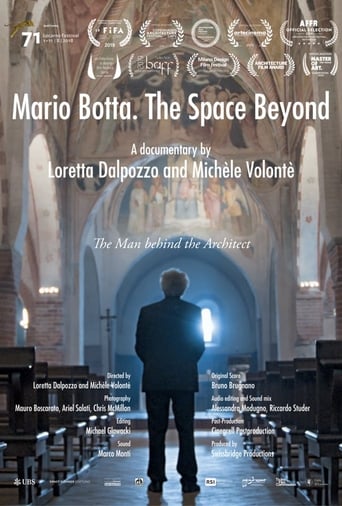
A rare, in-depth artistic journey into the work of internationally acclaimed Swiss architect Mario Botta. The film explores Botta's ever growing curiosity and reflections on the contractions of society through his sacred spaces, a subject very dear to him. Why does globalized society feel the urge to build such spaces? The directors traveled to China, South Korea, Israel, Italy, and Switzerland to discover a passionate and tireless artist, his buildings, and part of his creative process. Botta is one of the few architects who has built places of prayer for three main monotheistic religions. After building many churches, chapels, and synagogue, he is now working on a mosque in China. Through his thoughts and his interaction with artists, colleagues, clients, and family members, the viewers have a glimpse of the man behind the Architect.

"I especially hope to inspire young women, because I often feel like so much emphasis is put on how beautiful you are, and how thin you are, and not a lot of emphasis is put on what you can do and how smart you are. I'd like to change the emphasis of what's important when looking at a woman." Filmed in San Francisco in 2000, Margaret Kilgallen (1967-2001) discusses the female figures she incorporated into many of her paintings and graffiti tags. Loosely based on women she discovered while listening to folk records, watching buck dance videos, or reading about the history of swimming, Kilgallen painted her heroines to inspire others and to change how society looks at women. Three of Kilgallen's heroines—Matokie Slaughter, Algia Mae Hinton, and Fanny Durack—are shown and heard through archival recordings. Kilgallen is shown tagging train cars with her husband, artist Barry McGee, in a Bay Area rail yard and painting in her studio at UC Berkeley (source: Art21).
Poème Électronique is an 8-minute piece of electronic music by composer Edgard Varèse, written for the Philips Pavilion at the 1958 Brussels World’s Fair. The Philips corporation commissioned Le Corbusier to design the pavilion, which was intended as a showcase of their engineering progress. The pavilion was shaped like a stomach, with a narrow entrance and exit on either side of a large central space. As the audience entered and exited the pavilion, the electronic composition Concret PH by Iannis Xenakis (who also acted as Le Corbusier's architectural assistant for the pavilion's design) was heard. Poème électronique was synchronized to a film of black and white photographs selected by Le Corbusier which touched on vague themes of human existence.
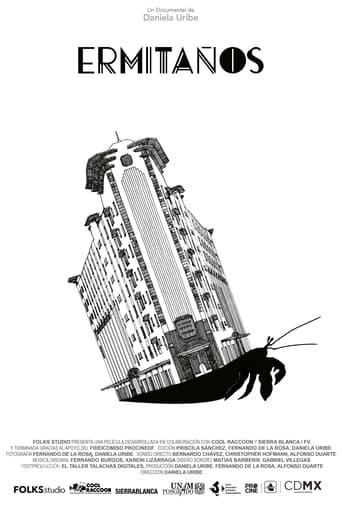
In the midst of the chaos of México City, a group of eight bachelor millennials who call themselves ´The Hermits´, open the doors to their tiny apartments in the historic Ermita Building, in the yet-to-be gentrified neighborhood of Tacubaya, and share their life experiences in a time when precarity changes the way in which we love, feel and relate to each other. As we explore the homes of these eight neighbors, we also witness their personalities intersect in a Whatsapp chat, a virtual space that functions as a supporting system that helps them face the adversities that living alone in this city brings.
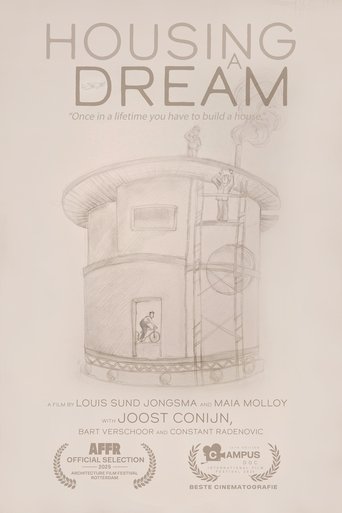
Housing a Dream follows Dutch visionary artist Joost Conijn as he builds his dream home—an unconventional, rotating house that turns with the help of a red bicycle mounted to its floor. By pedaling, Joost can orient the house to follow the sunlight, reflecting his work's delicate balance between function and poetry. Through his process, the film explores the philosophies shaped by a lifetime of craftsmanship, revealing how building a home can become a profound act of artistic creation.
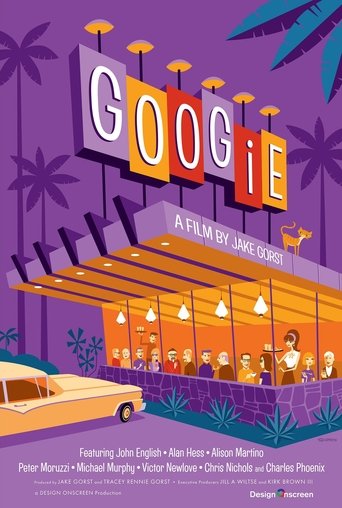
Googie architecture was one of the most visually exuberant and culturally formative design movements of the mid-20th century, yet it remains widely misunderstood. Defined by bold angles, sweeping rooflines, neon signage, and a sense of space-age optimism, Googie transformed everyday buildings into roadside spectacle. Coffee shops, bowling alleys, car washes, banks, and churches were designed not just for function, but to captivate motorists cruising by. Rooted in Los Angeles, the movement drew inspiration from visionary architects such as Frank Lloyd Wright and John Lautner, while firms like Armet & Davis brought futuristic flair to the commercial landscape. Though many original structures have been lost, preservationists now champion Googie as a serious architectural expression—one that captured the aspirations of postwar America and reshaped the visual identity of the modern city.