

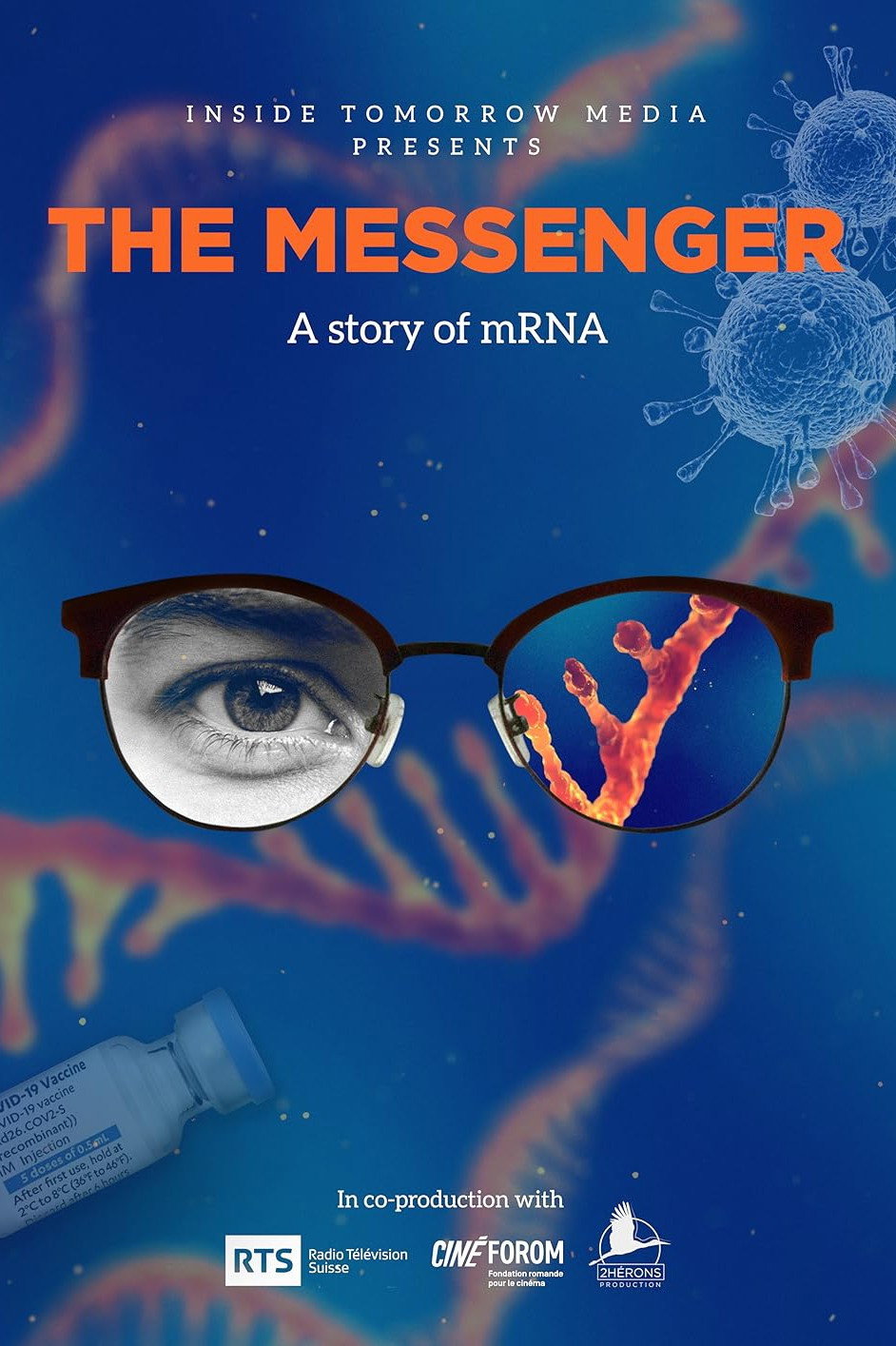
The Messenger: A Story of mRNA
Documentary
Overview
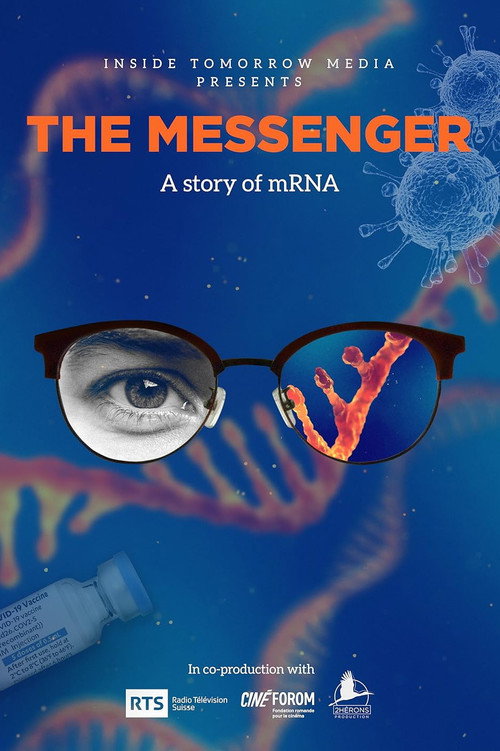
The Messenger documentary film is revealing a fascinating story of mRNA technology applied in the recent Covid-19 vaccines developed by Pfizer/ BioNTech and Moderna. Unaware of the upcoming pandemic 2020, researchers were initally looking for the best gene therapy methods to fight cancer, AIDS and other deadly diseases.
Top Cast






Katalin Karikó
Katalin Karikó
Katalin Karikó
Similar Movies
More and more bacteria are becoming insensitive to antibiotics, not least due to excessive drug consumption. According to the EU, this problem could soon become as explosive as the environmental issue - and antibiotic resistance threatens to become one of the main causes of death worldwide. Research must therefore find alternatives - not miracle cures, but permanently effective drugs. There has already been one in the past: One hundred years ago, the French biologist Félix d'Hérelle discovered mysterious "bacteria-eating" viruses, known as bacteriophages or phages for short. He used these to successfully treat bacterial infections before the development of antibiotics, but his method was forgotten again. Is bacteriophage therapy the miracle medicine of the future?
A team of international skiers embark on a two-week glacier traverse connecting two remote research stations in Kazakhstan. The Tien Shan's 4000+ meter peaks host an active scientific community, leveraging the rare environmental conditions for groundbreaking research. Established during the Soviet Union's occupation, the high-altitude research stations here are home to some of the longest-standing glacier and cosmic radiation experiments in the world - and are surrounded by deadly alpine terrain.
In recent years, the brain has become the new playground for top-level athletes and their trainers. At a time of standardized physical training, the brain has become the new frontier of effort and performance. Taming and taming it is a priority today for anyone who wants to become and remain the number 1 athlete. The documentary film "Open Brain - In the Brains of Athletes" takes us to the very limits of the human brain, as seen through the eyes of some of the world's finest athletes. These include basketball player Rudy Gobert, Formula 1 driver Charles Leclerc, surfer Justine Dupont and footballer Pierre Emerick Aubameyang.
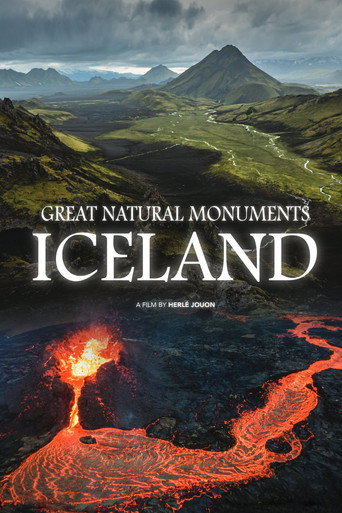
The fascinating landscape formations of Iceland in the North Atlantic bear witness to the beauty and primal power of nature. They were created through the interaction of powerful volcanic, geological and biological processes that have been changing the face of the earth for billions of years. This is what the Earth might have looked like four billion years ago. Iceland is the realm of ice and fire. Nowhere else is there such a high density of volcanoes. The landscapes, which are continually reshaped by eruptions, make the island a natural laboratory full of clues about the formation and development of the earth. The documentary follows a group of scientists through the most active areas of Iceland, along a mountain range that has emerged from the ocean. On the slopes of the volcanoes, in the fog of the fumaroles and on streams and rivers, the three researchers explore how the first forms of life populated the earth's surface and in what evolutionary steps they took over the earth.
Three million years ago, camels roamed through Greenland’s endless forests and our ancestors lived in the trees. It all came to an end with the Ice Ages. What died and what survived, as natural selection shaped the evolutionary tree during this epochal shift from hot to cold? Until now, scientists have known less about the natural world before the Ice Age than they did about the age of dinosaurs, which ended 64 million years ago. A new discovery is set to reveal this lost world, species by species. Led by Danish gene-hunter Eske Willerslev, a team of scientists for the first time in history is sequencing DNA from before the Ice Age. The picture that emerges is of a hot planet, when forests blanketed the Arctic and carbon levels matched those in our atmosphere today. Is this a portrait of our own climate future?
In this educational film, laboratory demonstrations show the effects of moisture and temperature on the growth of molds. Photomicrography reveals the structure of molds: hyphae, mycelium, spore balls, spores. Beginning with spores on a rice culture, time-lapse photography shows the formation of a new colony.
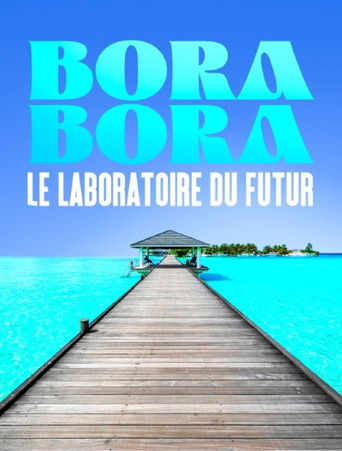
Bora Bora is the most popular destination in French Polynesia, certainly because of its lagoon, considered the most beautiful lagoon in the world. In this context, the islet could have sunk under concrete and pollution, and the reef could have been irreparably impacted. However, thanks to the will of a handful of inhabitants including the mayor of the island, Bora Bora is today a model of sustainable development, with water treatment technologies that are 15 years ahead of France, programs to rebuild corals and protect wildlife, educational actions and the rehabilitation of Polynesian traditions such as “rahui” and the establishment of a monitoring network using new technologies. All of this makes the island a veritable open-air laboratory that shows the way for all tropical coastal environments around the world.