

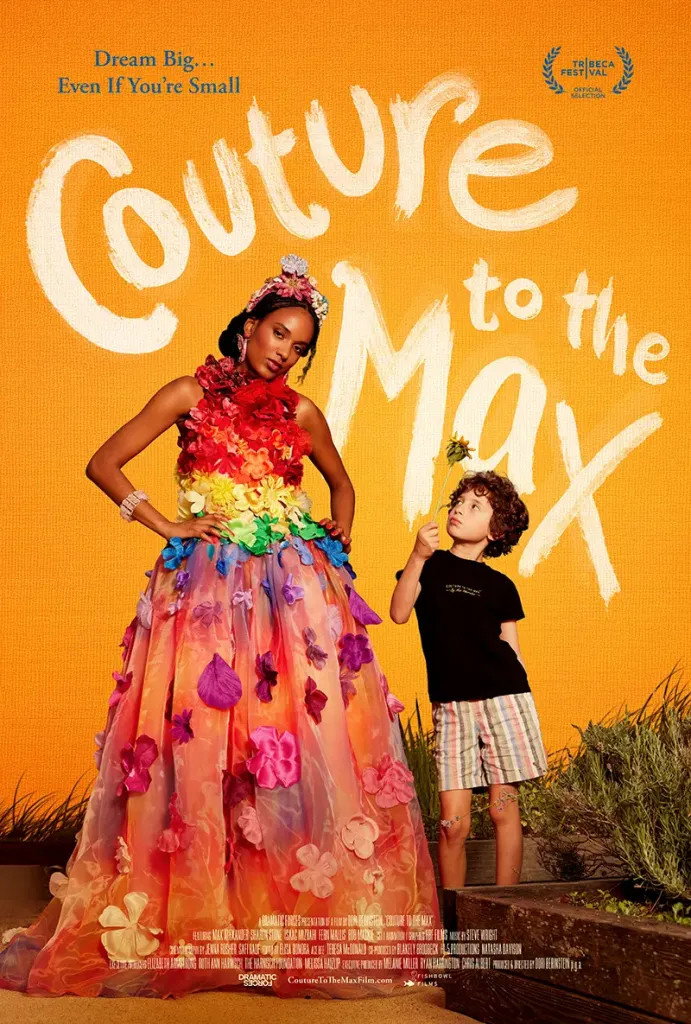
Couture to the Max
Documentary
Overview
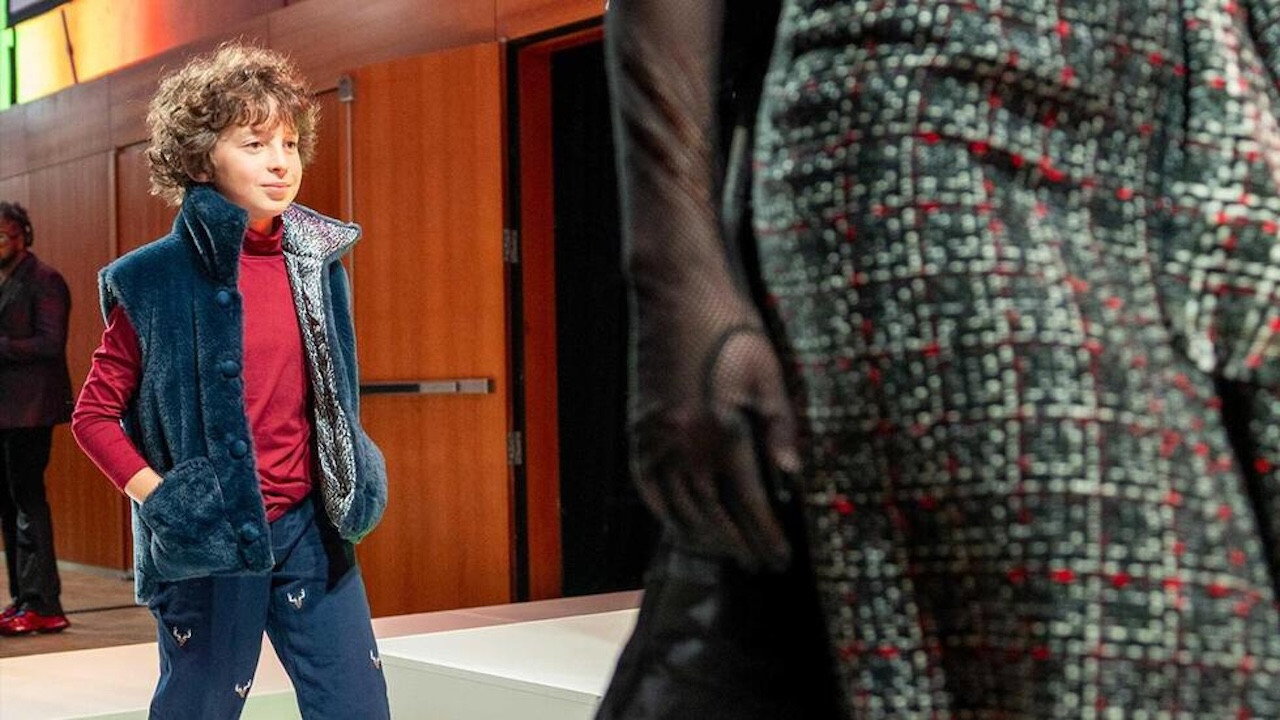
At just 9-years-old, fashion prodigy Max Alexander fearlessly fuses his boundless imagination with an unwavering commitment to sustainability, inspiring us to dream boldly and act responsibly.



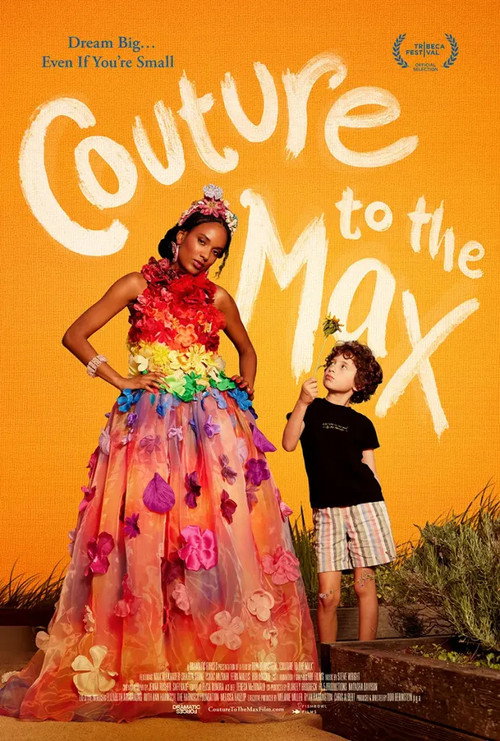
Max Alexander
Max Alexander
Self
Max Alexander
Self
Bob Mackie
Bob Mackie
Self
Bob Mackie
Self
Sherri Madison
Sherri Madison
Self
Sherri Madison
Self

Fern Mallis
Fern Mallis
Self
Fern Mallis
Self

Isaac Mizrahi
Isaac Mizrahi
Self
Isaac Mizrahi
Self

Sharon Stone
Sharon Stone
Self
Sharon Stone
Self
Similar Movies

This short focuses on the job of the costume designer in the production of motion pictures. The costume designer must design clothing that is correct for the film historically and geographically, and must be appropriate for the mood of the individual scene. We see famed costume designer Edith Head at work on a production. The Costume Designer was part of The Industry Film Project, a twelve-part series produced by the film studios and the Academy. Each series episode was produced to inform the public on a specific facet of the motion picture industry. Preserved by the Academy Film Archive in 2012.

At age 25, Olivier Rousteing was named the creative director of the French luxury fashion house, Balmain. At the time, Rousteing was a relatively unknown designer, but in the decade since, he’s proven his business prowess and artistic instinct by leading Balmain to new heights. Wonderboy gives the viewer the rare opportunity to experience the inner sanctum of the fashion world, as we stand shoulder-to-shoulder with this extraordinary individual while he works.
The film opens with general views and shows building works and Sherpas loading up. Scenes of threshing and a campsite, with Sherpas and huts. A settlement is then shown, including people weaving. Scenes of walking in towards the mountains and climbing in the foothills. More threshing scenes and the film ends with shots of the mountains and village.

Today, few people's clothes attract as much attention as the royal family, but this is not a modern-day paparazzi-inspired obsession. Historian Dr. Lucy Worsley, Chief Curator at Historic Royal Palaces, reveals that it has always been this way. Exploring the royal wardrobes of our kings and queens over the last four hundred years, Lucy shows this isn't just a public fascination, but an important and powerful message from the monarchs. From Elizabeth I to the present Queen Elizabeth II, Lucy explains how the royal wardrobe's significance goes far beyond the cut and color of the clothing. Royal fashion is, and has always been, regarded as a very personal statement to reflect their power over the reign. Most kings and queens have carefully choreographed every aspect of their wardrobe; for those who have not, there have sometimes been calamitous consequences. As much today as in the past, royal fashion is as much about politics as it is about elegant attire.

What do you call an Indian woman who's funny in 20th Century Britain? A British performer? A Black comedienne? An enigma? This humorous and comedic documentary, brings the laughs and dreams of four Indian women cabaret performers while posing the questions: What is comedy and who defines it? Is it culturally specific, or can anyone enjoy the joke? Who makes it into the mainstream and why? Does comedy always have to come from a white perspective in Britain to be taken seriously? What -- ultimately, do you call a funny Indian woman?
This film undertakes a journey into the amazing parallel universe of East Berlin’s fashion designers and experts in the art of survival. For, in the midst of the constraints of life in the GDR, there existed a fantasy world where it was possible to dance to another tune, be individual and even provocative. The most important characteristic of this bohemian scene was one’s per- sonal style. But this certainly wasn’t something that could be bought off the peg in the GDR. In this parallel universe it was up to you to create your own individual image – with your own hands. This film tells the story of the desires, the passion and the dreams that were tried and tested, lived and performed in the shadow of the Berlin Wall.
A multimedia short created for the U.S. millennium celebrations, The Unfinished Journey reflects on America’s history and spirit through six chapters—immigration, war, culture, civil rights, and innovation. Commissioned by President Bill Clinton and premiered at the Lincoln Memorial on New Year’s Eve 1999, the film features an original orchestral score by John Williams titled American Journey.