

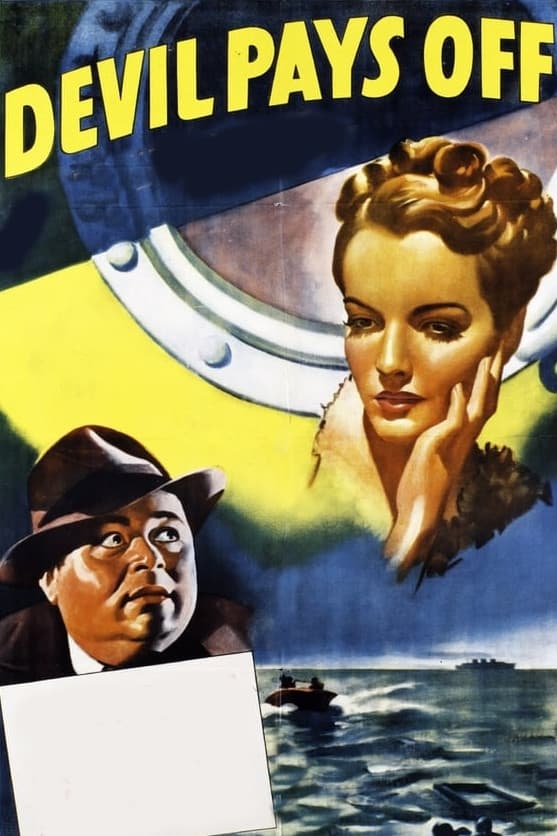
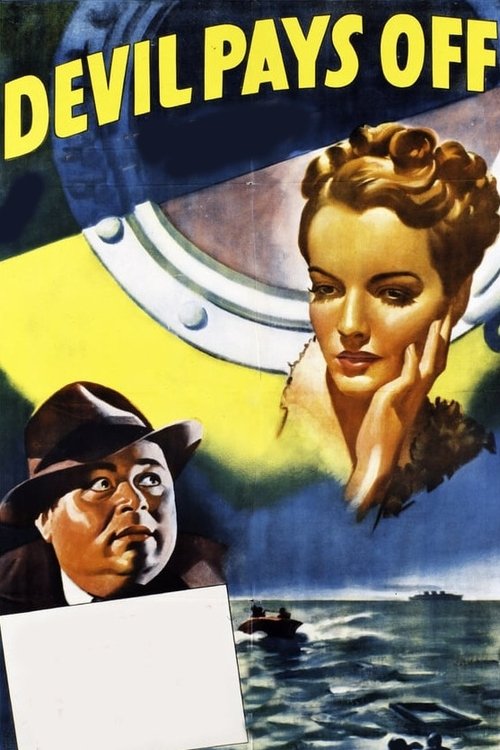
Devil Pays Off
Crime · War · Drama
Overview
A former Navy man attempts to redeem his honor by exposing a shipping tycoon's dealings with the enemy.
Top Cast
J. Edward Bromberg
Arnold DeBrock

Osa Massen
Valeria DeBrock
William Wright
Christopher Waring

Margaret Tallichet
Joan Millard

Abner Biberman
Carlos Castillo-Martinez

Martin Kosleck
Grebb, Henchman

Charles D. Brown
Capt. Jonathan Hunt
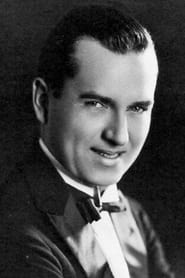
Ivan Miller
Capt. Brigham
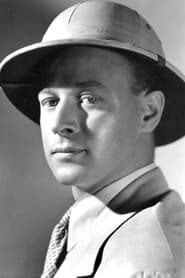
Roland Varno
Ship's Doctor
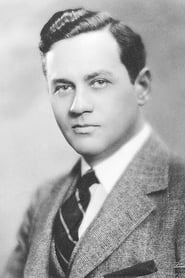
Sam Ash
Policeman
Edward Biby
Ship's Passenger
Roy Darmour
Steward








J. Edward Bromberg
J. Edward Bromberg
Arnold DeBrock
J. Edward Bromberg
Arnold DeBrock
Osa Massen
Osa Massen
Valeria DeBrock
Osa Massen
Valeria DeBrock
William Wright
William Wright
Christopher Waring
William Wright
Christopher Waring
Margaret Tallichet
Margaret Tallichet
Joan Millard
Margaret Tallichet
Joan Millard
Abner Biberman
Abner Biberman
Carlos Castillo-Martinez
Abner Biberman
Carlos Castillo-Martinez
Martin Kosleck
Martin Kosleck
Grebb, Henchman
Martin Kosleck
Grebb, Henchman
Charles D. Brown
Charles D. Brown
Capt. Jonathan Hunt
Charles D. Brown
Capt. Jonathan Hunt
Ivan Miller
Ivan Miller
Capt. Brigham
Ivan Miller
Capt. Brigham
Roland Varno
Roland Varno
Ship's Doctor
Roland Varno
Ship's Doctor
Sam Ash
Sam Ash
Policeman
Sam Ash
Policeman
Similar Movies
During World War II, spy Wu Lai-sheung is instructed by her superior Fan Yeung-shan to murder spy number 13 Cheung Chi-ping. While Wu establishes a relationship with Sakei, the assistant general of the Japanese army, she also gets acquainted with Cheung. Cheung and Wu fall in love. Wu recommends Cheung to become Sakei's driver. Cheung pretends to court the Japanese spy Siu-kuen, but Siu-kuen arranges to kill the spies contacting with him. Cheung has seen through Kuen's identity for long. When Kuen is going to kill Wu, Cheung kills Kuen, Fan compels Wu to kill Cheung. Wu follows the instruction to murder Cheung. After the murder, Wu disappears. After the war, Fan discovers Wu ends up in asylum. When he visits Wu, he tells her of Cheung's innocence. This breaks Wu's heart. Cheung turns out to have seen through Wu's identity for a long time and pretended to have been killed to cover up his identity and facilitate his work. With the truth known and the war ended, Cheung and Wu married.
A fictionalised essay read by Ben Wishaw exploring the complicated relationship between British espionage and male homosexuality. An anonymous narrator talks through the various chapters of his life as a spy and a gay man in late 20th-century Britain. His vivid stories of intimacy and surveillance play out over shots of the luscious countryside, busy Central London streets, and nighttime cruising zones.

Years of warfare end in a Japan unified under the Tokugawa shogunate, and samurai spy Sasuke Sarutobi, tired of conflict, longs for peace. When a high-ranking spy named Tatewaki Koriyama defects from the shogun to a rival clan, however, the world of swordsmen is thrown into turmoil. After Sasuke is unwittingly drawn into the conflict, he tracks Tatewaki, while a mysterious, white-hooded figure seems to hunt them both. By tale’s end, no one is who they seemed to be, and the truth is far more personal than anyone suspected. Director Masahiro Shinoda’s Samurai Spy, filled with clan intrigue, ninja spies, and multiple double crosses, marks a bold stylistic departure from swordplay film convention.
A British scientist is discovered to have been passing information to the Communists, then kills himself. Another scientist decides that they might have brainwashed him by a sensory deprivation technique, but he doesn’t know if someone really can be convinced to act against their strongest feelings. So he agrees to be the subject in an experiment in which others will try to make him stop loving his wife.