

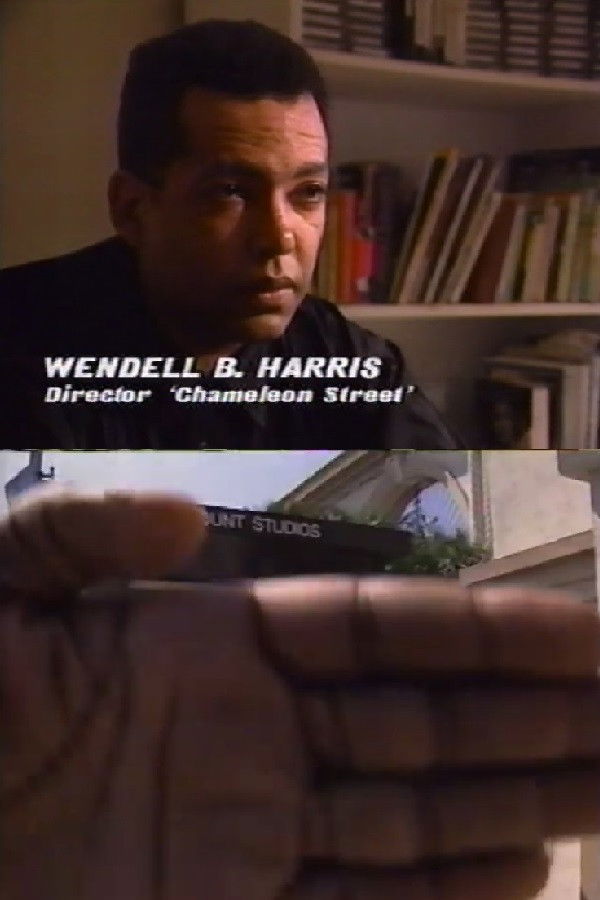
Chameleon Street: The Black Film They Could Not Sell
TV Movie · Documentary
Overview
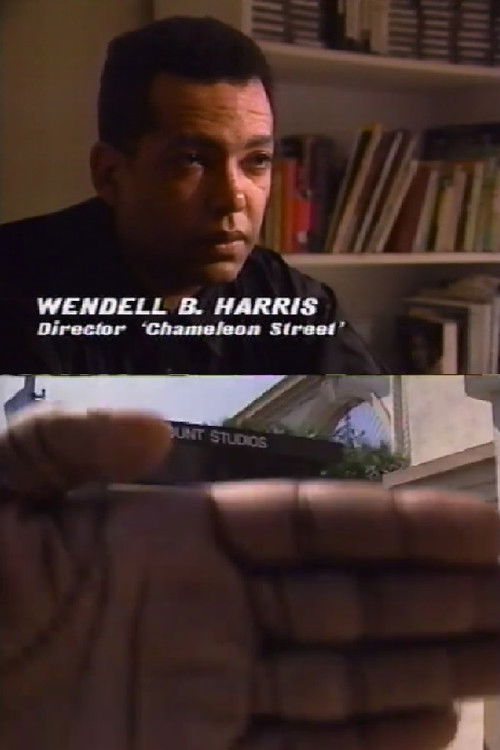
Elvis Mitchell uncovers why Chameleon Street (1989) by Wendell B. Harris Jr. failed to secure a proper distributor deal. Originally aired as a segment on "20/20".
Top Cast
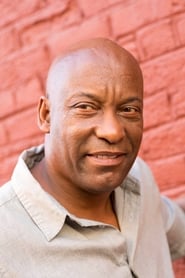
John Singleton
Self - Director, 'Boyz N' the Hood' (archive footage)
John Powers
Self - Film Critic

Steven Soderbergh
Self - Director, 'Sex, Lies & Videotape'
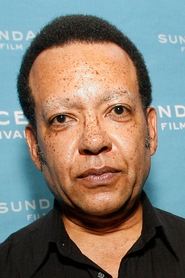
Wendell B. Harris Jr.
Self - Director, 'Chameleon Street'
Russell Schwartz
Self - Miramax Distributors, 'Sex, Lies & Videotape'

Elvis Mitchell
Self - Film Critic

Will Smith
Self (archive footage)

Warrington Hudlin
Self - Producer, 'House Party'
Armond White
Self - Film Critic
Robert Krulwich
Self - Host





John Singleton
John Singleton
Self - Director, 'Boyz N' the Hood' (archive footage)
John Singleton
Self - Director, 'Boyz N' the Hood' (archive footage)
John Powers
John Powers
Self - Film Critic
John Powers
Self - Film Critic
Steven Soderbergh
Steven Soderbergh
Self - Director, 'Sex, Lies & Videotape'
Steven Soderbergh
Self - Director, 'Sex, Lies & Videotape'
Wendell B. Harris Jr.
Wendell B. Harris Jr.
Self - Director, 'Chameleon Street'
Wendell B. Harris Jr.
Self - Director, 'Chameleon Street'
Russell Schwartz
Russell Schwartz
Self - Miramax Distributors, 'Sex, Lies & Videotape'
Russell Schwartz
Self - Miramax Distributors, 'Sex, Lies & Videotape'
Elvis Mitchell
Elvis Mitchell
Self - Film Critic
Elvis Mitchell
Self - Film Critic
Will Smith
Will Smith
Self (archive footage)
Will Smith
Self (archive footage)
Warrington Hudlin
Warrington Hudlin
Self - Producer, 'House Party'
Warrington Hudlin
Self - Producer, 'House Party'
Armond White
Armond White
Self - Film Critic
Armond White
Self - Film Critic
Robert Krulwich
Robert Krulwich
Self - Host
Robert Krulwich
Self - Host
Similar Movies
Heavy metal band Iron Maiden's 2008 Somewhere Back in Time World Tour. This concert recording accompanies the documentary film "Iron Maiden: Flight 666". The 16 songs performed were filmed live in 16 different cities giving you the full experience of the live power of Maiden and their fans all around the globe.
In 1946, Isaac Woodard, a Black army sergeant on his way home to South Carolina after serving in WWII, was pulled from a bus for arguing with the driver. The local chief of police savagely beat him, leaving him unconscious and permanently blind. The shocking incident made national headlines and, when the police chief was acquitted by an all-white jury, the blatant injustice would change the course of American history. Based on Richard Gergel’s book Unexampled Courage, the film details how the crime led to the racial awakening of President Harry Truman, who desegregated federal offices and the military two years later. The event also ultimately set the stage for the Supreme Court’s landmark 1954 Brown v. Board of Education decision, which finally outlawed segregation in public schools and jumpstarted the modern civil rights movement.
"The Laramie Project" is set in and around Laramie, Wyoming, in the aftermath of the murder of 21-year-old Matthew Shepard. To create the stage version of "The Laramie Project," the eight-member New York-based Tectonic Theatre Project traveled to Laramie, Wyoming, recording hours of interviews with the town's citizens over a two-year period. The film adaptation dramatizes the troupe's visit, using the actual words from the transcripts to create a portrait of a town forced to confront itself.
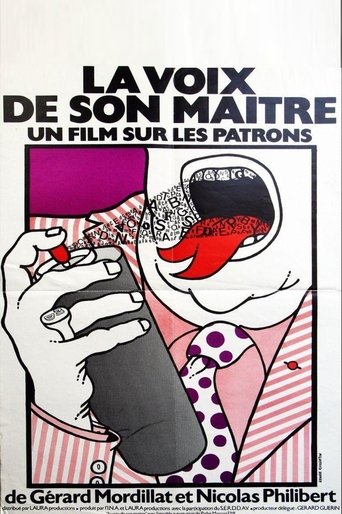
Jacques Lemonnier of IBM France, Francois Dalle of L'Oreal and other ultrapowerful French moguls are surprisingly candid -- and cold-blooded -- as they discuss their attitudes about business in this startling 1978 documentary. After sounding off about unions, strikes, hierarchy and management, the subjects realized how callous they sounded and managed to convince the French government to suppress the film.

The life and work of New York artist Jean-Michel Basquiat have been marked by a long quest for identity, by his Haitian and Puerto Rican family origins and by a founding trip to Africa. To portray this major painter of the 20th century, who died in 1988 at only 27 years old, is also to evoke the place of black American artists in the conservative and racist America of the Reagan years.
The film discusses the traits and originators of some of metal's many subgenres, including the New Wave of British Heavy Metal, power metal, Nu metal, glam metal, thrash metal, black metal, and death metal. Dunn uses a family-tree-type flowchart to document some of the most popular metal subgenres. The film also explores various aspects of heavy metal culture.
More than two-dozen music-videos directed by filmmaker Mark Romanek (One-Hour Photo) are collected together in this compilation from Palm Pictures. Among the songs featured in The Work of Director Mark Romanek are "Novocaine for the Soul" by Eels, "99 Problems" by Jay-Z, and "Hurt" by Johnny Cash.
Under pressure from activist groups, art is increasingly being cancelled for ideological reasons, because of 'cultural appropriation' or because of the desire for a 'safe space'. The colour and gender of the artist seem to be all-determining in this. How do you relate to this as an artist? Is this a disturbing development or a sign of emancipation? And what does it mean for freedom of expression? Director Karin Junger investigates this with Anne-Fay Kops, Ted van Lieshout, Angel-Rose Oedit Doebé, Raymi Sambo, Boris van Berkum, Marian Markelo, Stephan Sanders and Thomas Chatterton Williams.

Born in Berlin in 1896, Lotte Eisner became famous for her passionate involvement in the world of both German and French cinema. In 1936, together with Henri Langlois, she founded the Cinémathèque Française with the goal of saving from destruction films, costumes, sets, posters, and other treasures of the 7th Art. A Jew exiled in Paris, she became a pillar of the capital's cultural scene, where she promoted German cinema.