

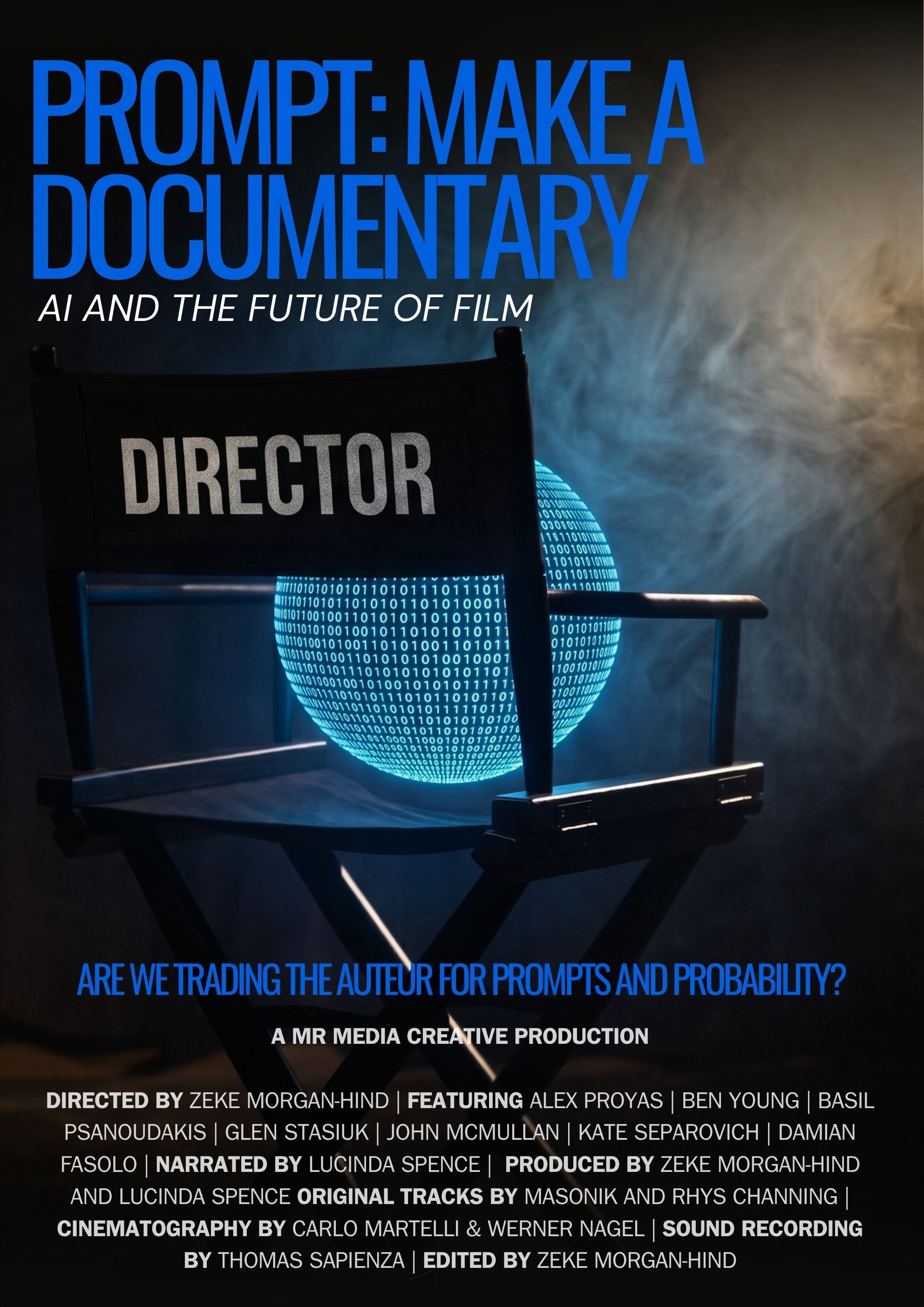
Prompt: Make a Documentary
Documentary
Overview
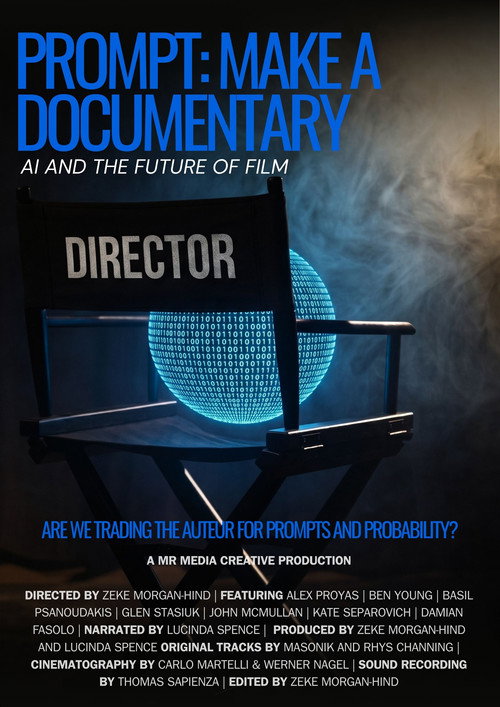
Prompt: Make a Documentary investigates the growing influence of artificial intelligence on the film industry. The documentary places the rise of AI within the broader historical context of cinema’s evolution, drawing parallels with earlier technological shifts such as the introduction of sound, colour, and digital visual effects. By revisiting landmark moments in film history, the film demonstrates that disruption has always been part of cinema’s DNA, while questioning whether AI represents a fundamentally different kind of change. Featuring insights from directors, academics, and practitioners, Prompt: Make a Documentary explores the tension between innovation and integrity, the democratisation of creative tools, and the ethical implications of automation in the arts. The film ultimately asks whether artificial intelligence will empower the next generation of storytellers or redefine creativity itself.






Lucinda Spence
Lucinda Spence
Narrator
Lucinda Spence
Narrator
Ben Young
Ben Young
Self
Ben Young
Self
Alex Proyas
Alex Proyas
Self
Alex Proyas
Self
Glen Stasiuk
Glen Stasiuk
Self
Glen Stasiuk
Self
Damian Fasolo
Damian Fasolo
Self
Damian Fasolo
Self
Basil Psanoudakis
Basil Psanoudakis
Self
Basil Psanoudakis
Self
John McMullan
John McMullan
Self
John McMullan
Self
Kate Separovich
Kate Separovich
Self
Kate Separovich
Self
Similar Movies
Two worlds beautifully collide as Dr. Cornel West (Class of 1943 Professor at Princeton University and acclaimed author and speaker) and His Holiness Radhanath Swami (Bhakti Yoga master, director of the Radha-Gopinath Ashram, and acclaimed author and speaker) sit down together and share their thoughts on the Divine, the mysteries of love, and the role that spirituality plays in activism.
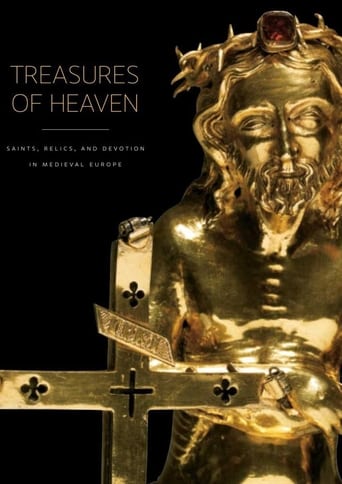
Andrew Graham-Dixon explores the ancient Christian practice of preserving holy relics and the largely forgotten art form that went with it, the reliquary. Fragments of bone or fabric placed inside a bejewelled shrine, a sculpted golden head or even a life-sized silver hand were, and still are, objects of religious devotion believed to have the power to work miracles. The documentary features interviews with art historian Sister Wendy Beckett and Neil MacGregor, director of the British Museum.
Once upon a time there was a large Finnish company called Nokia that manufactured the world’s best and most innovative mobile phones. Nokia’s annual budget was larger than that of the Government of Finland and their phones spread everywhere and changed the whole culture of communication. But then something changed. Film portrays the rise and fall of Nokia and the Finnish mobile phone industry. Nokia engineers, designers and managers tell their story about the creation, success and downfall of the Finnish mobile phone.
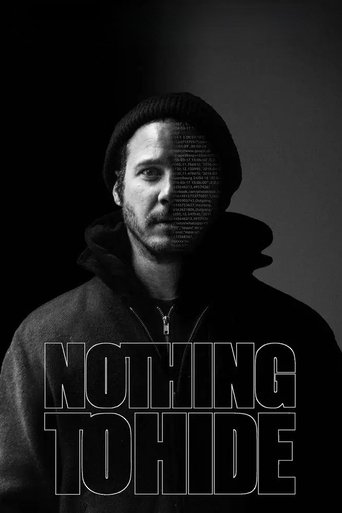
NOTHING TO HIDE is an independent documentary dealing with surveillance and its acceptance by the general public through the "I have nothing to hide" argument. The documentary was produced and directed by a pair of Berlin-based journalists, Mihaela Gladovic and Marc Meillassoux. It was crowdfunded by over 400 backers. NOTHING TO HIDE questions the growing, puzzling and passive public acceptance of massive corporate and governmental incursions into individual and group privacy and rights. After the emotion initially triggered by the Snowden revelations, it seems that the general public has finally accepted to live in a monitored digital world.
Summer 1936 - The Berlin Olympics, organized by the Nazi regime on the eve of World War II, acted as a grand showcase for a Germany that was athletic, peaceful and rejuvenated. The violence and hate that until then had reigned in the streets of Berlin suddenly vanished. Adolf Hitler became the triumphant host of European countries he would soon try to invade or face in a deadly global conflict.
In 1900, the eyes of the whole world are on Paris. The World's Fair welcomed 50 million amazed visitors, and the city celebrated itself in a glamorous era. This period went down in history as the "Belle Époque." Elaborately restored and colorized historical photographs bring to life the exciting life in Paris between the end of the 19th century and the beginning of World War I in 1914. Bicycles, cars, airplanes, moving pictures, newly founded film studios, revolutionary composers and painters, avant-garde ballet performances, fashion houses, summer resorts on the Atlantic coast – life was intoxicating. People celebrate in the variety shows, cabarets, and revue theaters of Paris. Moulin Rouge, Folies Bergères, Bal Tabarin—in Paris, the nights are long and life is too short to sleep through. It is a dance on the volcano, given the political developments in the world.
Priests, theologians and bishops are increasingly confessing that the majority of clergy no longer keep celibacy. They condemn the institution of the church and its treatment of priests. And they refuse to obey the ecclesiastical laws imposed by the Vatican. They no longer want to keep their private lives secret. Many are calling for an end to compulsory celibacy.