


Rita's Song
Music · Documentary
Overview
A music short based on the true story of Rafaela Amrita Crevoshay (aka Rita), who transitioned from male to female at the age of 76 years after a lifetime of hiding. The raw footage of the music video was created using Grok Imagine.
Top Cast
















Rafaela Amrita Crevoshay
Rafaela Amrita Crevoshay
Herself
Rafaela Amrita Crevoshay
Herself
Similar Movies
In the indigenous communities around the town of Juchitán, the world is not divided simply into males and females. The local Zapotec people have made room for a third category, which they call “muxes” - men who consider themselves women and live in a socially sanctioned limbo between the two genders.
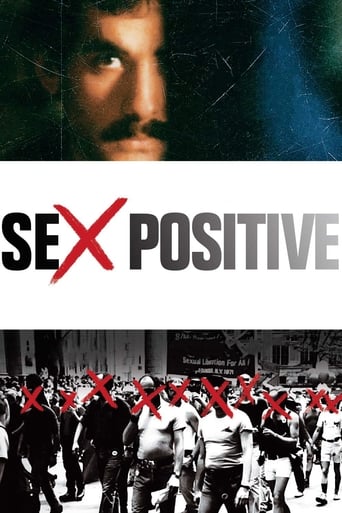
Sex Positive explores the life of Richard Berkowitz, a revolutionary gay S&M hustler turned AIDS activist in the 1980s, whose incomparable contribution to the invention of safe sex has never been aptly credited. Mr. Berkowitz emerged from the epicenter of the epidemic demanding a solution to the problem before the outside world would take heed. Now destitute and alone, Mr. Berkowitz tells his story to a world who never wanted to listen.
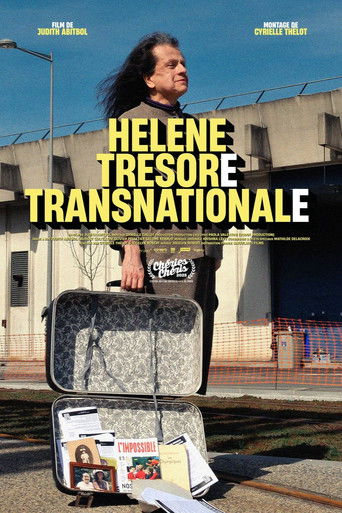
In this intimate portrait addressed directly to Hélène Hazera, filmmaker Judith Abitbol revisits a key figure of France’s countercultures from the late 1960s to the 1990s. A member of the Gazolines and the FHAR (Homosexual Front for Revolutionary Action), Hazera was a tireless LGBTQ activist who founded Act Up’s Trans and AIDS commissions—one of her proudest achievements. Her true victory, however, was becoming the first transgender journalist at a major national newspaper (Libération), and later a producer at Radio France and France TV. Through her story, Abitbol reconnects with the insurrectionary spirit and creative chaos of those decades—an era when French culture was shaken by radical imagination, humor, and defiance. The film celebrates these modern Antigones who dared to live their desires beyond the reach of any law.
A shocking look at how a recent anti-gay amendment to a Russian propaganda law has led to increased assaults on gay men and women. In modern-day Russia, where it is estimated that just 1% of the LGBT population lives completely openly, a recent anti-gay amendment to a “propaganda” law has been followed by a rising number of assaults on gay men and women by vigilantes who, more often than not, go unpunished for their crimes.
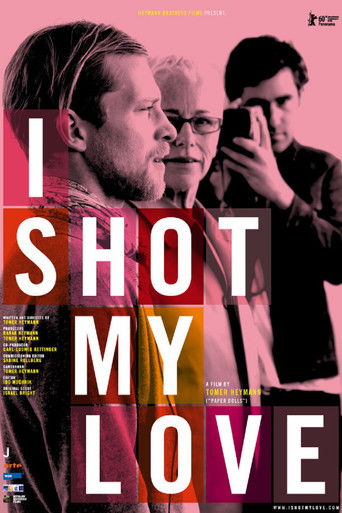
Seventy years after his grandfather escapes from Nazi Germany to Palestine, Israeli documentary director Tomer Heymann returns to the country of his ancestors to present his film "Paper Dolls" at the Berlin International Film Festival, and there meets a man who will change his life. This 48-hour love affair, originating in Berghain Panorama Bar, develops into a significant relationship between Tomer and Andreas Merk, a German dancer.
The oldest known "out" African-American lesbian remembers ten colorful decades in this hour-long documentary, which won the Audience Award for Best Documentary at the San Francisco International Gay and Lesbian Film Festival in 1999. Born July 23, 1899, in Springfield, IL, Ruth Ellis spent most of her life in Detroit. A pioneering independent black businesswoman, she operated her own print shop until the age of 65. In the home she shared with Cecilene "Babe" Franklin, her partner of more than 30 years, she played host to innumerable gatherings of the city's African-American gays and lesbians in an age when segregation excluded them from white homosexual society. A participant in the civil rights movement and a witness of the riots that tore Detroit apart in the 1960s, Ellis later became an icon for, and active participant in, the city's multicultural lesbian and feminist community.
Terrence McNally’s Corpus Christi is a play retelling the Jesus story, with Jesus as a gay man living in the 1950s in Corpus Christi, Texas. This documentary follows the troupe, playwright, and audience around the world on a five-year journey of Terrence McNally’s passion play, where voices of protest and support collide on one of the central issues facing the LGBT community: religion.
A truly major work, I Don’t Know observes the relationship between a lesbian and a transgender person who prefers to be identified somewhere in between male and female, in an expression of personal ambiguity suggested by the film’s title. This nonfiction film – an unusual, partly staged work of semi-verité – is the first of Spheeris’s films to fully embrace what would become her characteristic documentary style: probing, intimate, uncompromising. Preserved by the Academy Film Archive in 2014.