

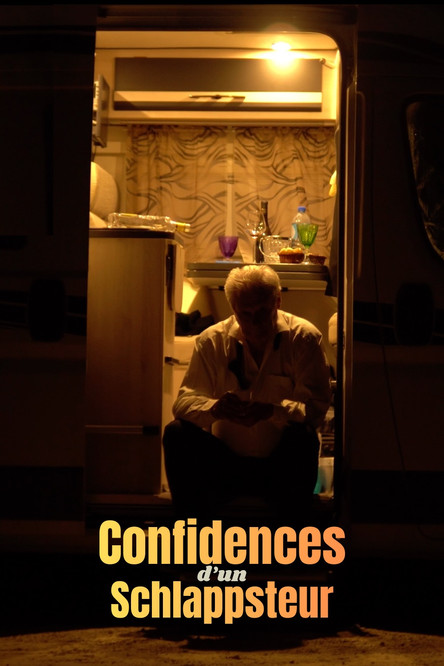
Confidences of a Schlappsteur
Comedy · Drama
Overview
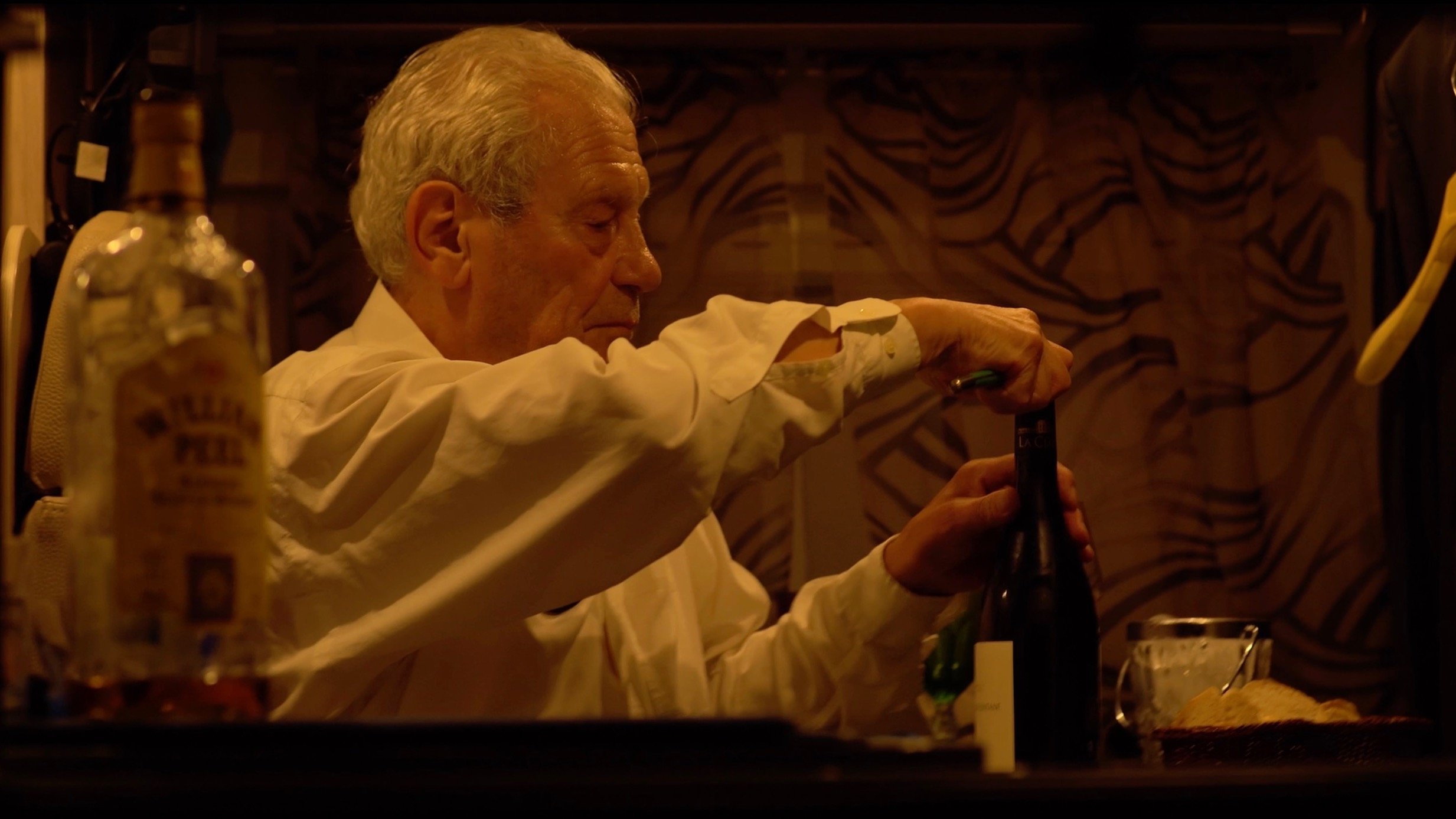
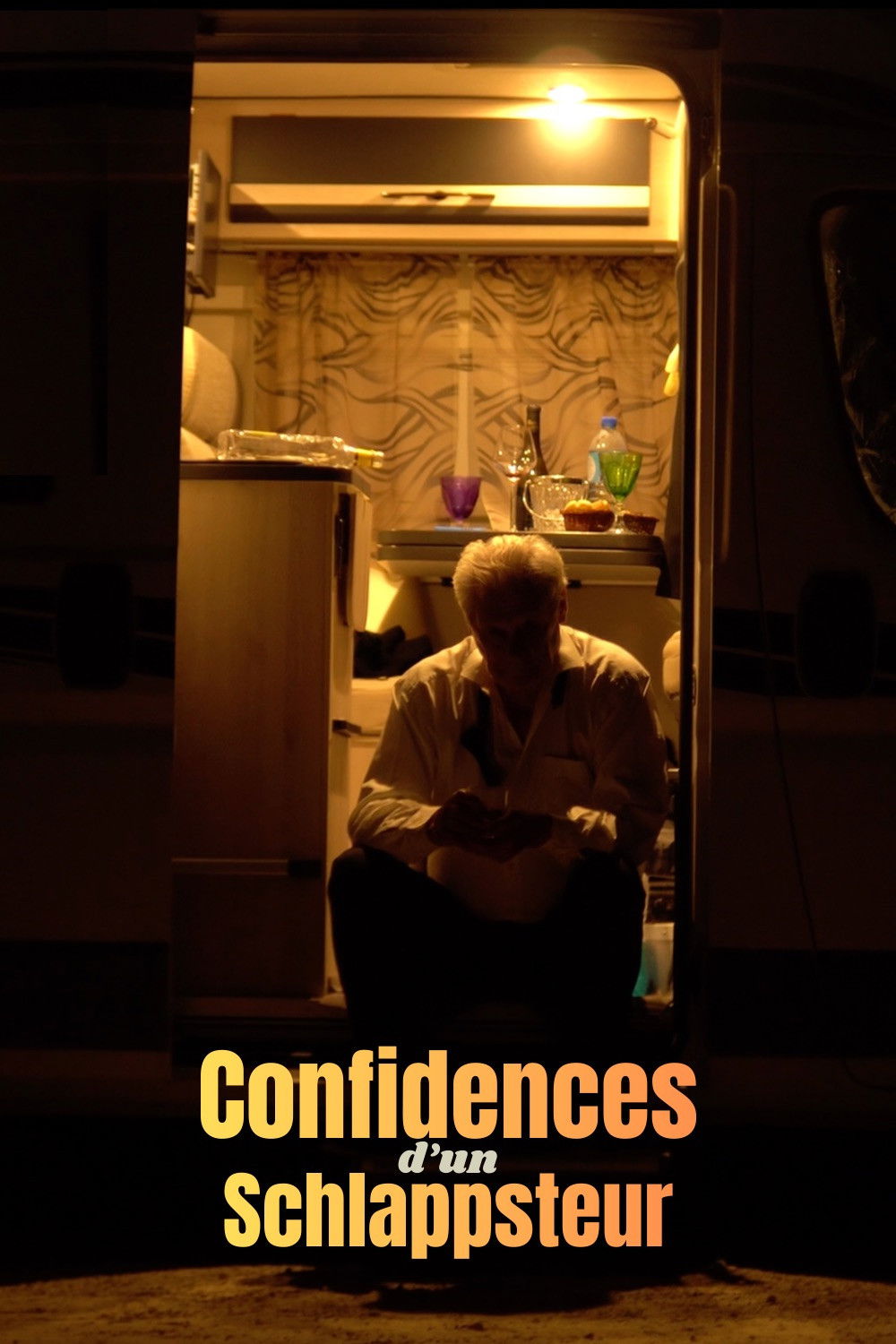
In his motor home, while drinking too much wine, an old “Shlappsteur” (a luxury event waiter) shares anecdotes about the job that ate up his whole life. Funny, rough or melancholic, his memories materialize before our eyes and paint, piece by piece, the portrait of a life dedicated to work.
Top Cast
Jean-Claude Martzel
Le Schlappsteur
Emir Loirat
Le Schlappsteur jeune
Delphine Lacouque
Première admiratrice des Schlapps
Aude Roman
Nadia, admiratrice des Schlapps
Cédric Tuffier
Admirateur des Schlapps

Emmanuel Barrouyer
Le Performeur
Valentin Fruiter
Schlappsteur salace
Eduardo Costa Gonçalves
Cuistot à la purée
Alban Sirou
Serveur aux coupes
Donatien Puyrigaud
Schlappsteur pointilleux
Eliott Puyrigaud
Goûteur en marcel
Vincent Eveille
Chef cuisinier















Jean-Claude Martzel
Jean-Claude Martzel
Le Schlappsteur
Jean-Claude Martzel
Le Schlappsteur
Emir Loirat
Emir Loirat
Le Schlappsteur jeune
Emir Loirat
Le Schlappsteur jeune
Delphine Lacouque
Delphine Lacouque
Première admiratrice des Schlapps
Delphine Lacouque
Première admiratrice des Schlapps
Aude Roman
Aude Roman
Nadia, admiratrice des Schlapps
Aude Roman
Nadia, admiratrice des Schlapps
Cédric Tuffier
Cédric Tuffier
Admirateur des Schlapps
Cédric Tuffier
Admirateur des Schlapps
Emmanuel Barrouyer
Emmanuel Barrouyer
Le Performeur
Emmanuel Barrouyer
Le Performeur
Valentin Fruiter
Valentin Fruiter
Schlappsteur salace
Valentin Fruiter
Schlappsteur salace
Eduardo Costa Gonçalves
Eduardo Costa Gonçalves
Cuistot à la purée
Eduardo Costa Gonçalves
Cuistot à la purée
Alban Sirou
Alban Sirou
Serveur aux coupes
Alban Sirou
Serveur aux coupes
Donatien Puyrigaud
Donatien Puyrigaud
Schlappsteur pointilleux
Donatien Puyrigaud
Schlappsteur pointilleux
Similar Movies
Jakob arrives at the Institute Benjamenta (run by brother and sister Johannes and Lisa Benjamenta) to learn to become a servant. With seven other men, he studies under Lisa: absurd lessons of movement, drawing circles, and servility. He asks for a better room. No other students arrive and none leave for employment. Johannes is unhappy, imperious, and detached from the school's operation. Lisa is beautiful, at first tightly controlled, then on the verge of breakdown. There's a whiff of incest. Jakob is drawn to Lisa, and perhaps she to him. As winter sets in, she becomes catatonic. Things get worse; Johannes notes that all this has happened since Jakob came. Is there any cause and effect?
The stage emulates life and compresses it, setting free skills learned over lifetimes in brief but dazzling displays for the amusement and judgment of others. For the performers, it is the ultimate risk, and some will rise while others must fall. Nowhere is this truer than at the Seisho Music Academy, where music, dance and real weapons all come into play in the creation of the next great Star. Karen and Hikari’s destinies have been linked since a childhood promise, but their journeys here have taken very different paths. Now, after Hikari leaves, Karen must discover who she is without her opposite, while Hikari must rediscover her own course. Nor are they the only girls who must reassess and change if they want to achieve their dreams, as the dance, magic, and swordplay continue!
Kensho Aoto reunites with Yoko Sudo, whom he had feelings for in junior high school, for the first time in 35 years. On the second floor window sill of a small apartment. Yoko was leaning against the window and looking up at the moon in the night sky, then Kensho was watching her from outside. Kensho “What were you thinking back then?” Yoko “...Something like a dream. Just about something like a dream.” The two of them are naturally attracted to each other for the first time at the age of 50. They eventually start talking about the future...
At the end of the Spanish civil war, Fando, a boy of about ten, tries to make sense of war and his father's arrest. His mother is religious, sympathetic to the Fascists; his father is accused of being a Red. Fando discovers that his mother may have aided in his father's arrest. Sometimes we witness Fando imagining explanations for what's going on; sometimes we see him at play, alone or with his friend Thérèse. Oedipal fantasies and a lad's natural curiosity about sex and death mix with his search for his mother's nature and his father's fate. Will Fando survive the search?
A metacinematic reflection on the nature of representation and the ongoing drug war in Mexico, Nicolás Pereda’s Flora revisits locations and scenes from the mainstream 2010 narco-comedy El Infierno, exploring the paradoxes of depicting narco-trafficking on film—its tendency both to romanticize and to obscure. To screen is both to project and to conceal.