

Naturals: Untouched
Documentary · Romance
Overview
Ron Harris produced and directed television programs for Playboy Television between 1995 and 1999, such as Ron Harris' Camera Up-Close & Dangerous, Ron Harris' Star Shapes, a series of seven one-hour specials and Naturals a series of five one-hour specials.
No cast information.
Similar Movies
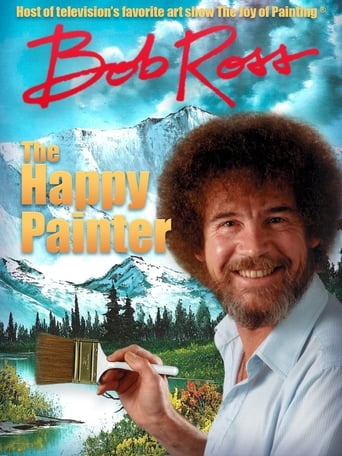
A behind-the-scenes look at the beloved public television personality's journey from humble beginnings to an American pop-culture icon. "The Happy Painter" reveals the public and private sides of Bob Ross through loving accounts from close friends and family, childhood photographs and rare archival footage. Interviewees recount his gentle, mild-mannered demeanor and unwavering dedication to wildlife, and disclose little-known facts about his hair, his fascination with fast cars and more. Film clips feature Bob Ross with mentor William Alexander and the rough-cut of the first "Joy of Painting" episode from 1982. Famous Bob Ross enthusiasts, including talk-show pioneer Phil Donahue, film stars Jane Seymour and Terrence Howard, chef Duff Goldman and country music favorites Brad Paisley and Jerrod Niemann, provide fascinating insights into the man, the artist and his legacy.
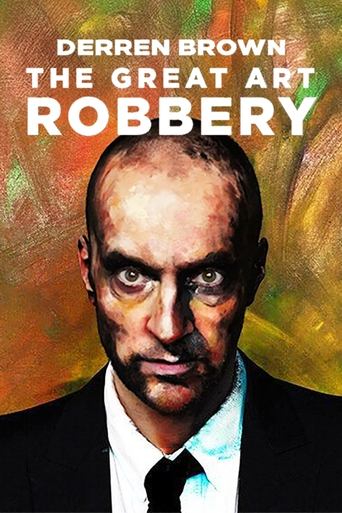
In this brand new episode, master illusionist and showman Derren Brown plans to pull off the perfect crime. He’s bet renowned art collector Ivan Massow that he can steal a painting from right under his nose. In true Derren style, he will tell Ivan exactly which painting he plans to target – a work by Turner-nominated British brothers Jake and Dinos Chapman no less – as well as what time the theft will happen. He’ll even give him a photograph of the person that’s going to take it.

Examines the mesmerising construction of clear crystal glass pieces created by the craftsmen of Waterford. The process from the intense heat of the furnace to glass blowing, shaping, cutting, honing, filling and finishing is all depicted in this celebration of the art of creation of Waterford Glass. Academy Award Nominee: Best Live Action Short - 1976.
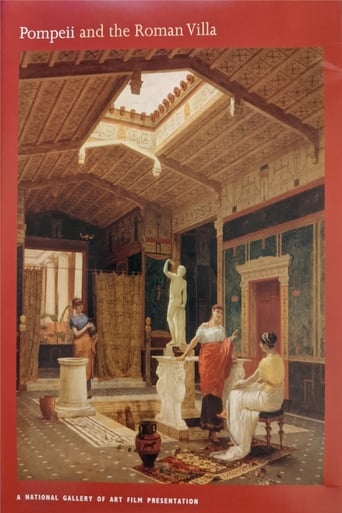
Narrated by Sir Derek Jacobi - star of the landmark television series "I, Claudius" - this documentary explores art and culture around the Bay of Naples before Mount Vesuvius erupted in AD 79. The bay was then the most fashionable destination for vacationing Romans. Julius Caesar, emperors, and senators were among those who owned sumptuous villas along its shores. Artists flocked to the region to create frescoes, sculpture, and luxurious objects in gold, silver, and glass for villa owners as well as residents of Pompeii and other towns in the shadow of Vesuvius. The film concludes with the story of the discovery of Pompeii and Herculaneum from the 18th century onward.

Gray Matters explores the long, fascinating life and complicated career of architect and designer Eileen Gray, whose uncompromising vision defined and defied the practice of modernism in decoration, design and architecture. Making a reputation with her traditional lacquer work in the first decade of the 20th century, she became a critically acclaimed and sought after designer and decorator in the next before reinventing herself as an architect, a field in which she laboured largely in obscurity. Apart from the accolades that greeted her first building –persistently and perversely credited to her mentor–her pioneering work was done quietly, privately and to her own specifications. But she lived long enough (98) to be re-discovered and acclaimed. Today, with her work commanding extraordinary prices and attention, her legacy, like its creator, remains elusive, contested and compelling.

Exhibition on Screen's latest release celebrates the life and masterpieces of Hieronymus Bosch brought together from around the world to his hometown in the Netherlands as a one-off exhibition. With exclusive access to the gallery and the show, this stunning film explores this mysterious, curious, medieval painter who continues to inspire today's creative geniuses. Over 420,000 people flocked to the exhibition to marvel at Bosch's bizarre creations but now, audiences can enjoy a front row seat at Bosch's extraordinary homecoming from the comfort of their own home anywhere in the world. Expert insights from curators and leading cultural critics explore the inspiration behind Bosch's strange and unsettling works. Close-up views of the curiosities allow viewers to appreciate the detail of his paintings like never before. Bosch's legendary altarpieces, which have long been divided among museums, were brought back together for the exhibition and feature in the film.
Up until the end of her life, Beatrice Wood continued to influence younger artists with her definitive, free-wheeling ways. She was central to the American Dada movement and was the last surviving member of this group. In this program she recalls her friends Man Ray, Picabia and others, and her ex-husband Marcel Duchamp. She died in 1999 at 105 years of age.
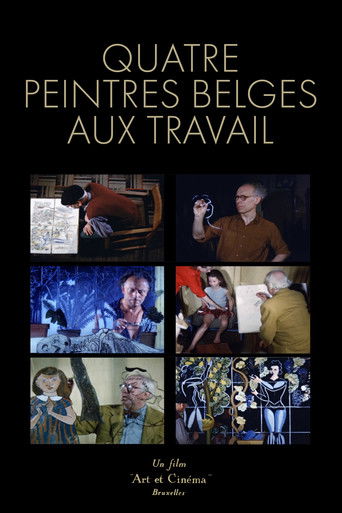
Belgian art historian and filmmaker Paul Haesaerts (1901–1974) made a significant contribution to the promotion of modern Flemish art. In the late 1940s, he started experimenting with the medium of film to practice a new form of lens-based art criticism. The understudied documentary "Quatre peintres belges au travail" (1952) presents Belgian artists Edgar Tytgat, Albert Dasnoy, Jean Brusselmans and Paul Delvaux at work in their studio. On a large sheet of glass placed in front of the camera, they each paint one of the seasons that also represent a stage in a person’s life. A close reading of this Kodachrome color film sheds light on the context of mid-century art reproductions, mass media and post-war Flemish culture. It also examines in what way this film operates as Haesaerts’s concept of cinéma critique, while raising questions as to the way Haesaerts attempted to reconcile the spatial art of painting with the temporal medium of film.
Immigrant residents of a “shift-bed” apartment in the heart of New York City’s Chinatown share their stories of personal and political upheaval. As the bed transforms into a stage, the film reveals the collective history of the Chinese in the United States through conversations, autobiographical monologues, and theatrical movement pieces. Shot in the kitchens, bedrooms, wedding halls, cafés, and mahjong parlors of Chinatown, this provocative hybrid documentary addresses issues of privacy, intimacy, and urban life.