

ˈsterˌkās
Overview
A person watches and analyzes other people from a staircase, but he or she is not the same as other people, or so he or she thinks.





No cast information.
Similar Movies
After I had already begun to conduct my first cinematographic experiments in 2015, I shot between 2016 and 2019 (during my time as a student in Rostock) exclusively for this "No Budget Feature-Length Experimental Film", now titled "Transfragmentation", which was originally conceived to last three hours, based on Werner Fritsch's "Faust Sonnengesang" (2011), but now has a running time of approximately two hours. In 2015, I also began my correspondence with the Brussels-based Sound-Artist Unenthüllte, who eventually composed four twenty-minute pieces for this work and has to be regarded as my sole artistic collaborator in this sense. My cinematographic concept was clearly outlined from the beginning: The duration of each shot is exactly 1 minute. Only two elements diverge from this primary premise: The Seventeen Minute Prelude, Created In Post-Production (2020-2022), And The Slow Motion Sequences Involving My Voice-Over, Which Linger In The Heart And At The End Of The Work.
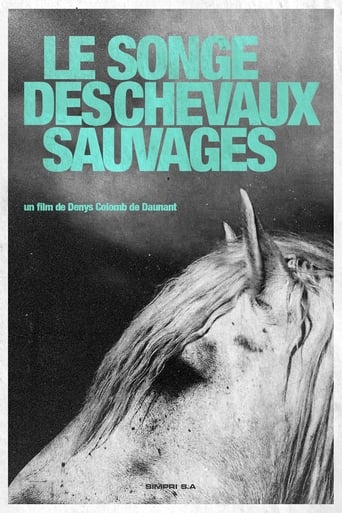
The horses in Denys Colomb Daunant’s dream poem are the white beasts of the marshlands of the Camargue in South West France. Daunant was haunted by these creatures. His obsession was first visualized when he wrote the autobiographical script for Albert Lamorisse’s award-winning 1953 film White Mane. In this short the beauty of the horses is captured with a variety of film techniques and by Jacques Lasry’s beautiful electronic score.
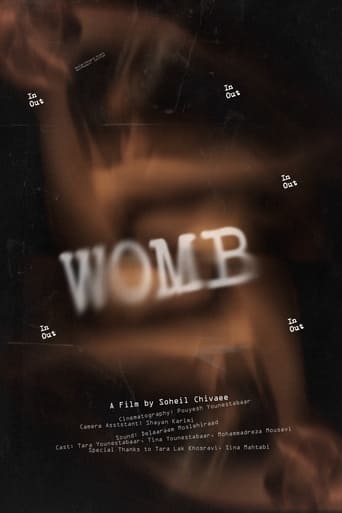
in my darkest moment, fetal and weeping, the moon tells me a secret, a confidant As full and bright as I am, this light is not my own and a million light reflections pass over me, the source is bright and endless. She resuscitates the hopeless. Without her, we are lifeless satellites drifting.
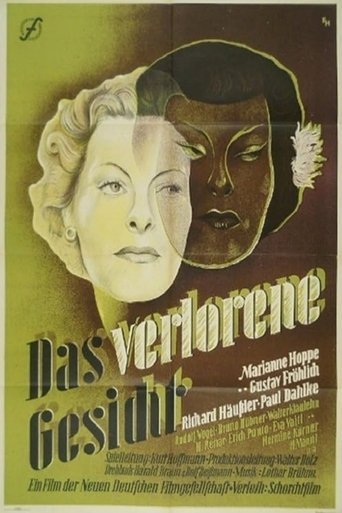
A clearly confused girl is found wandering around Stuttgart and can't be understood, because she's speaking in a foreign language. The police take her to some doctors, who eventually believe they're dealing with a Tibetan. Doctor von Aldenhoff takes the stranger in and begins to educate her according to western European standards. In her new home, the girl, Luscha, gets to know Robert Lorm, a rather well-travelled man, and falls in love with him. Eventually, she decides quite unilaterally that they're going to build a new home and life together. A plaster of paris mask of the girl's face is made for the doctors to keep as a remembrance of Luscha. But as soon as the mold is removed from her face, she suddenly seems to become an entirely different woman.
A 16 year old girl recalls the last moments of her summer vacation, spent with friends in the Laurentians north of Montreal. She reminisces about their talks on life, death, love, and God. Shot in direct cinema style, working from a script that left room for the teenagers to improvise and express their own thoughts, the film sought to capture the immediacy of the youths presence their bodies, their language, their environment.