

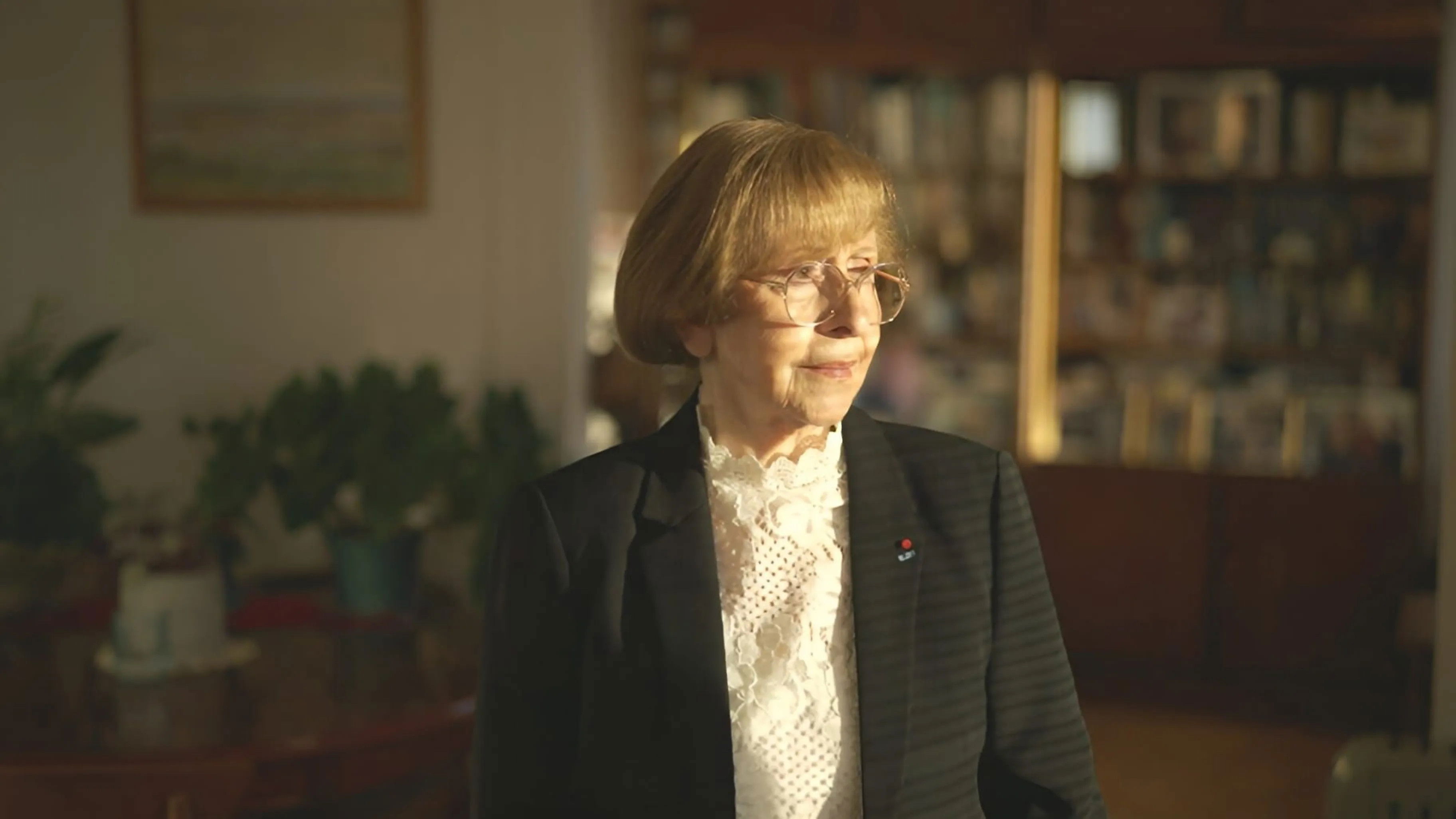

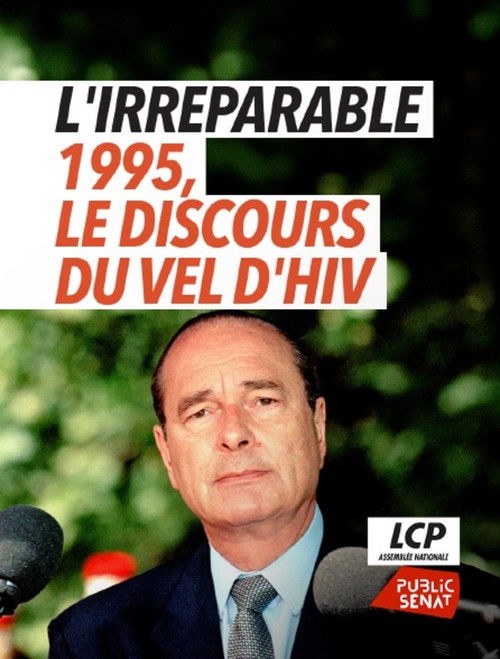
L'irréparable - 1995, le discours du Vel d'Hiv
Documentary · History
Top Cast
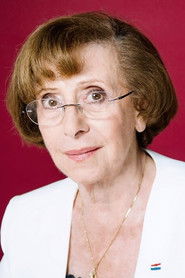
Rachel Jedinak
Self : Rescapée de la rafle du Vel d'hiv, voix des victimes, présente aux côtés de Jacques Chirac au moment du discours
Laurent Joly
Self : Historien
Henry Rousso
Self : Historien
Sarah Gensburger
Self : Sociologue
Hubert Strouk
Self : Historien
Henri Hajdenberg
Self : Ancien Président du CRIF
Serge Klarsfeld
Self : Président de l’Association des Fils et filles des déportés juifs de France
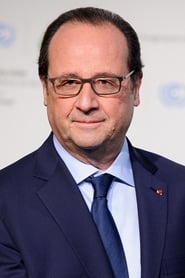
François Hollande
Self : Ancien Président de la République
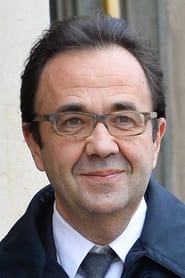
Frédéric Salat-Baroux
Self : Ancien Secrétaire général de Jacques Chirac
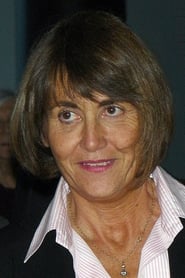
Christine Albanel
Self : Ancienne Conseillère culture de Jacques Chirac




Rachel Jedinak
Rachel Jedinak
Self : Rescapée de la rafle du Vel d'hiv, voix des victimes, présente aux côtés de Jacques Chirac au moment du discours
Rachel Jedinak
Self : Rescapée de la rafle du Vel d'hiv, voix des victimes, présente aux côtés de Jacques Chirac au moment du discours
Laurent Joly
Laurent Joly
Self : Historien
Laurent Joly
Self : Historien
Henry Rousso
Henry Rousso
Self : Historien
Henry Rousso
Self : Historien
Sarah Gensburger
Sarah Gensburger
Self : Sociologue
Sarah Gensburger
Self : Sociologue
Hubert Strouk
Hubert Strouk
Self : Historien
Hubert Strouk
Self : Historien
Henri Hajdenberg
Henri Hajdenberg
Self : Ancien Président du CRIF
Henri Hajdenberg
Self : Ancien Président du CRIF
Serge Klarsfeld
Serge Klarsfeld
Self : Président de l’Association des Fils et filles des déportés juifs de France
Serge Klarsfeld
Self : Président de l’Association des Fils et filles des déportés juifs de France
François Hollande
François Hollande
Self : Ancien Président de la République
François Hollande
Self : Ancien Président de la République
Frédéric Salat-Baroux
Frédéric Salat-Baroux
Self : Ancien Secrétaire général de Jacques Chirac
Frédéric Salat-Baroux
Self : Ancien Secrétaire général de Jacques Chirac
Christine Albanel
Christine Albanel
Self : Ancienne Conseillère culture de Jacques Chirac
Christine Albanel
Self : Ancienne Conseillère culture de Jacques Chirac
Similar Movies
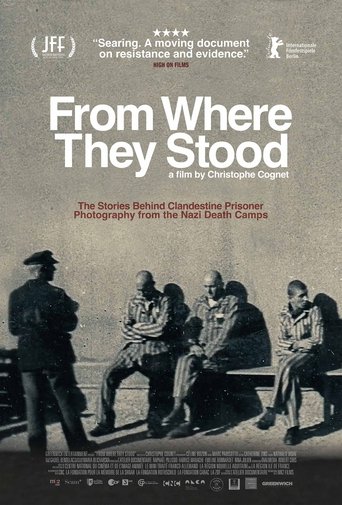
A handful of prisoners in WWII camps risked their lives to take clandestine photographs and document the hell the Nazis were hiding from the world. In the vestiges of the camps, director Christophe Cognet retraces the footsteps of these courageous men and women in a quest to unearth the circumstances and the stories behind their photographs, composing as such an archeology of images as acts of defiance.
When the lights dim and the stage is revealed, Meschke channels life through the strings of his puppets, triggering the spiritual connection between the creator and his alter-egos: the charismatic Don Quixote, the loving Penelope, the inquisitive Baptiste, or the mysterious Antigone. THE MAN WHO MADE ANGELS FLY is a poetic story about a master of his craft that has inspired audiences to reflect upon common issues of suffering and the mortal coil. Visionary and un-biographic, imaginary tribute to the puppeteer.

Anne Frank's world famous diary came to an abrupt end shortly before she and her family were discovered hiding from the Nazis in a secret annex at the top of Otto Frank's office building, on August 4, 1944. While her diary tells the story of Anne's life, the story of her death reveals the atrocities encountered by millions of Jews during the Holocaust. In a solemn remembrance of the horrors that Anne Frank and these millions of others suffered during the dark days of World War II, National Geographic Channel (NGC) takes viewers inside the concentration camps in a two-hour special. In keeping with NGC's tradition of unparalleled storytelling, Anne Frank's Holocaust incorporates new findings and rarely seen photographs to reintroduce the story of the massacre of Jews in one of the most comprehensive documentaries on the subject to date.
As notions of civil rights transformed across the world, so was the screen landscape reformed by the ascension of grassroots film movements seeking to challenge the mainstream. Some aspired to push form to its limit; others worked to destabilise what they saw as a homogenous industry, or to provoke questions around gender, sexuality, migration and race.
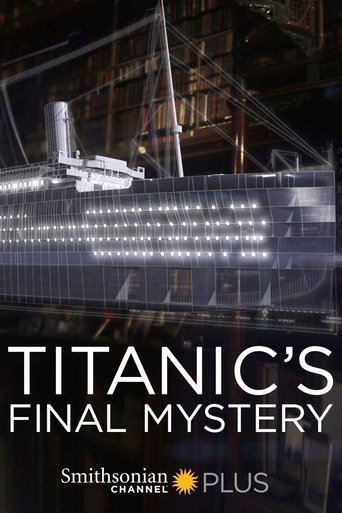
The sinking of the RMS Titanic remains one of the most enduring and mysterious tragedies of the 20th century. For decades, investigators and amateurs alike have floated theories for why it occurred and who was to blame for the extraordinary loss of life, but no one answer could fully explain what happened. Until now. To mark the 100th anniversary of the infamous disaster, Smithsonian Channel will premiere Titanic's Final Mystery. The two-hour special investigates a century of theories and uncovers astonishing new forensic evidence that proves the most likely theory for the case.
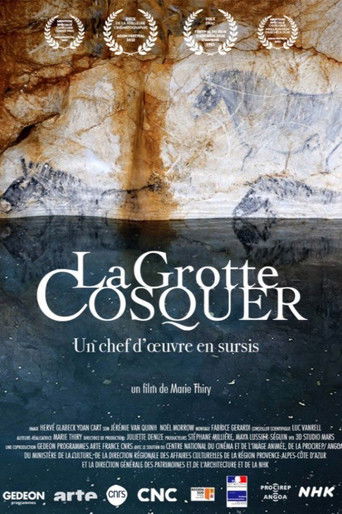
A short distance from Marseille, at Cape Morgiou, in the depths of the Calanques massif, lies the Cosquer cave, discovered only about thirty years ago by a diver, Henri Cosquer. With its bestiary of hundreds of paintings and engravings - horses, bison, jellyfish, penguins - the only underwater decorated cave in the world allows us to learn a little more about Mediterranean societies 30,000 years ago. Today, threatened by rising water levels accelerated by global warming, this jewel of the Upper Paleolithic is in danger of being swallowed up. To save the cave from disappearing, the Ministry of Culture has chosen to digitize it. From this virtual duplicate, a replica has been made on the surface to offer the public a reconstruction that allows them to admire these masterpieces.