

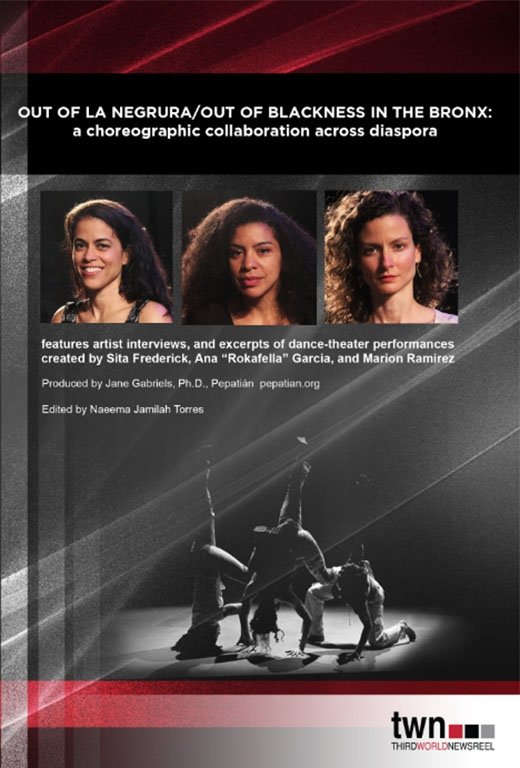
Out of La Negrura/Out of Blackness in the Bronx
Documentary
Overview
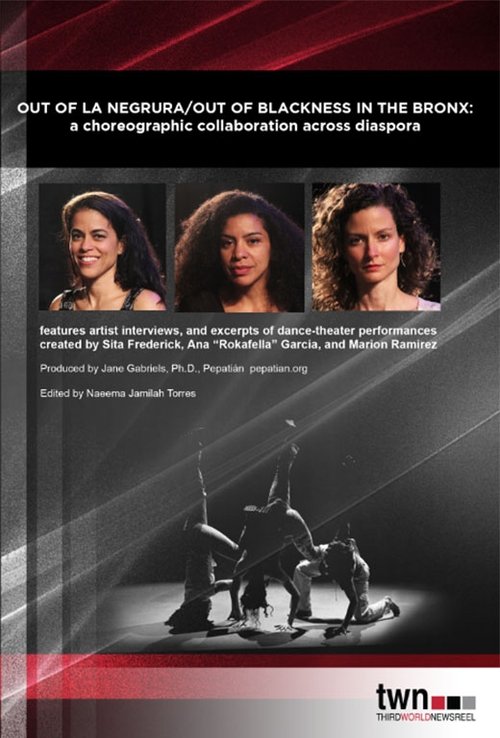
Dance artists Sita Frederick, Ana "Rokafella" Garcia, and Marion Ramirez collaborate to create a performance work that explores Caribbean and Latina-American experiences through dance. OUT OF LA NEGRURA/OUT OF BLACKNESS IN THE BRONX: A CHOREOGRAPHIC COLLABORATION ACROSS DIASPORA features NYC-based dance artists/choreographers: Sita Frederick, Ana "Rokafella" Garcia, and Marion Ramirez. This documentary reveals how the artists collaborated to create a new performance work that explored Caribbean and Latina-American experiences through dance. This film showcases the rich and diverse dance backgrounds of the Latinx performers as they mix salsa, breaking, Afro-Caribbean, and release techniques in one experimental dance piece. With footage from performances at Pregones Theatre, this documentary was made by PEPATIÁN, a South Bronx-based organization dedicated to creating, producing and supporting contemporary multi-disciplinary art by Latinx and Bronx-based artists.




No cast information.
Similar Movies
24-year old Ronald Hinton can be spotted in a crowd with his signature afro. It's taken him years to love and grow his big luscious curls, but underneath them, he's hiding a receding hairline. As Ronald unpacks his complicated relationship with hair, he prepares for the last attempt at saving this cultural blueprint, a hair transplant.
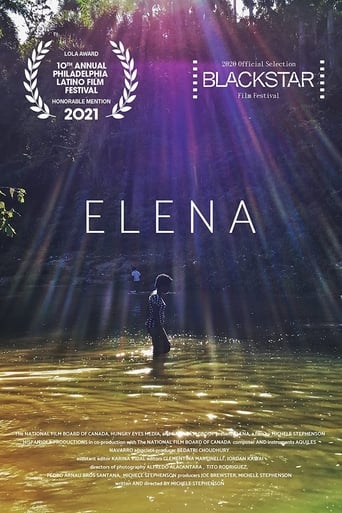
In 1937, tens of thousands of Haitians and Dominicans of Haitian descent were exterminated by the Dominican army, on the basis of anti-black racism. Fast-forward to 2013, the Dominican Republic's Supreme Court stripped the citizenship of anyone with Haitian parents, retroactive to 1929, rendering more than 200,000 people stateless. Elena, the young protagonist of the film, and her family stand to lose their legal residency in the Dominican Republic if they don't manage to get their documents in time. Negotiating a mountain of opaque bureaucratic processes and a racist, hostile society around, Elena becomes the face of the struggle to remain in a country built on the labor of her father and forefathers.
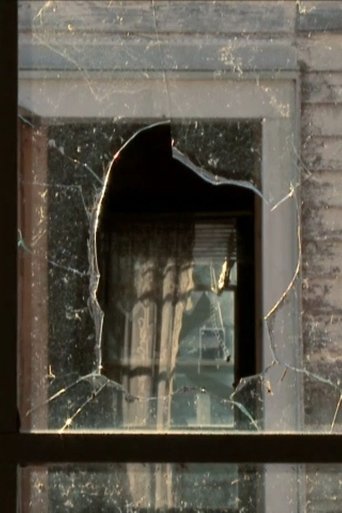
THE LOWER 9: A STORY OF HOME showcases four determined Lower Ninth Ward residents who share their most intimate stories of home, as they resume their lives years after Hurricane Katrina ravaged their neighborhood. Each story finds a voice in a narrative that intersperses contemporary interviews, abstract cinematography of destruction, and powerful scenes of present, everyday lives.
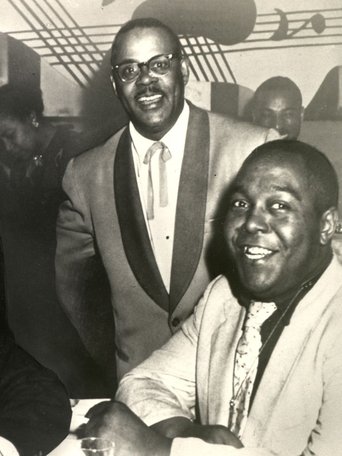
This film is an odyssey through the eyes, words and music of individuals who pioneered Afro-Cuban music in the United States. The video offers a rich overview of a wide number of musical styles from "Cubop" to Salsa, Big Band to jazz, and of musicians from Chano Ponzo to Tito Puente and Desi Arnaz to Johnny Colon. It examines the significant role of women performers and contains interviews with Mario Bauza and Dizzy Gillespie as they reveal the parallel course of jazz with the "latin sound".
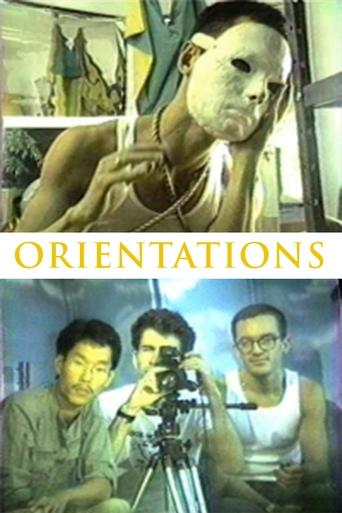
Best known for his work in video, Richard Fung has made the politics of gender, ethnicity, and sexual orientation his central focus. Orientations (1984) deald explicitly with gay issues, sn ambitious study considering racism and cultural self-assertion through art, coupled with stories of individual experiences,

A critique of liquid love through sarcasm and crude humor. With the desire that the viewer empathize with the protagonists and reflect on the ephemerality of sexual-affective relationships in modern society. At the end of the short film, the transformation of people into mere consumer goods will be clear, which, once they have been used, are discarded