

Malen ohne Regeln – Amerikanische Künstlerinnen der Nachkriegszeit
Documentary
Top Cast

Helen Frankenthaler
Künstlerin
Lee Krasner
Künstlerin
Joan Mitchell
Künstlerin
Mary Gabriel
Journalistin und Autorin
Elizabeth A. T. Smith
Leiterin Helen Frankenthaler Foundation, New York
Helen A. Harrison
Pollock-Krasner Experte
Douglas Dreishpoon
Kurator Frankenthaler-Ausstellung, Palazzo Strozzi, Florenz
Lea Schäfer
Kuratorin Museum Reinhard Ernst Museum, Wiesbaden
Ann Temkin
Kuratorin Museum of Modern Art, New York
Michaële-Andréa Schatt
Künstlerin
Guy Bloch-Champfort
Autor und Jurist
Matthew Ward
Leiter Krasner-Pollock-House, East Hampton, USA



Helen Frankenthaler
Helen Frankenthaler
Künstlerin
Helen Frankenthaler
Künstlerin
Lee Krasner
Lee Krasner
Künstlerin
Lee Krasner
Künstlerin
Joan Mitchell
Joan Mitchell
Künstlerin
Joan Mitchell
Künstlerin
Mary Gabriel
Mary Gabriel
Journalistin und Autorin
Mary Gabriel
Journalistin und Autorin
Elizabeth A. T. Smith
Elizabeth A. T. Smith
Leiterin Helen Frankenthaler Foundation, New York
Elizabeth A. T. Smith
Leiterin Helen Frankenthaler Foundation, New York
Helen A. Harrison
Helen A. Harrison
Pollock-Krasner Experte
Helen A. Harrison
Pollock-Krasner Experte
Douglas Dreishpoon
Douglas Dreishpoon
Kurator Frankenthaler-Ausstellung, Palazzo Strozzi, Florenz
Douglas Dreishpoon
Kurator Frankenthaler-Ausstellung, Palazzo Strozzi, Florenz
Lea Schäfer
Lea Schäfer
Kuratorin Museum Reinhard Ernst Museum, Wiesbaden
Lea Schäfer
Kuratorin Museum Reinhard Ernst Museum, Wiesbaden
Ann Temkin
Ann Temkin
Kuratorin Museum of Modern Art, New York
Ann Temkin
Kuratorin Museum of Modern Art, New York
Michaële-Andréa Schatt
Michaële-Andréa Schatt
Künstlerin
Michaële-Andréa Schatt
Künstlerin
Similar Movies
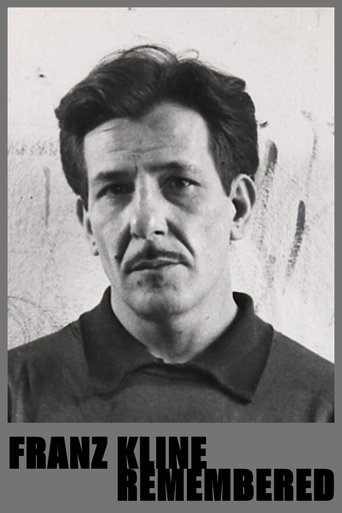
This documentary offers an intimate look at the life and legacy of American abstract expressionist Franz Kline. Through personal memories and reflections from those who knew him—such as fellow artist Willem de Kooning, de Kooning’s wife Elaine, and other contemporaries—the film paints a vivid portrait of Kline’s personality, artistic spirit, and lasting influence. Known for his powerful black and white compositions and bold brushwork, Kline is remembered not only for his art, but also for his wit, warmth, and passionate approach to painting. The episode explores both his creative process and the deep friendships that shaped his career.
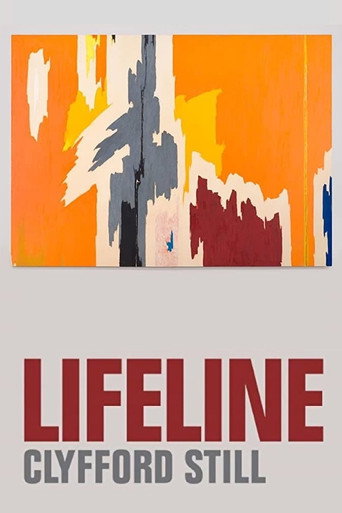
Jackson Pollock said, “he makes the rest of us look academic,” Mark Rothko acknowledged him as a “myth-maker” and Clement Greenberg called him “a highly influential maverick and an independent genius.” Clyfford Still, one of the strongest, most original contributors to abstract expressionism, walked away from the commercial art world at the height of his career. Extremely disciplined, principled, and prolific, Still left behind a treasure trove of works like no other major artist in history. With a wonderful mosaic of archival material, found footage and audio recorded by the artist himself, Lifeline paints a picture of a modern icon, his uncompromising creative journey and the price of independence.
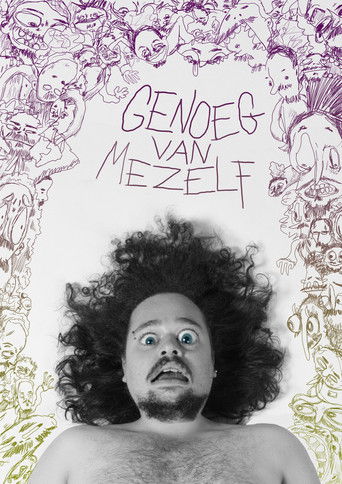
Do you ever wonder why you are the way you are? One day I decided to ask myself this question and I have been struggling to put the answer together ever since. “Enough of Myself” is my visualization of this process. When I finally had the headspace to consider my own emotions, it turned out to be a lot harder than I had thought. When you start to examine your own thoughts and patterns, the digging doesn’t stop. You keep digging deeper and finding new connections that you might have preferred stay hidden. But to ignore these things is to give in to them. Growth requires a certain level of vulnerability, not just towards others but towards yourself as well. To grow beyond those negative patterns, you need to look them in the eye first. In my film I tried to capture this emotional process in an array of animations. I hope that I haven’t just captured my own emotional process, but some deeper universal emotions as well.
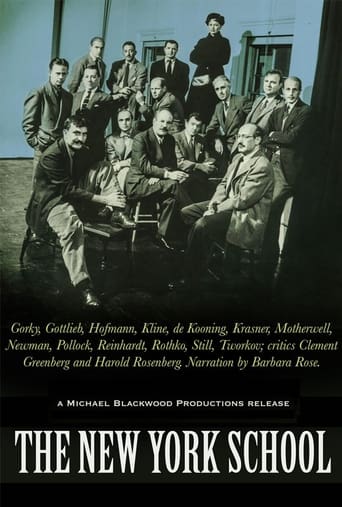
The band of American artists known as the New York School toyed with tradition and rebelled against the Renaissance.Feeling as though free association yielded their best results, the painters, poets and performers of the New York School took a surrealist approach that was concerned less with aesthetic and more with expression. Those associated with the School were unified by their desire to create from within. They created a monumental, dramatic art that remains a singular expression of the crucial modern quest for individuality and personal freedom." Never knowing exactly how their pieces would turn out, the artists of the New York School embraced their own complex humanity and worked from a place of bold, sporadic realness.
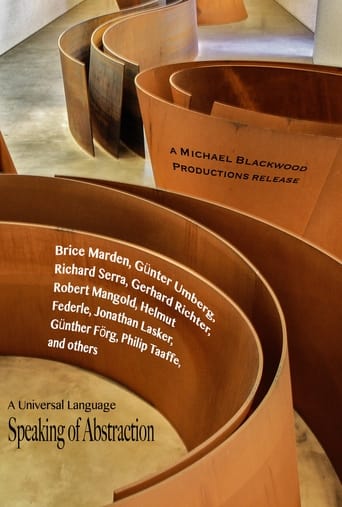
At the beginning of the twenty-first century, abstraction - that most quintessentially modernist innovation - maintains a peculiarly contradictory position. Used, on one hand, by post-modernist artists as just one more quotable style amongst many, it is on the other hand still considered an elitist or hermetic language by audiences intimidated by its lack of recognizable subject matter. Yet ultimately, abstraction continues to be a viable creative path for contemporary artists of all generations, many of whom embrace it as the most inclusive and fundamentally resonant of artistic languages. Filmed at the artists' studios, the Dia Center for the Arts, and the Guggenheim Museum during their exhibition, "Abstraction in the Twentieth Century."
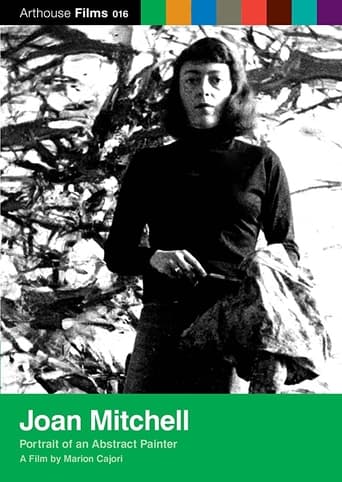
A powerful and intimate portrait, Joan Mitchell: Portrait of an Abstract Painter captures Mitchell's independent spirit and testifies eloquently to Mitchell's art. Joan Mitchell was born in Chicago in 1926 and died in Paris in 1992. After graduating from the School of the Art Institute of Chicago, Joan settled in New York City in 1950. She was an active participant of New York's dynamic Abstract Expressionist scene and hung out with fellow painters Franz Kline, Willem de Kooning and Philip Guston and, soon, poets Frank O'Hara, James Schuyler and John Ashbery. In the mid-fifties, she moved to Paris, France. There she was part of a circle of friends that included Pierre Matisse, Samuel Beckett and Alberto Giacometti. Mitchell is one of the great abstract painters of the 20th century. This elegantly edited documentary weaves interviews with the acerbic Mitchell and other leading painters and critics while letting her stunning pictures dominate the film.
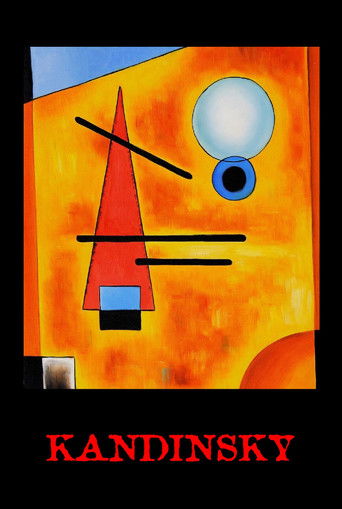
The Russian painter Wassily Kandinsky claimed, or has been credited with, the 'creation' of abstract art. At the core of this film is a dramatic recreation of Kandinsky's account of returning to his studio one dark evening, and being astonished by an unknown masterpiece of abstract art leaning against the easel - a picture which turned out to be one of his own landscapes fallen on its side. 'Now I knew for certain that the object spoiled my pictures.' While this film's narration does indeed emphasize the notion of an inspired breakthrough to Abstraction, the picture it conveys in more purely filmic ways is a rich and complex one.
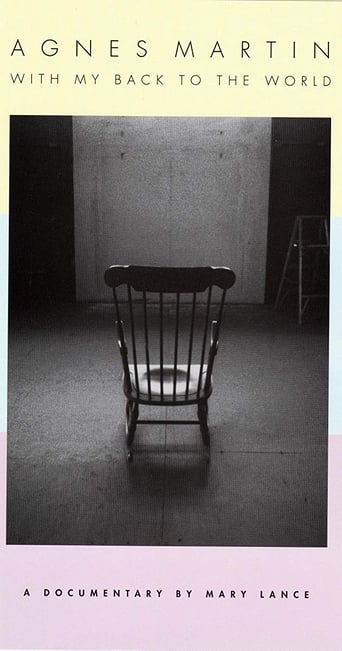
A groundbreaking documentary on the internationally renowned painter, designated by ARTnews Magazine one of the world's top-ten living artists. This documentary was shot over a period of four years, from 1998 through 2002, Agnes Martin's ninetieth year. Interviews with Martin are inter-cut with shots at work in her studio in Taos, New Mexico, with photographs and archival footage, and with images of her work from over five decades. It is a venue for Martin to speak about her work, her working methods, her life as an artist, and her views about the creative process. She also discusses her film, "Gabriel" and reads from her poetry and lectures. In keeping with Martin's chosen life of solitude, she alone appears in the documentary.
“Pat Pasloff is a strong artist within a strong tradition…She has transcended some of the angst of Abstract Expressionism, without descending into something that is bland or formulaic or potentially conceptual” – David Cohen Pat Pasloff (1928 – 2011) was an ambitious abstract expressionist painter who produced large scale, fresh, and vital bodies of work. Studying under pioneering artist William de Kooning, she was able to find her own path and grow from his influence. Her patterns and grids come alive with the materiality and physicality of her paintings. Watch as Pasloff describes her experiences painting, gaining an education in art, and as her visual language of emotion comes alive.