

Black Rodeo
Documentary
Overview
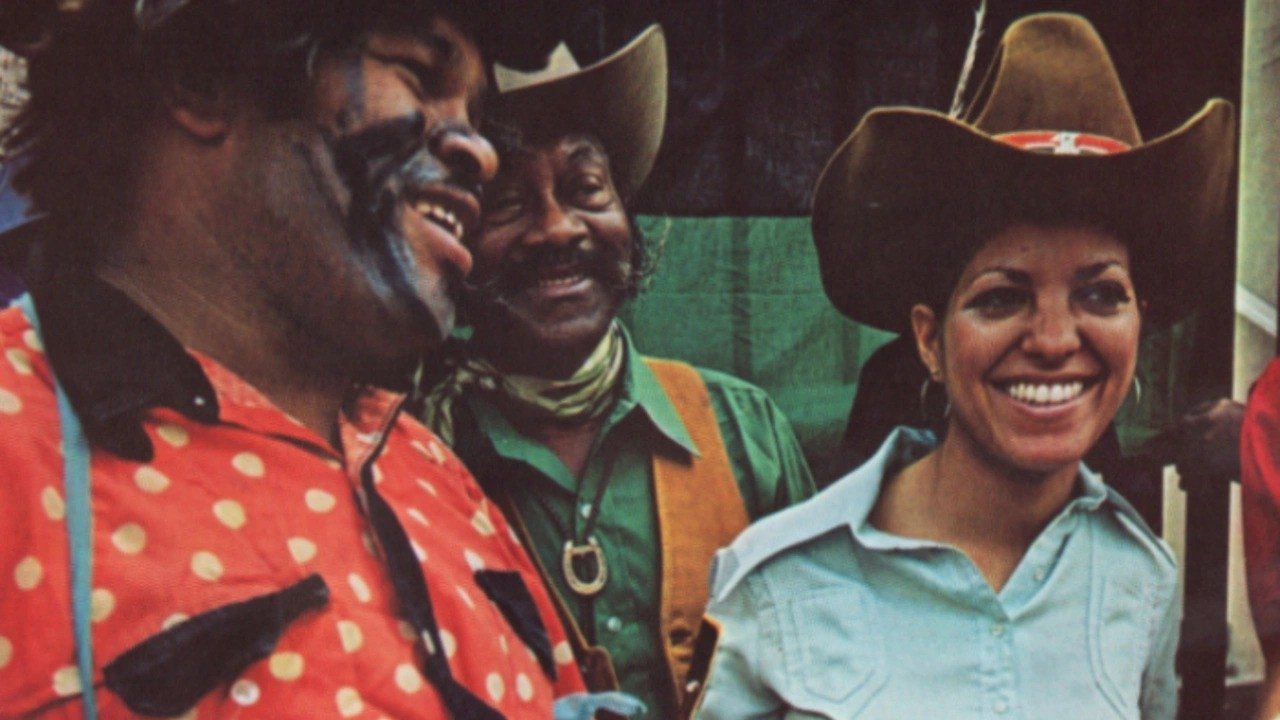
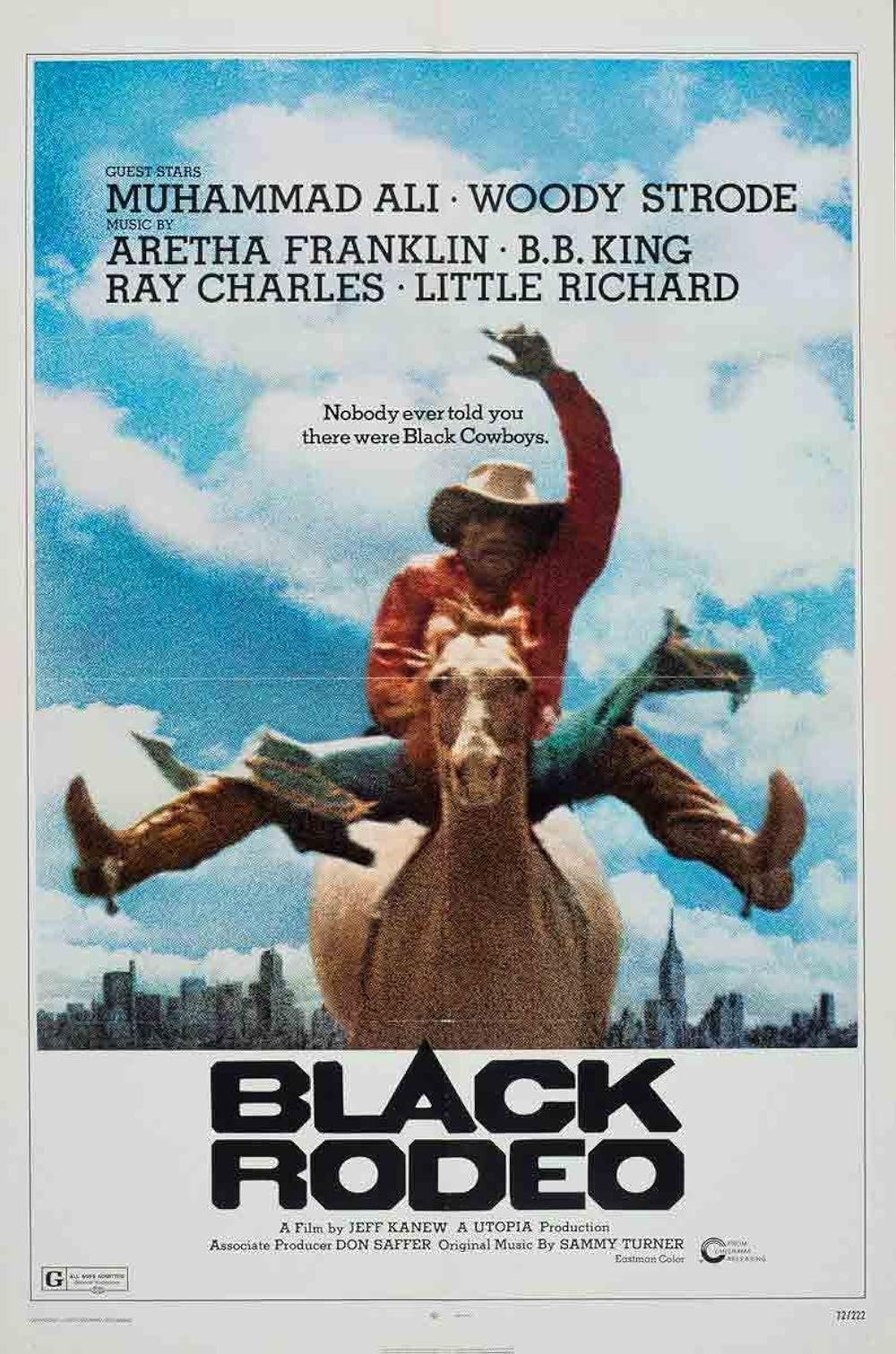
Documentary about a rodeo that takes place, for the most part, in Harlem.




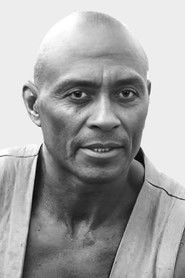
Woody Strode
Woody Strode
Narrator (voice)
Woody Strode
Narrator (voice)
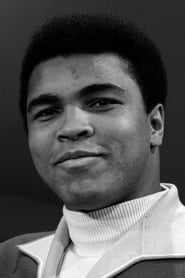
Muhammad Ali
Muhammad Ali
Self
Muhammad Ali
Self
Archie Wycoff
Archie Wycoff
Bud
Archie Wycoff
Bud
Clarence Gonzalez
Clarence Gonzalez
Cleo
Clarence Gonzalez
Cleo
Betsy Bramwell
Betsy Bramwell
Betsy Bramwell
Reuben Heura
Reuben Heura
James
Reuben Heura
James
Marval Rogers
Marval Rogers
Rocky
Marval Rogers
Rocky
Similar Movies
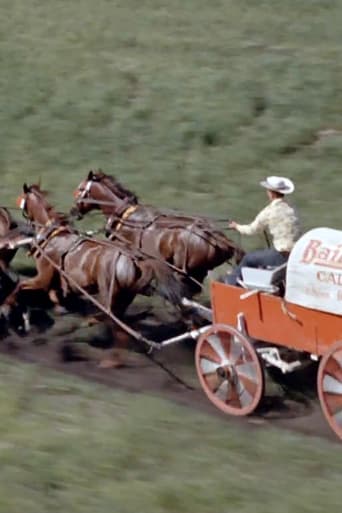
Focusing on the sport of chuckwagon racing at the Calgary Stampede, captured through a mix of aerial, POV, and ringside footage, the film is ahead of its time in the way it captures adrenaline-pumping action. This short documentary offers a ringside view of the chuckwagon race, star attraction of the world-famous Calgary Stampede. Once ponderous Percheron and Clydesdale draught thundered around the course. Now they are racers, and it takes a firm hand to guide such horsepower.
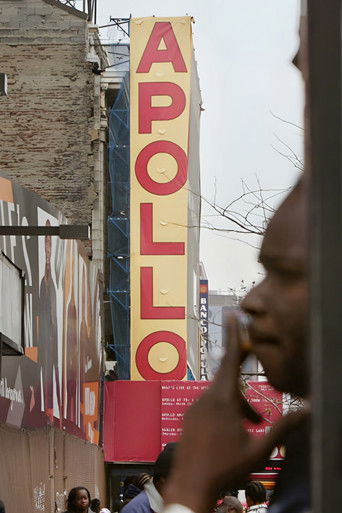
Some of the world's best jazz, R & B, hip-hop, rap, gospel and Latin musicians perform classic and modern songs in this 2004 benefit show celebrating the 70th year of Harlem's famed Apollo Theater. Performers include Natalie Cole, Ashanti, Brian McKnight, Yolanda Adams with the Abyssinian Baptist Choir, James Ingram, Herbie Hancock, Branford Marsalis, Doug E. Fresh, Slick Rick, Patti LaBelle, Angie Stone and Arturo Sandoval.
The Harlem Blues & Jazz Band during its sunset years: 87-year-old Al Casey, who had worked closely with Fats Waller throughout the 1930s; guitarist Lawrence Lucie, 95 years young, from the bands of Louis Armstrong, Benny Carter and Duke Ellington; saxophonist Bubba Brooks, 79, who was with Bill Doggett; Edwin Swanston, 80, pianist with Louis Armstrong's Orchestra; 91-year-old drummer Johnny Blowers, ex-Bunny Berigan, Billie Holiday and Frank Sinatra; Ivan Rolle, 85, bassist with Jonah Jones; and 88-year-old Laurel Watson, one-time vocalist with Duke Ellington and Count Basie. Baron's cameras record the musicians through their tours and concerts, capturing their joy in performing together. A celebration of the jazz spirit.
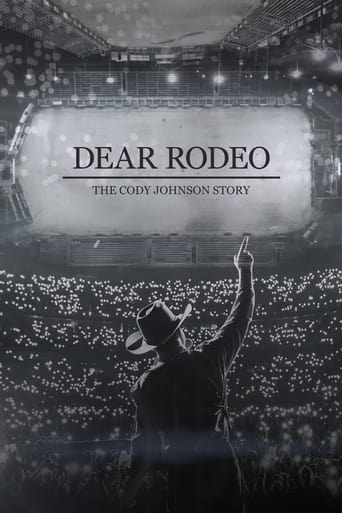
Dear Rodeo: The Cody Johnson Story, a brand-new cinematic feature-length documentary, is the much bigger picture, recounting Johnson’s real-life journey from the dusty rodeo arenas of rural Texas to some of the biggest musical stages in America. Every emotion Johnson felt over the past 20 years – whether he was standing in the back of the chute at the rodeo or singing about it in front of 75,000 fans – is captured vividly in this big screen experience, with all the highs and lows that come from the dreams you cling to and the dreams you ultimately let go of. Featuring interviews with Reba McEntire, Taya Kyle (the widow of “American Sniper” Chris Kyle), and more, this evocative and celebratory film is a love letter to everyone who has had to abandon a dream in order to find true purpose.
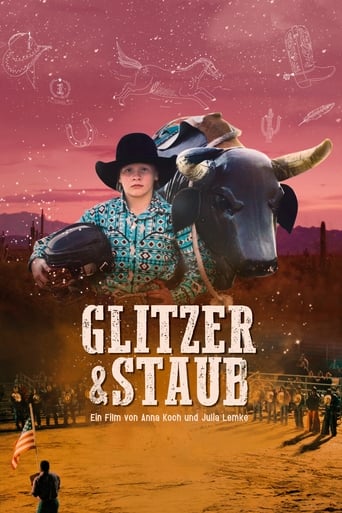
Four girls living in the lonely vastness of the USA share one passion: The wild world of rodeo. Although they move about in the powerful imagery of the American prairie and the myths of the Wild West, they give it new resonance and break free of it. In a world which used to belong to their fathers and brothers, they prove that "you ride like a girl" is not an insult but a compliment.
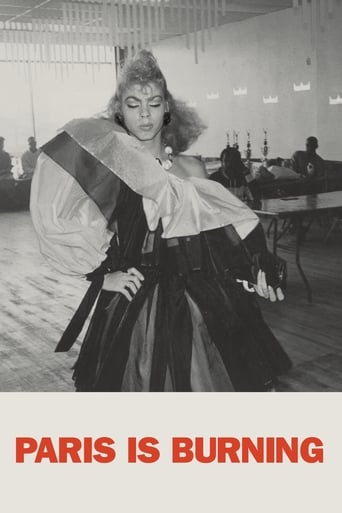
Where does voguing come from, and what, exactly, is throwing shade? This landmark documentary provides a vibrant snapshot of the 1980s through the eyes of New York City's African American and Latinx Harlem drag-ball scene. Made over seven years, PARIS IS BURNING offers an intimate portrait of rival fashion "houses," from fierce contests for trophies to house mothers offering sustenance in a world rampant with homophobia, transphobia, racism, AIDS, and poverty. Featuring legendary voguers, drag queens, and trans women — including Willi Ninja, Pepper LaBeija, Dorian Corey, and Venus Xtravaganza.
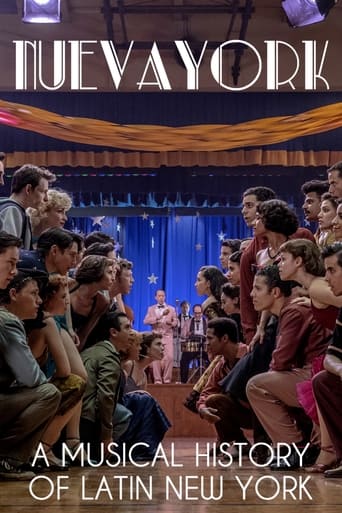
When the film West Side Story was released in 1961, New York's reviled Puerto Rican community gained some visibility and, over time, both in Spanish Harlem and the Bronx, neighborhoods plagued by poverty, drugs and crime, Hispanic identity was reborn and strengthened, thanks to a syncretic and intentionally popular music that eventually conquered the entire city.