

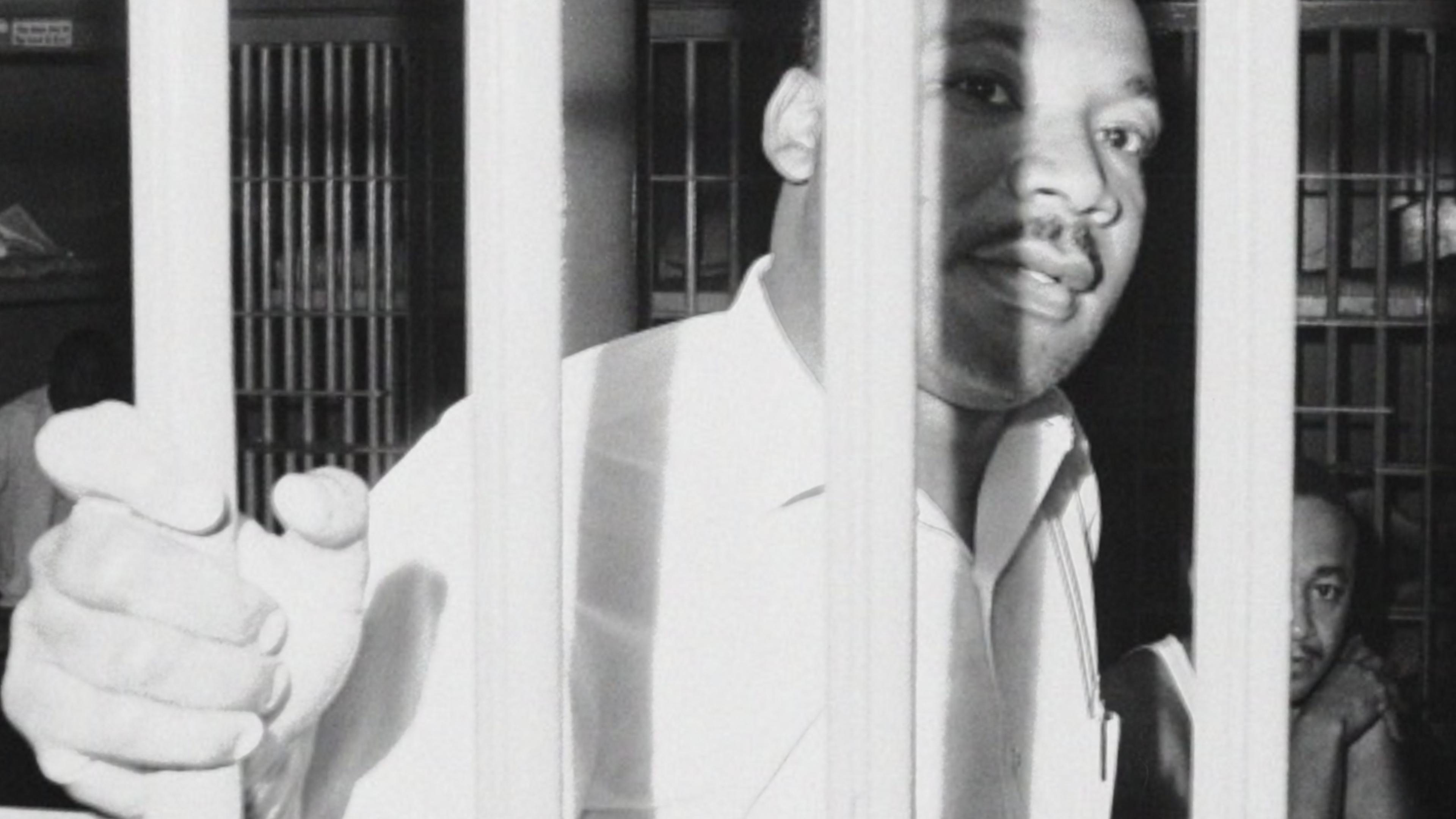
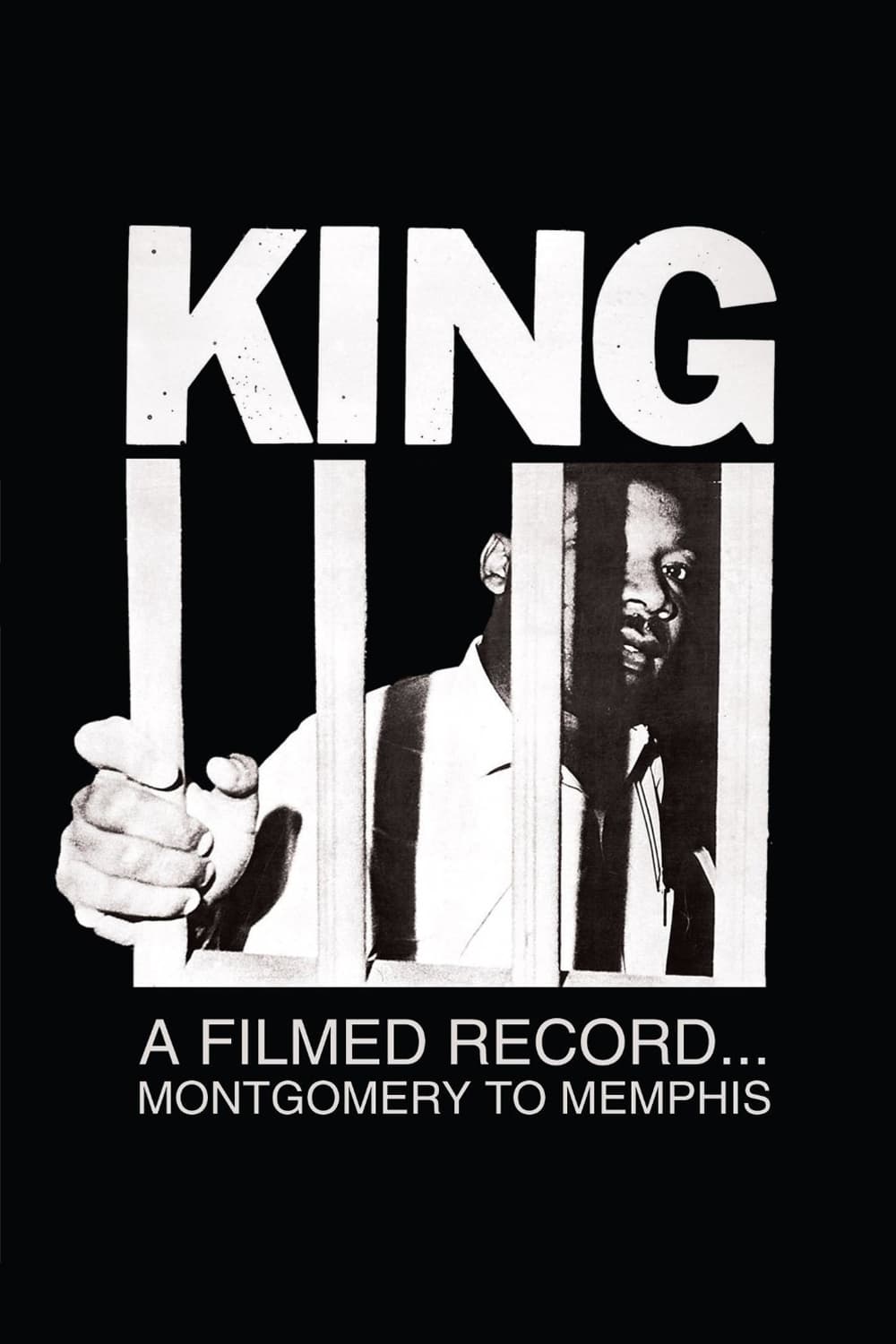
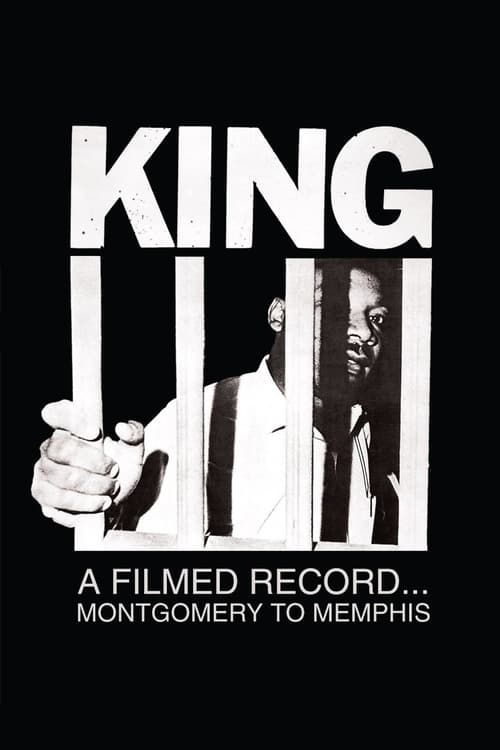
King: A Filmed Record... Montgomery to Memphis
Documentary
Overview
A presentation of key events in the life of civil rights activist Martin Luther King Jr. Beginning with the 1955 bus boycott in Montgomery, Alabama, MLK is followed through major steps in his struggle to promote racial equality. Including footage of King's stirring speeches, it is a fitting tribute to his legacy, and features clips narrated by a wide range of celebrities, including Harry Belafonte, Paul Newman Charlton Heston, Ruby Dee, Burt Lancaster, Anthony Quinn, Walter Matthau, Ben Gazzara, Clarence Williams III, Joanne Woodward, and James Earl Jones.
Top Cast
Martin Luther King Jr.
Self (archive footage)
Coretta Scott King
Self (archive footage)
A.D. King
Self (archive footage)
Dexter King
Self (archive footage)
Yolanda King
Self (archive footage)
Martin Luther King III
Self (archive footage)
Bernice King
Self (archive footage)
Ralph Abernathy
Self (archive footage)

Joan Baez
Self (archive footage)
James Baldwin
Self (archive footage)
Harry Belafonte
Self (archive footage)
Tony Bennett
Self (archive footage)


Martin Luther King Jr.
Martin Luther King Jr.
Self (archive footage)
Martin Luther King Jr.
Self (archive footage)
Coretta Scott King
Coretta Scott King
Self (archive footage)
Coretta Scott King
Self (archive footage)
A.D. King
A.D. King
Self (archive footage)
A.D. King
Self (archive footage)
Dexter King
Dexter King
Self (archive footage)
Dexter King
Self (archive footage)
Yolanda King
Yolanda King
Self (archive footage)
Yolanda King
Self (archive footage)
Martin Luther King III
Martin Luther King III
Self (archive footage)
Martin Luther King III
Self (archive footage)
Bernice King
Bernice King
Self (archive footage)
Bernice King
Self (archive footage)
Ralph Abernathy
Ralph Abernathy
Self (archive footage)
Ralph Abernathy
Self (archive footage)
Joan Baez
Joan Baez
Self (archive footage)
Joan Baez
Self (archive footage)
James Baldwin
James Baldwin
Self (archive footage)
James Baldwin
Self (archive footage)
Similar Movies
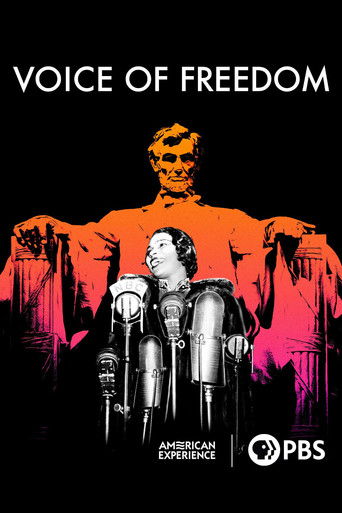
On Easter Sunday, 1939, contralto Marian Anderson stepped up to a microphone in front of the Lincoln Memorial. Inscribed on the walls of the monument behind her were the words “all men are created equal.” Barred from performing in Constitution Hall because of her race, Anderson would sing for the American people in the open air. Hailed as a voice that “comes around once in a hundred years” by maestros in Europe and widely celebrated by both white and black audiences at home, her fame hadn’t been enough to spare her from the indignities and outright violence of racism and segregation.
In 1831 African American slave, and preacher, Nat Turner lead a bloody slave revolt in Southampton County, Virginia. It was a fight against the enslavement of African and American people of color who longed for freedom from tyranny. This one-hour doc follows Roger Guenveur Smith as he travels to Southampton County, Virginia to take viewers on a physical journey through the town, fields and farms where Turner lived, fought, and died; along the way meeting with academics, locals, and descendants to peel back the layers of one of the most misunderstood Americans in history. In addition to candid discussions on historical and contemporary racial tensions, Roger asks us to consider why Turner is not lofted up across America as an early black revolutionary figure who helped to shape the nation.
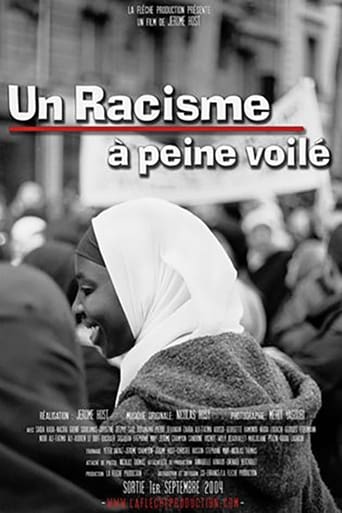
October 2003, Alma and Lila Levy are excluded from the Lycée Henri Wallon in Aubervilliers solely because they were wearing a headscarf. What follows is a deafening political and media debate, justifying in most cases the exclusion of girls wearing head-scarves to school. February 2004, a law was eventually passed by the National Assembly. "A thinly veiled racism" is about this controversy since the affair of Creil in 1989 (where two schoolgirls were excluded for the same reasons) and attempts to "reveal" that maybe what hides behind is the desire to exclude these girls. This film gives them a voice as well as others - teachers, community activists, feminists, researchers - gathered around the group "A School for You-All" fighting for the repeal of this law they consider sexist and racist ... This movie was censured in Septembre 2004 in France.
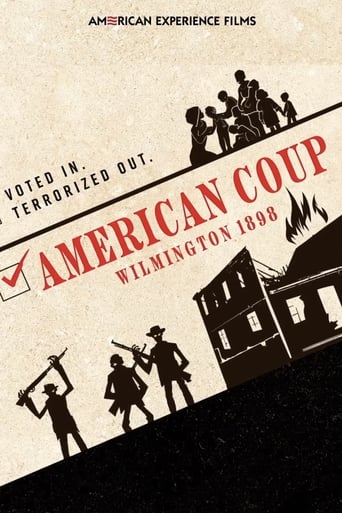
The little-known story of a deadly race massacre and carefully orchestrated insurrection in North Carolina’s largest city in 1898 — the only coup d’état in the history of the US. Stoking fears of 'Negro Rule', self-described white supremacists used intimidation and violence to destroy Black political and economic power and overthrow Wilmington’s democratically-elected, multi-racial government. Black residents were murdered and thousands were banished. The story of what happened in Wilmington was suppressed for decades until descendants and scholars began to investigate. Today, many of those descendants — Black and white — seek the truth about this intentionally buried history.

Pop star Leigh-Anne Pinnock confronts her experience as the only black member of Little Mix, and as a black woman in the music industry. She embarks on her own very personal journey to understand how she can use her platform and privilege to combat the profound racism she sees in society around her.
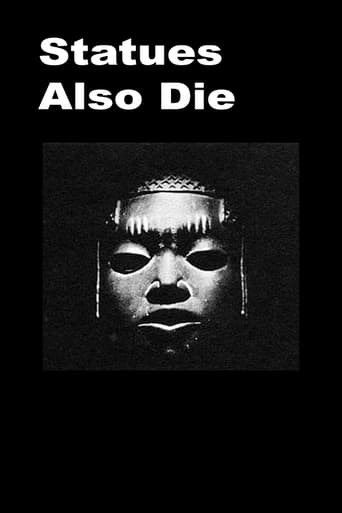
Commissioned by the journal Présence Africaine, this short documentary examines how African art is devalued and alienated through colonial and museum contexts. Beginning with the question of why African works are confined to ethnographic displays while Greek or Egyptian art is celebrated, the film became a landmark of anti-colonial cinema and was banned in France for eight years.
African American filmmaker David A. Wilson decided to look into his family's history during the slave era. The result is this documentary, which provides a unique perspective on the long shadow cast by slavery in America. Wilson travels to North Carolina to visit the plantation where his ancestors once toiled and to meet its current owner -- a white man named David Wilson, whose slave-owning ancestors originally occupied the property.