

Bride of Trailer Camp
Documentary
Overview
A compilation of "coming attractions" from bad '50s melodrama through the greatest disaster movies of the '70s. Features a chain of your divas including Bette Davis in What Ever Happened to Baby Jane?, Jeanne Moreau in Mademoiselle, Elizabeth Taylor in Butterfield 8 and Boom, Kim Novak in The Legend of Lylah Clare, Susan Hayward in I'll Cry Tomorrow, and Judy Garland in I Could Go On Singing. One clips is a young Rock Hudson promoting Christmas Seals. Bride of Trailer Camp includes specimens of movie trailer artistry.




Bette Davis
Bette Davis
(archive footage)
Bette Davis
(archive footage)

Jeanne Moreau
Jeanne Moreau
(archive footage)
Jeanne Moreau
(archive footage)

Elizabeth Taylor
Elizabeth Taylor
(archive footage)
Elizabeth Taylor
(archive footage)
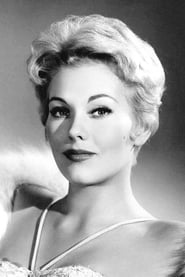
Kim Novak
Kim Novak
(archive footage)
Kim Novak
(archive footage)

Judy Garland
Judy Garland
(archive footage)
Judy Garland
(archive footage)

Susan Hayward
Susan Hayward
(archive footage)
Susan Hayward
(archive footage)
Similar Movies
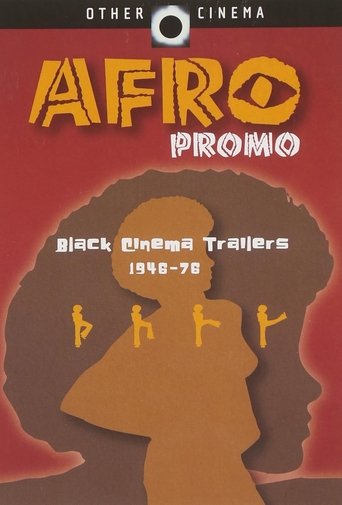
Co-curated by Jenni Olson and the late Black gay activist Karl Knapper, this entertaining showcase of vintage movie trailers traces the evolution of African American cinema through its most crucial period, 1952-1976. Filled with insights on race and social dynamics, this fascinating compendium of coming attractions explores an extensive range of stylistic approaches—Blaxploitation, Comedy, Music Bio, Plantation Drama and more—offering an outrageous joyride through motion picture history. Beyond mere camp, these marvelously condensed gems crystallize a range of African American identities and personalities, tracking the meteoric careers of Sidney Poitier, James Earl Jones, Billy Dee Williams, Richard Pryor, Pam Grier and others through their bold performances in movies both hugely popular and practically forgotten. Afro Promo provides a compact glimpse at the representation of African Americans through twenty-five dynamic years of American cinema history.
Film archivist and former director of the San Francisco Lesbian and Gay Film Festival Jenni Olson created this fast-paced and often funny, campy 75-minute film comprised entirely of spliced together movie trailers. Some of the segments have themes such as a breezy look back at John Travolta's career that includes trailers from such films as Saturday Night Fever, Staying Alive, Grease, Perfect, and Moment by Moment. Other trailers include Mae West in Sextette, the disco camper Thank God It's Friday, Raquel Welch in Kansas City Bomber, Pier Paolo Pasolini's The Gospel According to St. Matthew and the rarely seen Chastity, the serious acting debut of Cher.
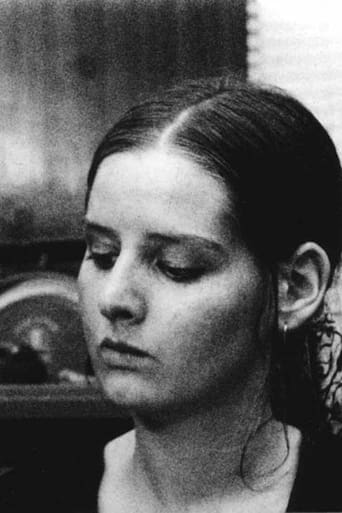
A docu-drama shot in 1970, but not completed until 1973, the film sought to encapsulate in an experimental form issues that were under discussion within the Women’s Liberation Movement at this time and to thus contribute to action for change. In its numerous community screenings, active debate was encouraged as part of the viewing experience.
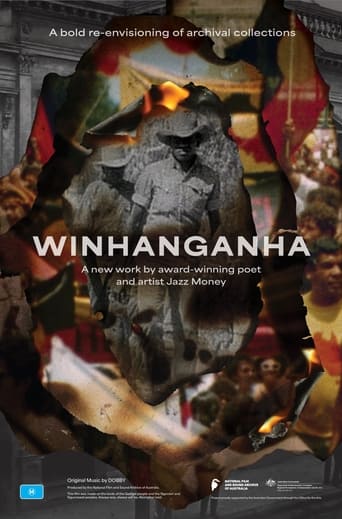
WINHANGANHA (Wiradjuri language: Remember, know, think) - is a lyrical journey of archival footage and sound, poetry and original composition. It is an examination of how archives and the legacies of collection affect First Nations people and wider Australia, told through the lens of acclaimed Wiradjuri artist, Jazz Money.
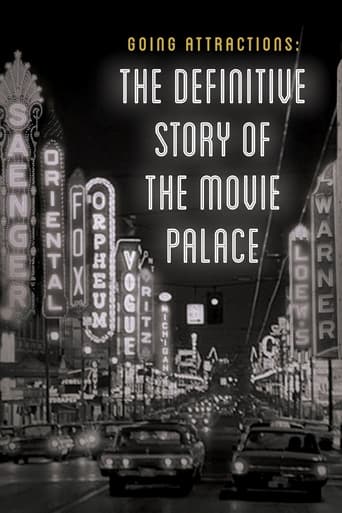
Celebrating the splendor and grandeur of the great cinemas of the United States, built when movies were the acme of entertainment and the stories were larger than life, as were the venues designed to show them. The film also tracks the eventual decline of the palaces, through to today’s current preservation efforts. A tribute to America’s great art form and the great monuments created for audiences to enjoy them in.
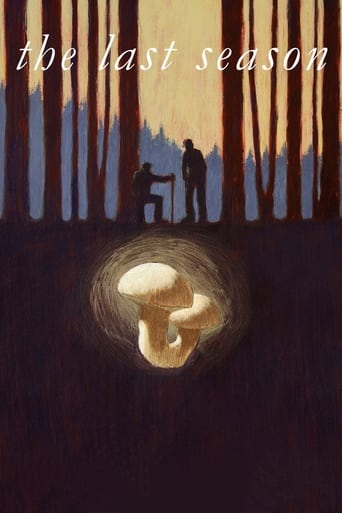
In search of the lucrative matsutake mushroom, two former soldiers discover the means to gradually heal their wounds of war. Roger, a self-described 'fall-down drunk' and sniper in Vietnam, and Kouy, a Cambodian refugee who fought the Khmer Rouge, bonded in the bustling tent-city known as Mushroom Camp, which pops up each autumn in the Oregon woods. Their friendship became an adoptive family; according to a Cambodian custom, if you lose your family like Kouy, you must rebuilt it anew. Now, however, this new family could be lost. Roger's health is declining and trauma flashbacks rack his mind; Kouy gently aids his family before the snow falls and the hunting season ends, signaling his time to leave.
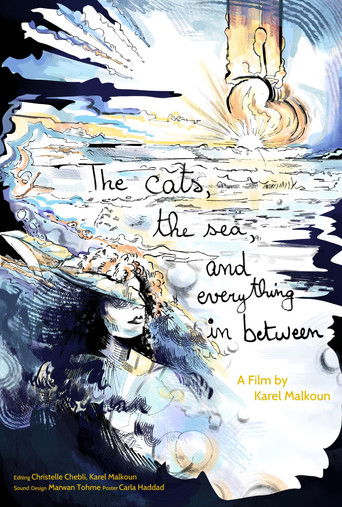
In 2022, when the economic crisis in her native country was at its peak, she decided to visit her family there. She turned her short trip into a collage-like diary in which she reflects on her relationship with her homeland, which is in a state of protracted decay. The film is composed of spontaneous snapshots capturing the author's stay, interspersed with inserted captions serving as personal, often poetically formulated comments and observations. As a result, the film does not hide its strongly subjective perspective, but at the same time builds on it to make an important statement that shows the transformation of Lebanese society in everyday details such as the appearance of the city itself or in the intimate sphere of the author's family life.