

ABF-Memoiren
Documentary
Overview
The documentary shows historical film footage from the workers' and farmers' faculties (ABF) of the GDR, which existed until 1962 and were intended to help level out class differences in the education sector by preparing mainly workers' and farmers' children for a university career.




No cast information.
Similar Movies
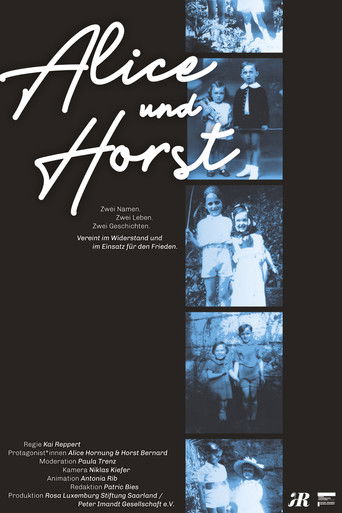
Alice and Horst paints a moving portrait of two siblings from Saarbrücken whose lives were shaped by their family’s antifascist resistance. As children, Alice Hornung and Horst Bernard were forced to flee from the Nazis into exile in France, where, despite constant danger, they also experienced great solidarity. After their return they continued their parents’ political commitment: against fascism, for peace and disarmament. The film combines personal memories with rare archival footage and portrays two individuals who, well into old age, remain unwavering in their commitment to justice and remembrance.
In the midst of the transition towards reunification and a market economy, two teams meet for the last time in the final of the FDGB Cup shortly after the 1990 Volkskammer elections: favorites Dynamo Dresden and Polizeisportverein Schwerin. Matthias Hufmann and Benjamin Unger take a look back 30 years later.
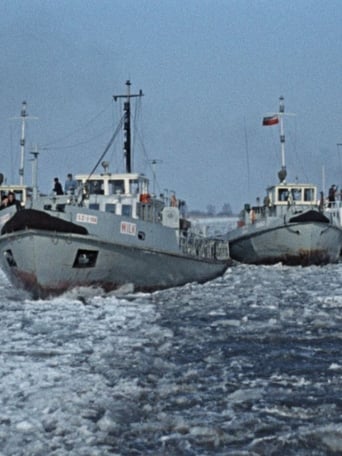
Documentary reports on the annual icing of the Oder in the 160-kilometer border area between the GDR and the People's Republic of Poland. Icebreakers from both countries with experienced skippers join forces to make the international waterway between Frankfurt and Szczecin navigable again. Everyone works hard as a team and even a broken-down ship cannot stop them from achieving their goal. A look back at the winter of 1947 with its flooding shows what the freezing of the river and the subsequent thaw can do if the ice floes are not drained into the Baltic Sea via Lake Dammsch in good time. The skippers from both countries have known each other for years and trust each other; the camaraderie that has developed on the Oder unites the people, they control the river in winter for the common benefit of all.
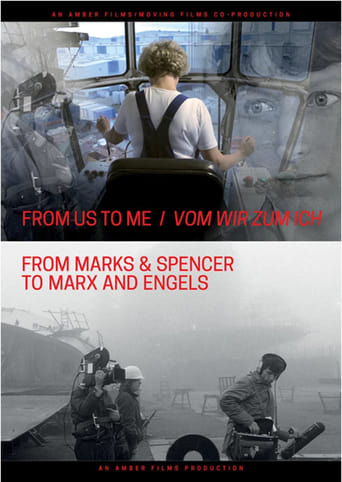
This first co-production between the GDR and Great Britain is intended to contribute to an understanding of the situation and attitudes of millions of working people in opposing social orders. Using the example of shipyard workers, fishermen, the brigade and family of a trade union active cook and unemployed person of various ages and professions in Newcastle on the one hand and a brigade of crane operators of the Warnowwerft and fishermen of the Warnemünde cooperative on the other hand, insights into the way of life and attitudes of people of our time are to be conveyed.
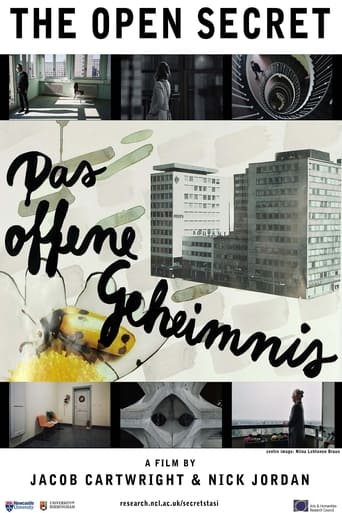
A documentary that explores questions of secrecy and power in relation to the East German Secret Police (the 'Stasi') within East German society. The film is based upon key findings from an extensive research project, 'Knowing the Secret Police', and reflects upon how different kinds of knowledge were circulated through social, religious, political and literary networks within the former GDR. The filmmakers present this research with footage filmed at key locations throughout East Berlin and the wider surrounding landscape, including the Stasi archives and former HQ, Karl-Marx-Allee, Volkspark Friedrichshain, rural 'dacha' cabins, the urban neighbourhood of Prenzlauerberg and the social housing estates of Marzahn.
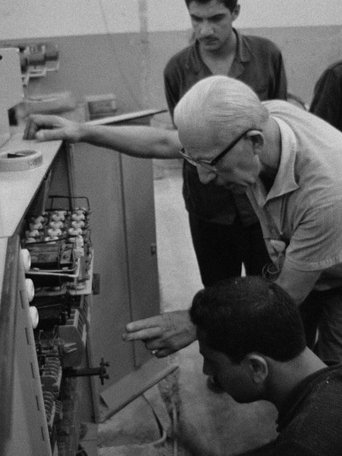
The film is a reportage showing the help of workers from the GDR in the industrial reconstruction of Syria. We witness the friendly relationship between workers from both countries, who are jointly involved in the construction of the cotton spinning mill in Homs. In impressive pictures the exoticism of the environment and the mentality of the Syrian hosts is shown. At the same time it becomes clear that the workers from the GDR become 'ambassadors of the GDR' through their collegial behaviour and good work.