


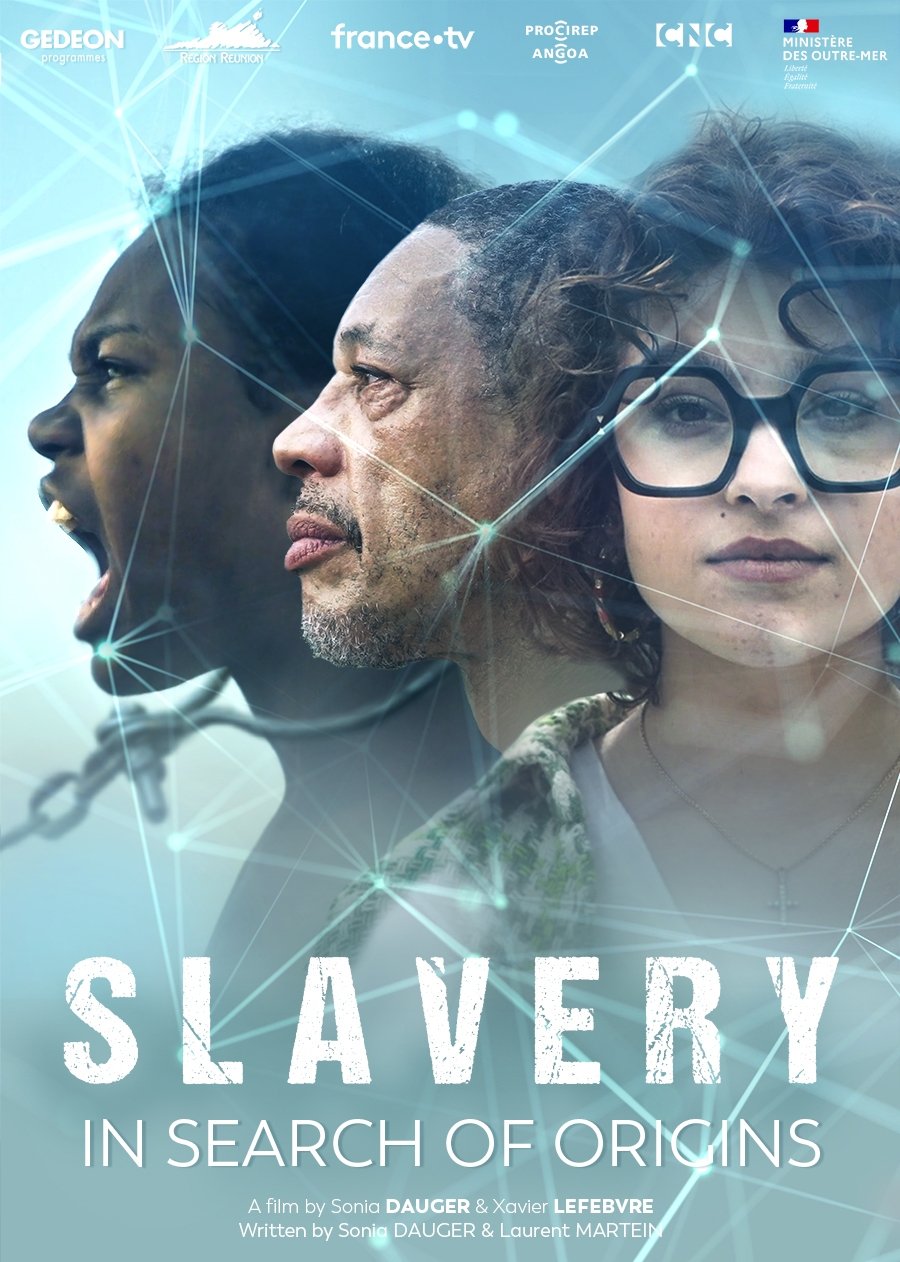
Aux origines, l'esclavage
Documentary · History









Elsa Hamnane
Elsa Hamnane
Narrator (voice over)
Elsa Hamnane
Narrator (voice over)

Karine Baste-Régis
Karine Baste-Régis
Self
Karine Baste-Régis
Self

Stéfi Celma
Stéfi Celma
Self
Stéfi Celma
Self

Marie-Laure Garnier
Marie-Laure Garnier
Self
Marie-Laure Garnier
Self

Guillaume Hoarau
Guillaume Hoarau
Self
Guillaume Hoarau
Self
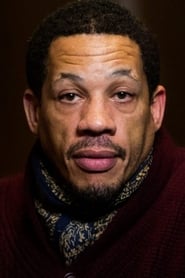
JoeyStarr
JoeyStarr
Self : Didier Morville
JoeyStarr
Self : Didier Morville

Kalash
Kalash
Self : Kévin Valleray
Kalash
Self : Kévin Valleray
Similar Movies
Set in the Mayan civilization, when a man's idyllic presence is brutally disrupted by a violent invading force, he is taken on a perilous journey to a world ruled by fear and oppression where a harrowing end awaits him. Through a twist of fate and spurred by the power of his love for his woman and his family he will make a desperate break to return home and to ultimately save his way of life.
In 1375, China was in chaos between Yuan Dynasty and Ming Dynasty. Coryo (an ancient kingdom of Korea then) sent a delegation of many diplomats, soldiers and a silent slave to make peace with the new Chinese government. However, this delegation got charged as spies and sent in exile to a remote desert.
The rebellious Thracian Spartacus, born and raised a slave, is sold to Gladiator trainer Batiatus. After weeks of being trained to kill for the arena, Spartacus turns on his owners and leads the other slaves in rebellion. As the rebels move from town to town, their numbers swell as escaped slaves join their ranks. Under the leadership of Spartacus, they make their way to southern Italy, where they will cross the sea and return to their homes.
Where do I come from? For some, the question has a simple answer -- for others, the truth can be much more complicated. With the rise in popularity of at-home DNA tests, it's now easier than ever for people to uncover their family history and, sometimes, things their parents wish would stay buried. Interested in learning more about his family heritage, director Jon Baime took an at-home DNA test and uncovered a family secret that has been hidden for half a century. Featuring in-depth interviews with Jon's siblings as well as a treasure trove of family photos and films spanning 70 years, FILLING IN THE BLANKS takes audiences on a journey as Jon explores the meaning behind his discovery and expands on what it means to be family.
Between the end of the Second World War and the abolition of the "offence of homosexuality" in 1982, 10,000 sentences were handed down in France. Sentences in correctional courts, fines and sometimes imprisonment, the convictions were mainly against men. The last witnesses of this period speak out and tell of four decades of clandestine life, just before the tragedy of AIDS.
Algeria, summer 1962, eight hundred thousand French people left their native land in a tragic exodus. But 200,000 of them decided to attempt the adventure of independent Algeria. Over the following decades, political developments would push many of these pieds-noirs into exile towards France. But some never left. Germaine, Adrien, Cécile, Guy, Jean-Paul, Marie-France, Denis and Félix, Algerians of European origin, are among them. Some have Algerian nationality, others do not. Some speak Arabic, others do not. They are the last witnesses to the little-known history of these Europeans who remained out of loyalty to an ideal, a taste for adventure and an unconditional love for a land where they were born, despite all the ups and downs that the free Algeria in full construction had to go through.
For eight centuries, between the 9th and 1st century BC, the Etruscans, inhabitants of the Italian peninsula, were one of the most powerful peoples of the Mediterranean basin, and when they disappeared they left behind impressive necropolises, vestiges of sanctuaries and even entire cities. How did they attain such power? How far did they extend their dominion and influence? What were the causes of their decline?
60 years ago, in the Algerian desert, an atomic bomb, equivalent to three or even four times Hiroshima, exploded. Named the “Blue Gerboise”, it was the first atomic bomb tested by France, and of hitherto unrivaled power. This 70 kiloton plutonium bomb was launched in the early morning, in the Reggane region, in southern Algeria, during the French colonial era. If this test allowed France to become the 4th nuclear power in the world, it had catastrophic repercussions. France had, at the time, certified that the radiation was well below the standard safety threshold. However, in 2013, declassified files revealed that the level of radioactivity had been much higher than announced, and had been recorded from West Africa to the south of Spain.
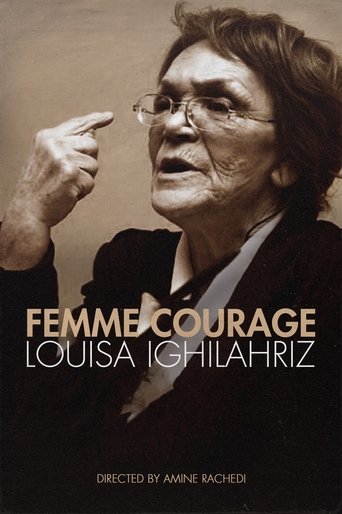
The autobiographical account of the tormented life of a witness of the century: Louisa Ighilahriz, activist and leading figure in Algerian independence. A student, she joined the independence struggle at the age of 20, joining the ranks of the FLN on the eve of the Battle of Algiers in late 1956 under the name Lila. She took part in the high school students' strike, then fled into the maquis when she was actively sought after. She was part of the French FLN support network of "suitcase carriers" during the Battle of Algiers. Seriously wounded alongside her network leader, Saïd Bakel, during an ambush in 1957, hospitalized and then imprisoned, she suffered numerous tortures in French prisons. She will be saved from certain death by an anonymous person, she will seek, for forty years, to find him just to show him her gratitude... Emblematic of the painful Franco-Algerian history, Louisa's story is poignant and imbued with humanism.