



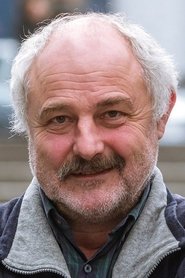
Jiří Krejčík
Jiří Krejčík
Jiří Krejčík
Václav Voska
Václav Voska
Václav Voska
Similar Movies
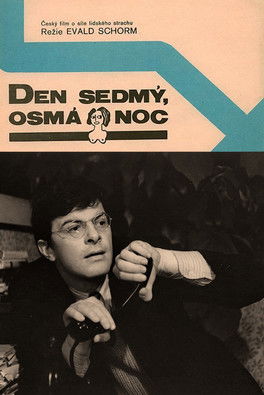
An allegory set in an archetypal Czech village, it tells the story of what happens when a series of mysterious events take place, including the disappearance of the station master. While everything has a rational explanation, collective paranoia takes over and everyone's worst instincts are unleashed. Interrogations, disenfranchisement, and the search for scapegoats ultimately lead to murder. The movie was completed in 1969, but it was banned and not released till 1990, Evald Schorm who died in 1988 never saw it completed.
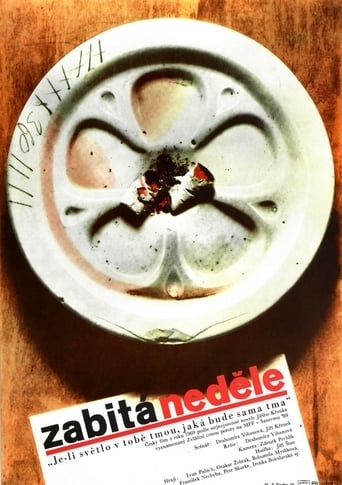
A day in the life of Arnošt, a soldier staying in Josefov. A sense of desperation permeates the environment as well as the mind of the protagonist. It is sunday, and saturday left just a hangover. Days go by, nothing changes. A metaphor for the political situation in the Czech lands at a time where depicting a soldier as a drunk was considered out of place to say the least.

Matylda, who lives in the Czech countryside, is trying to arrange burial plans for her dying husband, Jan. While Matylda hopes to have a funeral for Jan in the small town where they once lived, there are complications. Years earlier, Jan spoke out against the Communist government and was consequently expelled from the town. When Matylda fails to convince a local politician to allow the ceremony, she uses her husband's funeral as a public show of dissent.
A successful scientist dares to openly and forcefully criticize the unproductive activities of the institute in which he works. He draws attention to outdated procedures and also to the fact that scientific work must not fall into the abyss of mediocrity and everyday grayness, so typical of the entire society. Will his career withstand this situation?
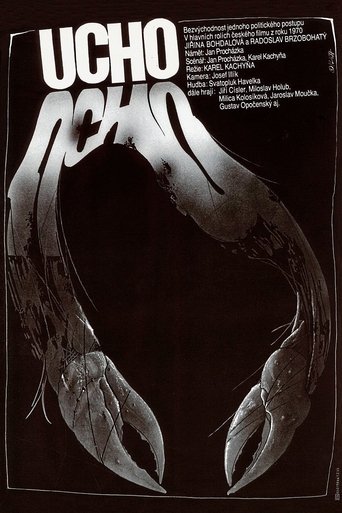
Government bureaucrat Ludvik becomes suspicious after several colleagues disappear and he overhears something strange at a cocktail party. Returning home with his wife, Anna, he finds their house under surveillance and spends a fraught night worrying about his possible arrest in the morning. Marital difficulties come to light as Ludvik and his wife attempt to act normal in front of the cameras while dredging up their problems out of sight.
In the film, the creative forces of personalities from three spheres of art collide. The subtitle "The Game of Love and Hate" refers to the motivation of an old Czech medieval satire, the theme belongs to Antonín Přidal, an expert on this subject. His collaboration with Juraj Herz created a collage of past and present, an updated, sharp satire and a parable about the clash of human qualities that could not but end up in the vault. The music of the Prague Selection - Michael Kocáb and Michal Pavlíček - also contributed to the film's offensive provocativeness - the film was one of the reasons for their complete move to the underground. The dancing chorus of medieval citizens resembles more of a jumble of long-haired maniacs, the edge of a contemporary dump intrudes into the space of a medieval marketplace, and the characters oscillate between the past and the present, whether in their appearance, symbolism or behaviour.
A television recording of a theatrical production of Alfred Jarry's absurd drama about the gluttonous, gluttonous, compulsive and unscrupulous Father Ubo, who, with the generous advice of his ambitious wife, gets rid of the Polish king and seizes his throne. He establishes a reign of terror in which he only cares about his own benefit, so it is not surprising that the people rebel against him. The recording was made at the end of July 1968 and, thanks to a copy saved from destruction during the normalization period, was first published in 1990.