


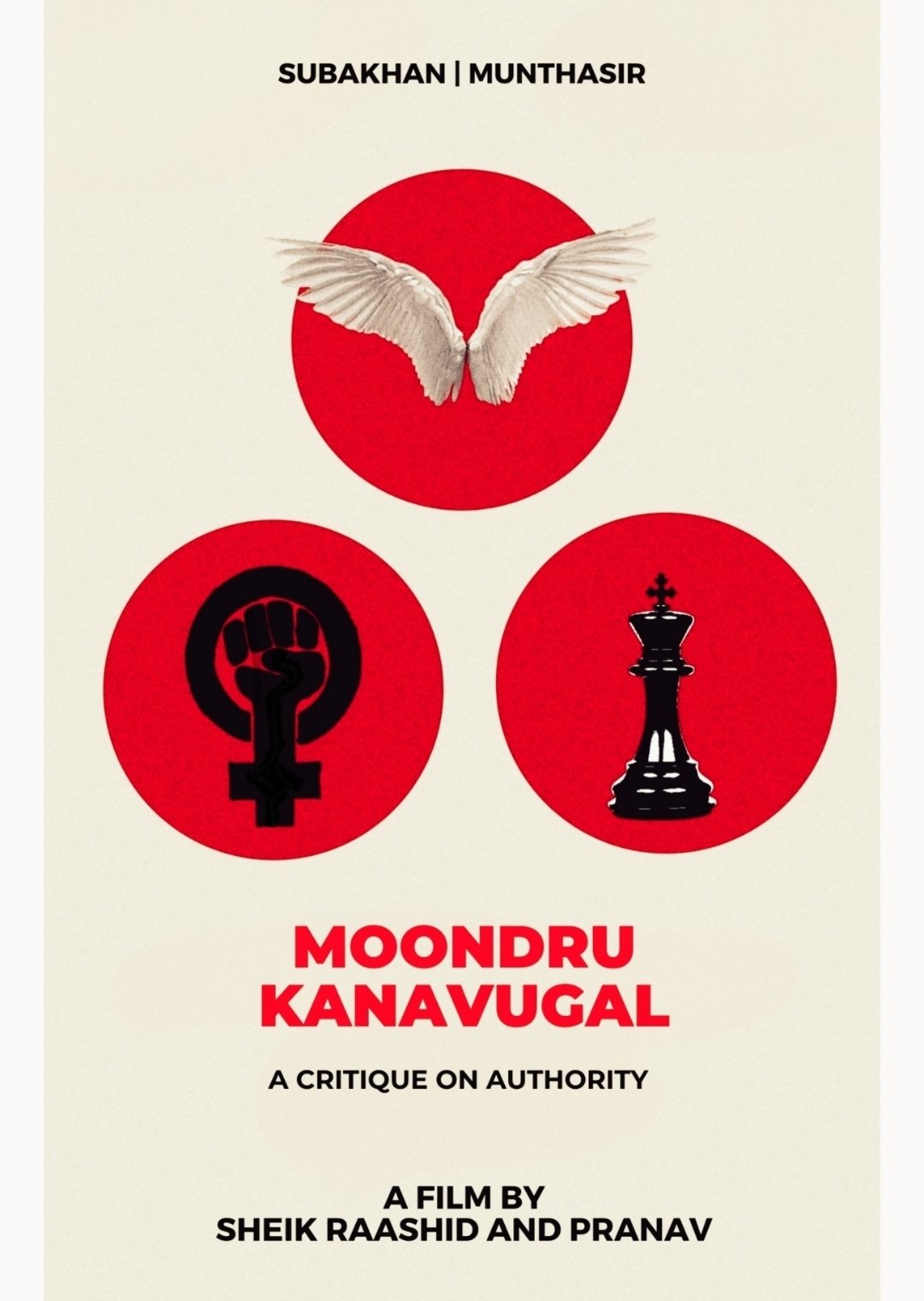
Moondru Kanavugal
Fantasy · Drama
Overview
Two strange people exchange their views on different forms of authority through dreams they encountered.
Top Cast





Subakhan
Subakhan
Protagonist 1
Subakhan
Protagonist 1
Munthazir
Munthazir
Protagonist 2
Munthazir
Protagonist 2
Shri Ranjani
Shri Ranjani
Wife
Shri Ranjani
Wife
Anantha Padmanaban
Anantha Padmanaban
Child
Anantha Padmanaban
Child
Sriram Shashank
Sriram Shashank
Boss
Sriram Shashank
Boss
Maharajothi Raja
Maharajothi Raja
Employee 1
Maharajothi Raja
Employee 1
Sriram P
Sriram P
Employee 2
Sriram P
Employee 2
Vaithiyanathan
Vaithiyanathan
Employee 3
Vaithiyanathan
Employee 3
Adhitya Natarajan
Adhitya Natarajan
Bodyguard 1
Adhitya Natarajan
Bodyguard 1
Abishek KR
Abishek KR
Bodyguard 2
Abishek KR
Bodyguard 2
Similar Movies
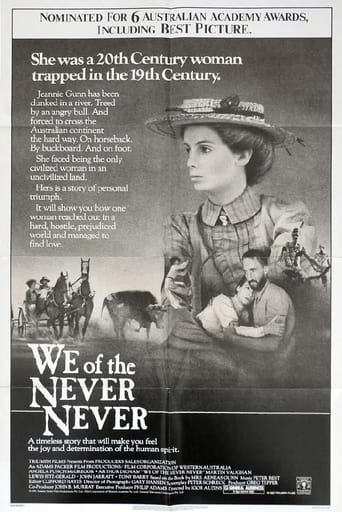
Based on the well-loved Australian classic by Mrs. Aeneas Gunn, this is the remarkable true story of Jeannie Gunn, a woman who fought to overcome sexual and racial prejudice amid the harsh beauties of the outback. Leaving her Melbourne existence for a new life on her husband's isolated ranch, Jeannie's feisty, good-natured attitude soon wins over the misogynistic stockmen, but she faces a much tougher challenge in trying to change their racist attitudes towards the indigenous aboriginal population.
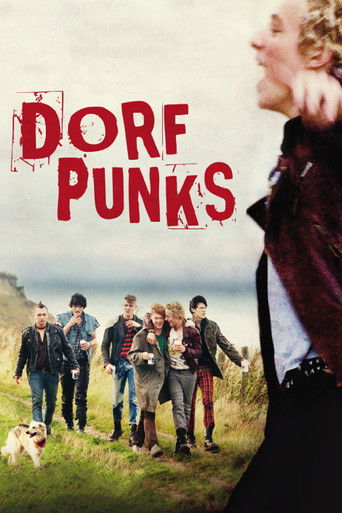
It is the summer of 1984 in Schmalenstedt, in the middle of Holstein Switzerland, directly on the Baltic Sea. The 17-year-old Malte Ahrens, who calls himself Roddy Dangerblood, lives with his elderly parents in a farmhouse, is trained as a potter and has discovered for himself the punk that has made its way into Schmalenstedt with some delay.
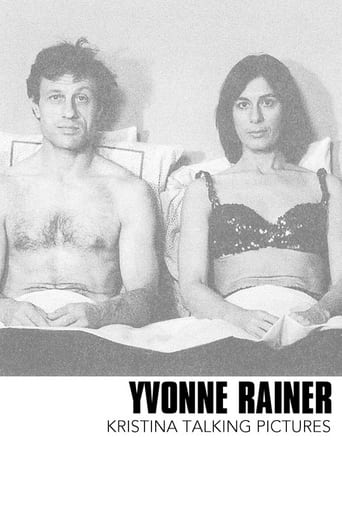
Kristina, a self-named Hungarian female lion tamer, arrives in New York to become a dance choreographer. Kristina, now a middle-class NYC artist concerned about the environment, has a sailor lover named Raoul. The film, a collage work, an essay film, a fictional narrative and a documentary all rolled into one, is one of the most important independent American feminists films made during the 1970's.
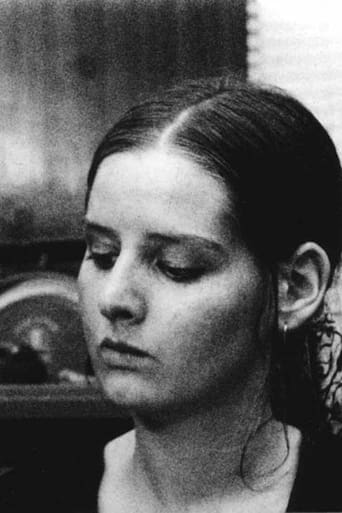
A docu-drama shot in 1970, but not completed until 1973, the film sought to encapsulate in an experimental form issues that were under discussion within the Women’s Liberation Movement at this time and to thus contribute to action for change. In its numerous community screenings, active debate was encouraged as part of the viewing experience.

The death of the minotavr talks about the concept of the heroine's journey. Suffering, horror and exhaustion lead the protagonist to a process of transformation, abyss and expiation, because only murdering to minotaur and everything he represents is possible to return to life. From the female gaze, it shows the depth of the emotional wounds caused by domestic violence; the same one that the surrealist Dora Maar lived and that ask why, as a society, instead of killing the minotaur, we blindly continue to send him women only to be devoured and ask them why they simply did not fight, why they did not try get out of the labyrinth.