

La réparation
Documentary
Overview
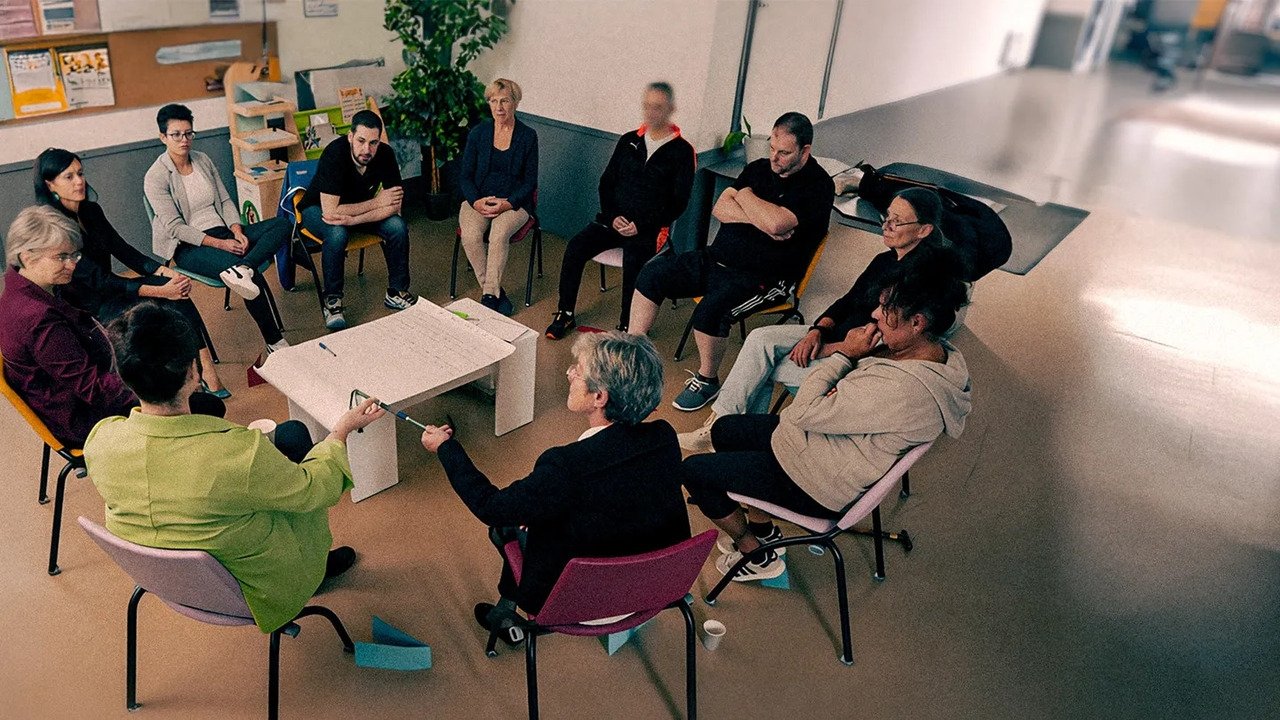
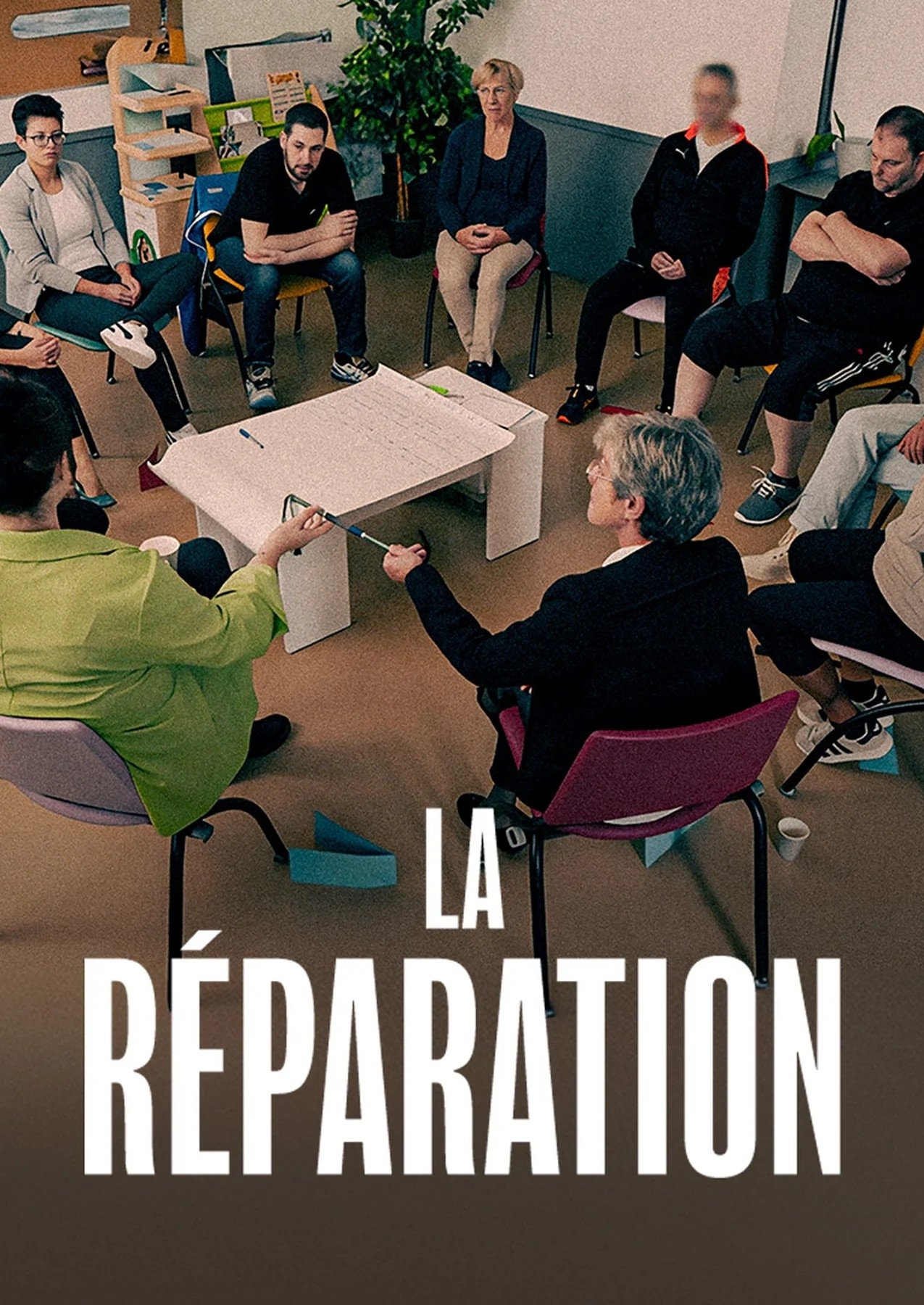
In France, victims and perpetrators of offenses, misdemeanors, or crimes can meet and talk in secure, supervised settings. Included in the Penal Code since 2014, this "restorative justice" is intended to complement criminal justice and provide a safe space for dialogue. The aim is to enable victims to rebuild their lives and perpetrators to take full responsibility for their actions, thereby reducing the risk of reoffending. This film follows one such program over the course of a year. Amélie, a prison rehabilitation and probation counselor, and Séverine, a lawyer for a victims' association, prepare Marthe, Aurélien, Sylvain, and JF, who are incarcerated for murder or attempted murder of their spouses. They also follow Emeline, Evelyne, and Marie, victims of similar crimes.





No cast information.
Similar Movies
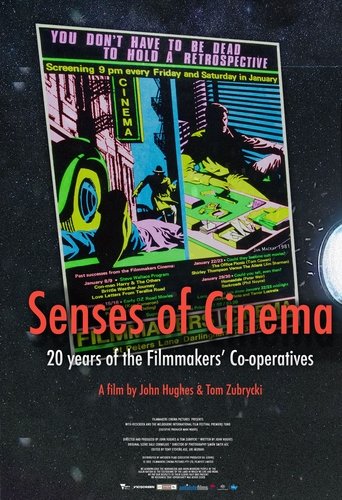
As notions of civil rights transformed across the world, so was the screen landscape reformed by the ascension of grassroots film movements seeking to challenge the mainstream. Some aspired to push form to its limit; others worked to destabilise what they saw as a homogenous industry, or to provoke questions around gender, sexuality, migration and race.
Charlie, Wendy and Holly are joined by Regis, Jocelyne and Armelle investigate the naturist opportunities on Corsica. They visit the lovely seaside resorts of Bagheera and Villata with their splendid beaches and numerous facilities, before heading to the mountainous resort of U Furu where waterfalls and sparkling pools provide enchanting delight.
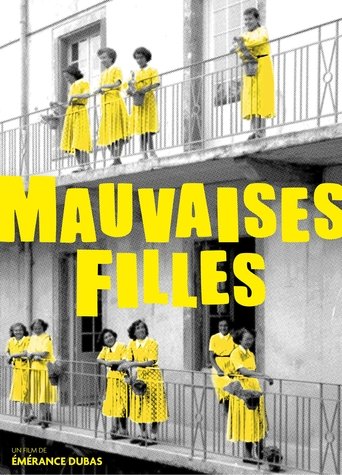
Disobedients, rebels, misunderstoods or simply unpopulars. As many other french women, Édith, Michèle, Éveline and Fabianne had been put in a juvenile detention center during their teenage years. Nowadays, with an incredible strength, each of them relate their story, and unveil the deeply moving fate lived by these « bad girls » until the late 70's.
Portrait of Augustinas Baltrušaitis, film and theatre director, as well as actor, who fell into obscurity and has now been relegated to the margins of society, as a result of specific political circumstances. Countdown is a film about the limits of memory, the effects of the implacable passage of time, and a hope that surpasses time.

Ireland, June 1944. The crucial decision about the right time to start Operation Overlord on D-Day comes to depend on the readings taken by Maureen Flavin, a young girl who works at a post office, used as a weather station, in Blacksod, in County Mayo, the westernmost promontory of Europe, far from the many lands devastated by the iron storms of World War II.
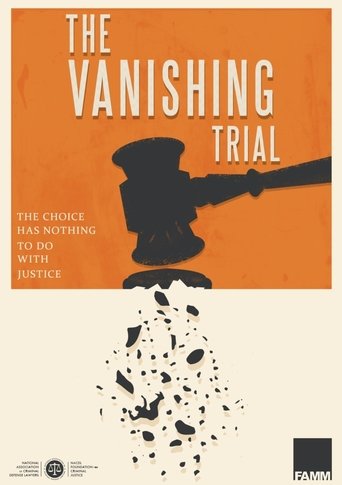
“The Vanishing Trial” looks into “trial penalty,” the term used to describe the substantially longer prison sentence a person receives if they exercise their constitutional right to trial instead of plead guilty. The documentary focuses on four individuals who were forced to make that excruciating choice.

This documentary is about sexism and masculinity. It’s also a journey through reflections on male condition, an attempt to strip away beliefs, myths and prejudices about masculinity. Why is there violence against women? We try to answer that by the hand of a former pimp trapped by his past and an artist, son of a prostitute, who transforms his pain into provocative performances. In parallel, the class of a high school teacher and a team of publicists become debate scenarios on the same theme, while interspersed reflections of several influential men who address the issue of masculinity from multiple points of view. A rich and complex approach that invites us to reflect on our own gender related education and socialization.