

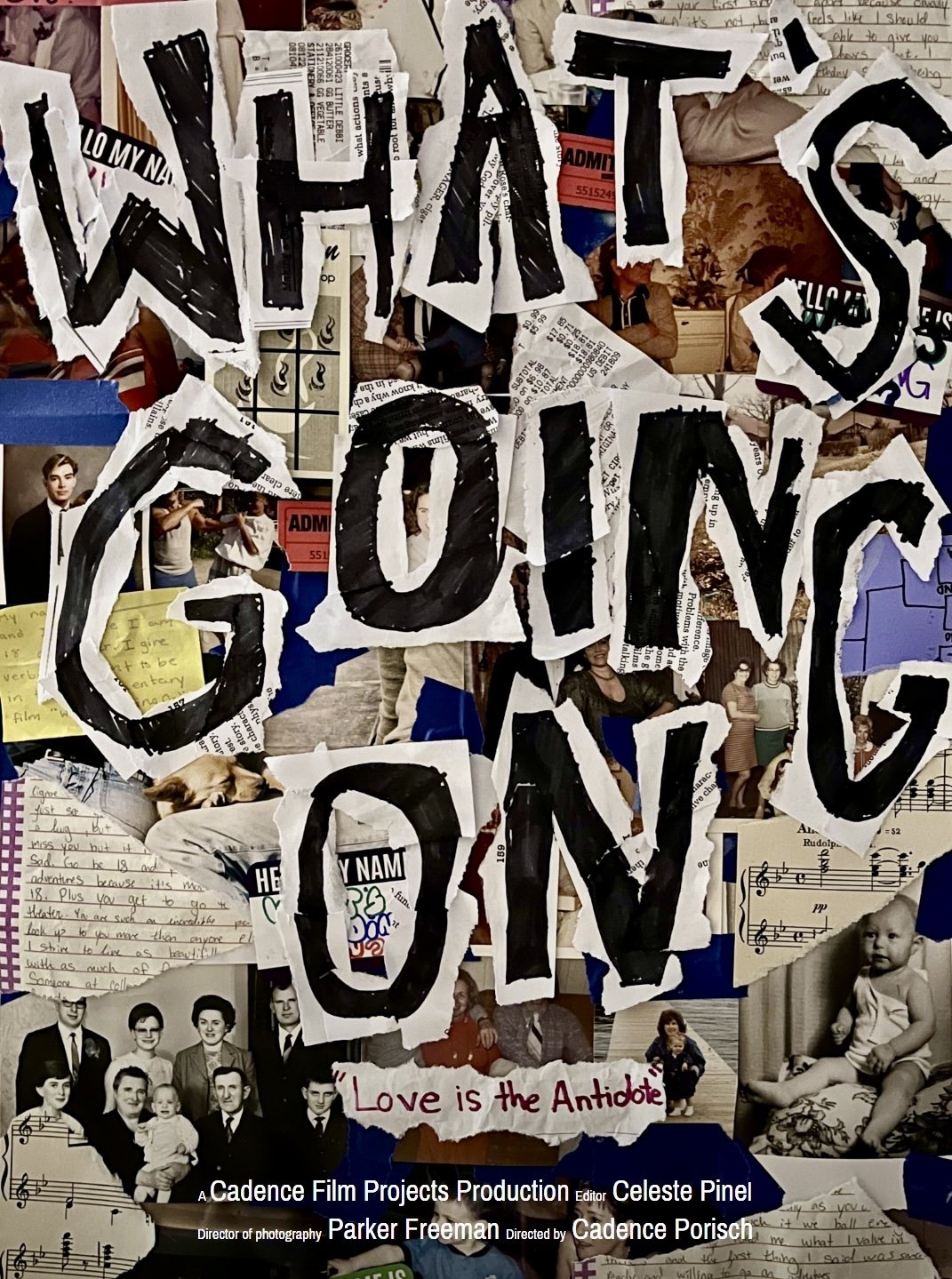
What's Going On?
Documentary
Overview
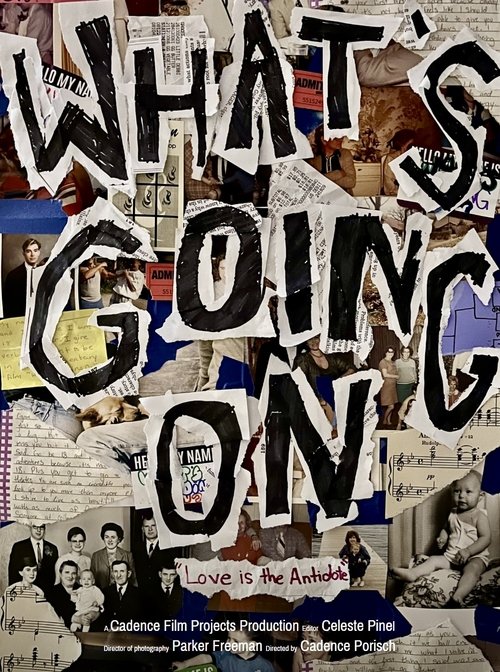
The audience is taken through a range of years through archival footage exploring the ups and downs of our lives and the thing that connects us all, love. Seven interview subjects: a philosophy professor, a film professor, a humanities professor, a retired lawyer turned archivist, a volunteer, a dance student, and a fashion student, explore their backgrounds with religion, their current personal philosophies, whether or not they believe we have a purpose, or if the things we do have any meaning at all. Eventually everything wraps back around to love.







No cast information.
Similar Movies
December 31, 2015. The Valencian bookstore Valdeska closed its doors permanently after forty years of activity. The result of four years of monitoring and filming, these 31 minuts of run time are part of a book unread, unknown and undiscovered. "Me voy. Me voy" it's not the story of a bookstore, not the portrait of an exceptional bookseller, it's a will to attach the things in the filmed image, to make something lasting showing the moment of its disappearence.
Max Devereaux and Suko Pyramid documentary about the making of their first three albums together as a duo and the story of their inspiring, international collaboration. Produced entirely remotely, featuring never-before-seen photos, videos and audio as well as interviews with close collaborators from all over the world.

One Thousand and One Attempts to Be an Ocean reflects on the experience of not being able to see the world with depth perception. Made up of micro-events from "satisfying video" that swarm on the internet, the abstract narrative unfolds through an appropriation way by referring to trance and minimal music. It's about a desire for groundless waves, blended with today's inexorable entropy of our information societies.
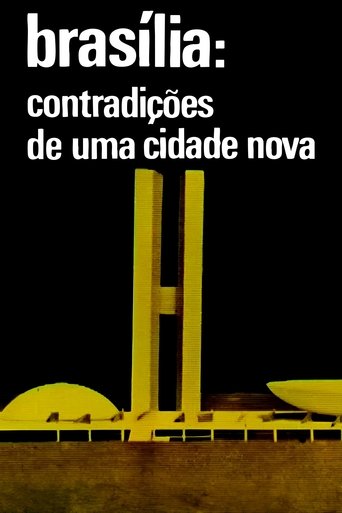
In 1967, de Andrade was invited by the Italian company Olivetti to produce a documentary on the new Brazilian capital city of Brasília. Constructed during the latter half of the 1950s and founded in 1960, the city was part of an effort to populate Brazil’s vast interior region and was to be the embodiment of democratic urban planning, free from the class divisions and inequalities that characterize so many metropolises. Unsurprisingly, Brasília, Contradições de uma Cidade Nova (Brasília, Contradictions of a New City, 1968) revealed Brasília to be utopic only for the wealthy, replicating the same social problems present in every Brazilian city. (Senses of Cinema)