

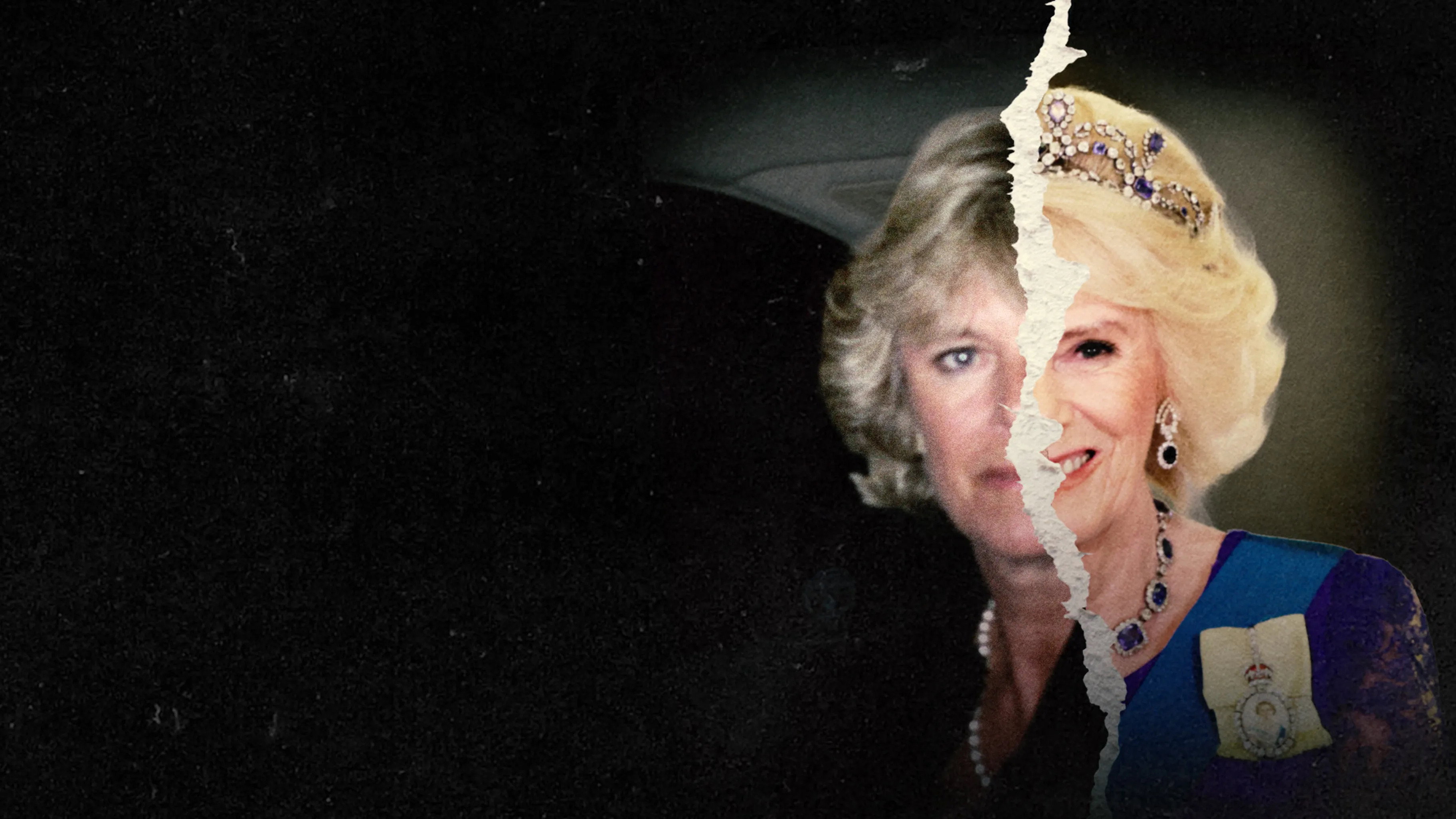
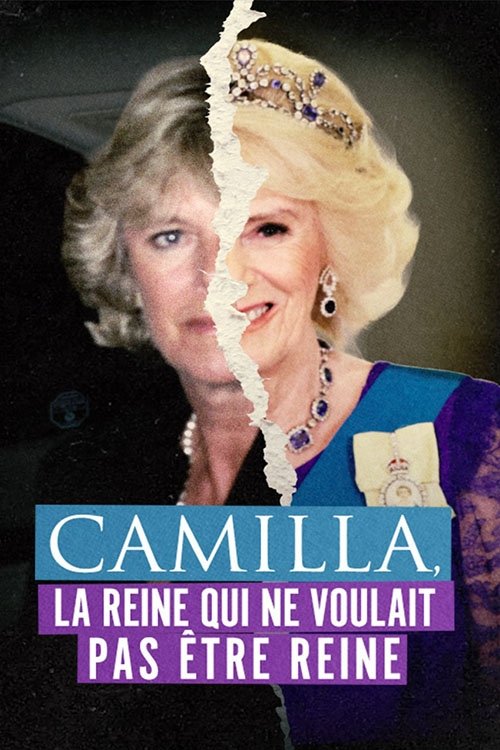
Camilla, la reine qui ne voulait pas être reine
Documentary
Top Cast
Queen Camilla of the United Kingdom
Self (archive footage)
Jacques Gamblin
Narrator (voice over)
Katie Nicholl
Self : Journaliste Vanity Fair
Emily Andrews
Self : Correspondante royale

Roya Nikkhah
Self : Journaliste Sunday Times
Ingrid Seward
Self : Editrice Majesty Magazine
Robert Hardman
Self : Écrivain
Kate Williams
Self : Historienne
Marc Roche
Self : Correspondant à Londres
Dickie Arbiter
Self : Porte-parole du Roi Charles
Angela Levin
Self : Biographe de Camilla Parker Bowles






Queen Camilla of the United Kingdom
Queen Camilla of the United Kingdom
Self (archive footage)
Queen Camilla of the United Kingdom
Self (archive footage)
Jacques Gamblin
Jacques Gamblin
Narrator (voice over)
Jacques Gamblin
Narrator (voice over)
Katie Nicholl
Katie Nicholl
Self : Journaliste Vanity Fair
Katie Nicholl
Self : Journaliste Vanity Fair
Emily Andrews
Emily Andrews
Self : Correspondante royale
Emily Andrews
Self : Correspondante royale
Roya Nikkhah
Roya Nikkhah
Self : Journaliste Sunday Times
Roya Nikkhah
Self : Journaliste Sunday Times
Ingrid Seward
Ingrid Seward
Self : Editrice Majesty Magazine
Ingrid Seward
Self : Editrice Majesty Magazine
Robert Hardman
Robert Hardman
Self : Écrivain
Robert Hardman
Self : Écrivain
Kate Williams
Kate Williams
Self : Historienne
Kate Williams
Self : Historienne
Marc Roche
Marc Roche
Self : Correspondant à Londres
Marc Roche
Self : Correspondant à Londres
Dickie Arbiter
Dickie Arbiter
Self : Porte-parole du Roi Charles
Dickie Arbiter
Self : Porte-parole du Roi Charles
Similar Movies
Homo Cinematographicus is a human species whose unit of measurement and point of reference is the cinema and its derivative, television. Filmed at the 1998 Cannes Film Festival, the film offers an unspecified number of statements, talking about memories and a thousand fragments of stories, titles and film scenes, the warp of a gigantic collective Chanson de geste.
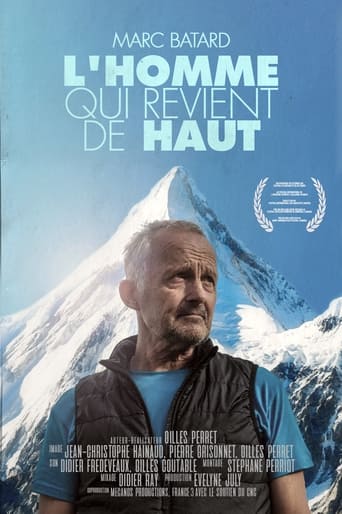
What compels a man to push the limits of what is attainable ever higher? After thirty years of relentless struggle with the highest peaks on earth, Marc Batard has finally found the answers to these questions. He had to reach the summit of Everest twice, once shattering the record for fastest time in 24 hours without oxygen, and climb the most difficult faces of the Alps to glimpse the path to inner healing. It was through physical suffering that he was able to confront the pain of his soul. He was finally able to talk about the violence of his childhood, the shock he carried like a ball and chain for decades. Having completed his summit therapy, Marc Batard tells his story in this documentary by Gilles Perret.
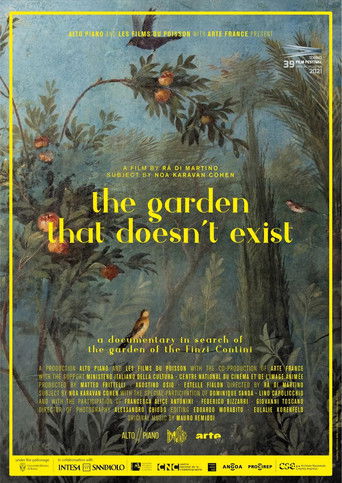
Once upon a time there was a garden, a refuge, a safe haven - 'The Garden of the Finzi Continis'. It came to life in Giorgio Bassani's 1962 semi-autobiographical novel recounting an unfulfilled love story between two young Jews in Ferrara, while fascism was raging in Italy in the late 1930's. In 1972, Vittorio De Sica's film adaptation of the book won the Oscar for Best Foreign Language Film. Since then, the fictional space of the garden became so tangible that people from all over the world come to Ferrara to look for it. Fifty years after winning the Oscar, reality and fiction come together once more, as we walk through an imaginary garden and bring to life the book, its author, its main protagonists, history, love, friendships and betrayals.
Bacteria, viruses, but also fungi, algae, pollen, and even insects: micro-organisms thrive and circulate constantly in our sky. How can so many living beings find their way into the air and circulate? How do they survive? And what influence do they have on our lives and the living world? Biodiversity, health, climate: it is only recently that scientists have begun to understand how this discreet aerial "plankton" affects our lives and our ecosystem. But despite their many virtues, some of these micro-organisms are now threatened by human activities. With the help of experts and 3D models, this scientific investigation plunges us into the heart of a still mysterious world, and reveals the diversity and fragility of the air we breathe.
When the lights dim and the stage is revealed, Meschke channels life through the strings of his puppets, triggering the spiritual connection between the creator and his alter-egos: the charismatic Don Quixote, the loving Penelope, the inquisitive Baptiste, or the mysterious Antigone. THE MAN WHO MADE ANGELS FLY is a poetic story about a master of his craft that has inspired audiences to reflect upon common issues of suffering and the mortal coil. Visionary and un-biographic, imaginary tribute to the puppeteer.