


Wie konnte es geschehen? - Teil 1: "Deutschland erwache..." (1914 - 1938)
Documentary
Overview
In 1945, 160 German cities lay in ruins and the loss of millions of lives, billions in material assets and countless cultural treasures was mourned throughout Europe... With the question “How could it happen?”, the film goes back to the year 1914, when the “primal catastrophe of the 20th century” took its course with the First World War.
Top Cast
Ulrich Ritter
Narrator (voice)
Beate Schubert
Narrator (voice)

Paul von Hindenburg
Self (archive footage) (uncredited)
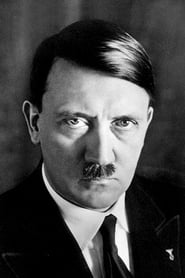
Adolf Hitler
Self (archive footage) (uncredited)
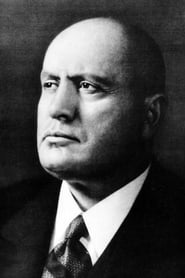
Benito Mussolini
Self (archive footage) (uncredited)
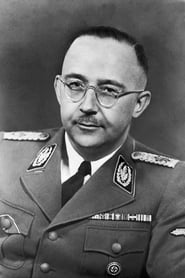
Heinrich Himmler
Self (archive footage) (uncredited)
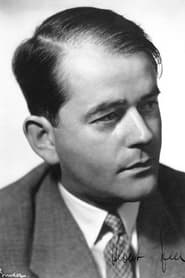
Albert Speer
Self (archive footage) (uncredited)











Ulrich Ritter
Ulrich Ritter
Narrator (voice)
Ulrich Ritter
Narrator (voice)
Beate Schubert
Beate Schubert
Narrator (voice)
Beate Schubert
Narrator (voice)
Paul von Hindenburg
Paul von Hindenburg
Self (archive footage) (uncredited)
Paul von Hindenburg
Self (archive footage) (uncredited)
Adolf Hitler
Adolf Hitler
Self (archive footage) (uncredited)
Adolf Hitler
Self (archive footage) (uncredited)
Benito Mussolini
Benito Mussolini
Self (archive footage) (uncredited)
Benito Mussolini
Self (archive footage) (uncredited)
Heinrich Himmler
Heinrich Himmler
Self (archive footage) (uncredited)
Heinrich Himmler
Self (archive footage) (uncredited)
Albert Speer
Albert Speer
Self (archive footage) (uncredited)
Albert Speer
Self (archive footage) (uncredited)
Similar Movies
APPROACHING THE ELEPHANT is a feature-length documentary about The Teddy McArdle Free School, where classes are optional and rules are made by democratic vote. Summerhill, founded 90 years ago by A. S. Neill, was the first free school - now there are more than 200 worldwide. Approaching the Elephant chronicles a free school in the making - spanning two years, from Teddy McArdle's first day when there were no rules or classes, through the changing of the school's director and the expulsion of a student by democratic vote, to the last day of the second year, APPROACHING THE ELEPHANT is an intimate portrait of a small group of people from a range of educational backgrounds, come together to forge a place where children are treated as equals, at liberty to spend their days however they please.
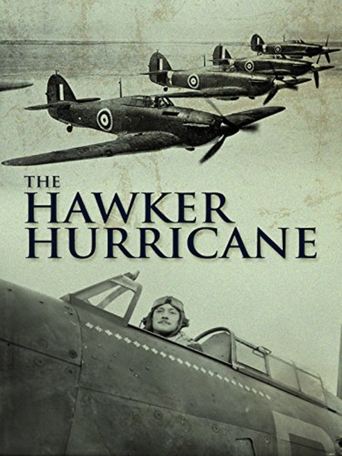
The Hawker Hurricane was the first fighter monoplane to join the Royal Air Force and the first combat aircraft adopted by that arm capable of exceeding 300 mph in level flight. The Hurricane shouldered the lion s share of Britain s defence during the Battle of Britain. This program portrays the history of this legendary aircraft which was to form an immortal partnership during the infamous battle.
Part of the Canada Carries On series, this short film portrays the First Division of the Canadian Active Service Force in Aldershot, England. Using an intimate letter home as a narrative device, this film reveals how the troops were received, what their living conditions were like, how they would get along with their English allies and how they spent their leisure time.

Feisty, fiercely independent and firmly rooted in place, 90 year-old Mabel Robinson broke barriers back in the 40s when she became the first woman in Hubbards, Nova Scotia, to launch her own business—a hairdressing salon where she still provides shampoo-n-sets over 70 years later. Weaving animation and archival imagery with intimate and laugh out loud moments in the salon, the film celebrates the power of friendship, doing what you love and staying active. With no desire to retire anytime soon, Mabel gives voice to a generation who are not front and center of cinema or the pop hairstyles of the day, and subtly shifts the lens on our perception of beauty and the elderly.

When the lights dim and the stage is revealed, Meschke channels life through the strings of his puppets, triggering the spiritual connection between the creator and his alter-egos: the charismatic Don Quixote, the loving Penelope, the inquisitive Baptiste, or the mysterious Antigone. THE MAN WHO MADE ANGELS FLY is a poetic story about a master of his craft that has inspired audiences to reflect upon common issues of suffering and the mortal coil. Visionary and un-biographic, imaginary tribute to the puppeteer.
Far from the reverberations of contemporary society, the Guérande Salt Marshes have a rhythm of their own throughout the year. After winter restoration work, the mosaic of shallow salt pans are prepared, which let water circulate; combined with the effects of the sun and the wind, these allow the salt to crystallize. By the end of the process, as at the end of the film, the fine salt flower crystals float on the surface above the bigger crystals on the bottom in all directions at once.
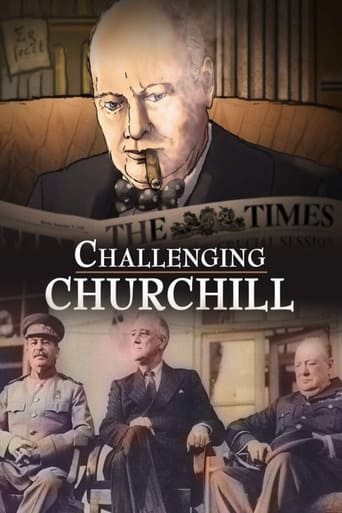
Churchill, a name typically associated with braveness and altruism. Recently found evidence from Soviet and British sources however brings up questions about Churchill's doings in the conferences of Tehran, Yalta and Potsdam. Why did he agree to give Stalin large parts of Poland? The story of two world leaders in times of war - it is also the story of Poland.