

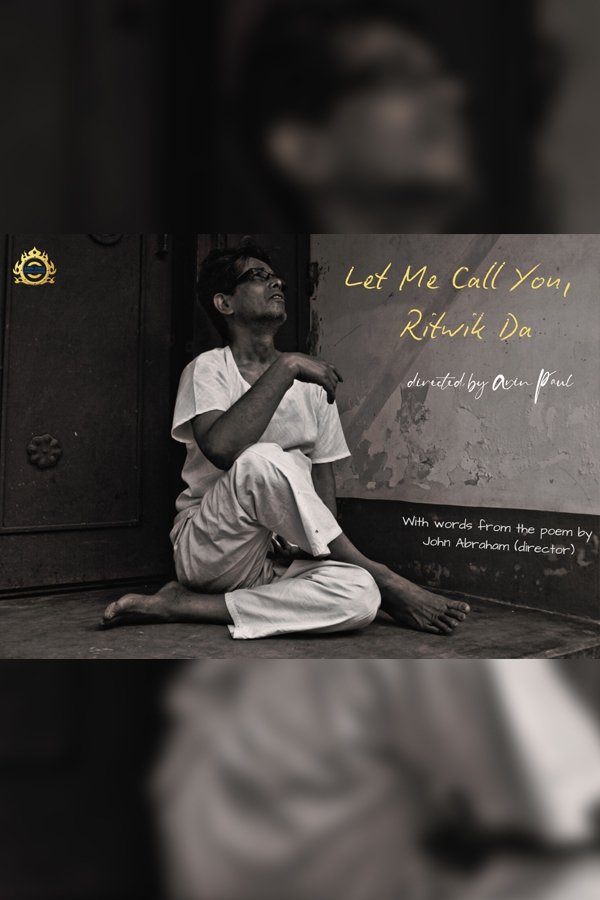
Let Me Call You, Ritwik Da
Drama
Overview
A poetic and experimental short film by Arin Paul, Let Me Call You, Ritwik Da pays tribute to Ritwik Ghatak, inspired by a poem by director John Abraham. Blending evocative imagery and voice-over, it explores Ghatak's legacy.
Top Cast

















Jyotirmay Mandal
Jyotirmay Mandal
Ritwik Kumar Ghatak
Jyotirmay Mandal
Ritwik Kumar Ghatak
Brojonath Banerjee
Brojonath Banerjee
John Abraham (director)
Brojonath Banerjee
John Abraham (director)
Salim Tahim
Salim Tahim
Poem Narrator
Salim Tahim
Poem Narrator
Similar Movies
Kang Sai, a reserved and talented artist, has long seen his cheerful friend Xiao Xi as his muse. After college, he journeys to the serene Arxan National Forest Park for inspiration, and Xiao Xi soon joins him. Amidst the stunning landscape that becomes their haven, they face life’s challenges, testing the strength of their bond and the future of their love.
Relationship issues arise between a researcher with a theory to explain away all his failed dating experiments, a player who wants out of the game, a deejay whose head spins with thoughts of God, a hoodrat with no street cred, a poet not-so-well-versed in the art of love, and a womanipulator of men.
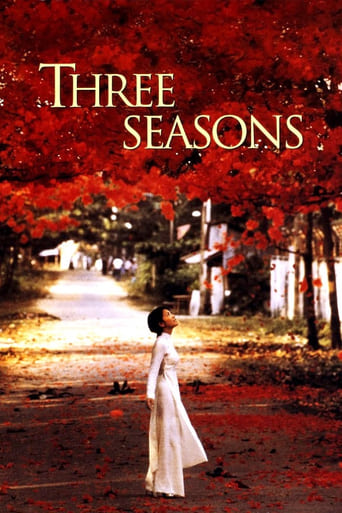
The residents of Ho Chi Minh City face modernization amid widespread poverty. A retired American Marine arrives on a search for his daughter, whom he abandoned at the end of the Vietnam War. Elsewhere, a cyclo driver falls for a troubled prostitute and schemes to raise money so he can spend time with her. Additionally, a young women begins harvesting lotuses for a writer suffering from leprosy, and a child trinket seller loses his traveling case.
In postwar Tokyo, beloved writer-professor Hyakken Uchida retires and is buoyed through hardship by the fierce devotion of his former students, who honor him each year with a raucous “Not yet!” birthday toast. Told in warm, gently comic vignettes, Kurosawa’s farewell celebrates aging, friendship, and the sustaining ritual of teacher and pupils refusing to say goodbye.
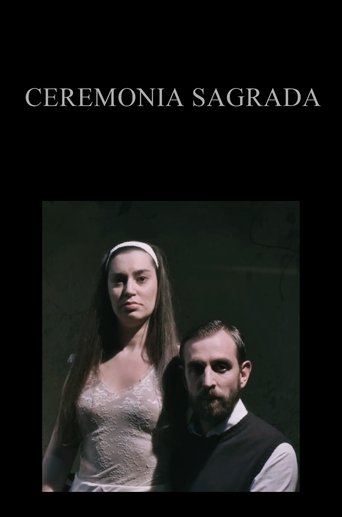
Two adult siblings, confined to their childhood home, live under the lingering presence of their parents, whose memory is mirrored in a portrait on the wall. They strive to preserve their existence through a “sacred ceremony” of nourishment and cleansing. Trapped in the family’s gilded cage, they become both inmates and bathers, with heightened senses that console and are consoled, faithful to rituals that have vanished from modern times, where everyone is violated by the rush of time. In a classic urban house, marked by decay, they tend to each other like young mammals in the wild— with love, with exposure, with violence, frustration, and shame.